



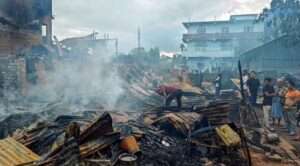
Nearly three years after the violence of May 2023, Manipur continues to simmer—periodically exploding into fresh tragedy. The recent killing of two children in a suspected rocket attack is not just another grim headline; it is a damning reminder that the state is nowhere near normalcy. What began as an ethnic confrontation between the Meitei community and the Kuki community has metastasized into a prolonged security, political, and humanitarian crisis. Let’s be blunt: this is no longer just an “ethnic clash.” It is a governance failure layered with security lapses, political hesitation, and possibly external interference. The trigger in 2023—a controversial Manipur High Court order on ST status extending benefits to the Meiteis—may have been rolled back, but the distrust it unleashed has not been repaired. Instead, it has hardened into territorial segregation, armed hostility, and institutional paralysis. The recent sequence of events underscores how fragile the situation remains. The killing of two infants in Bishnupur district sparked protests that quickly spiralled into mob violence, including attacks on security installations. Retaliatory firing reportedly left civilians dead, while shutdowns called by groups like the Meira Paibis and the United Naga Council have paralysed daily life across both valley and hill districts. Schools are shut, transport is off roads, and curfews have returned—a grim déjà vu for a population already exhausted by conflict. So why does Manipur continue to burn? First, there is a visible absence of sustained political engagement at the highest level. In crises of this magnitude, symbolism matters as much as strategy. A visit by Prime Minister Narendra Modi is not a mere optics exercise—it is a signal of urgency, empathy, and accountability. The silence, or at best sporadic attention, has allowed narratives of neglect to fester. Second, the security response, though heavy in numbers, appears inconsistent in execution. The presence of central forces like the Central Reserve Police Force has not translated into a durable peace. Arms continue to circulate, militant groups remain active, and porous borders with Myanmar enable the smuggling of weapons and narcotics. Allegations of cross-border support—whether from insurgent networks or hostile external actors—cannot be dismissed lightly. Third, the political architecture of the state remains deeply skewed. The valley-hill divide is not just geographic; it is embedded in representation, resource allocation, and administrative control. Without addressing this imbalance, any peace will be temporary at best.
What needs to be done—urgently and decisively? Start with security, but don’t end there. A state-wide disarmament drive—covering both licensed and illegal weapons—is essential. This will require political courage, as it risks alienating armed groups on all sides. But without it, peace is a mirage. Simultaneously, border management must be tightened. The government should consider sealing vulnerable stretches along the Myanmar border, deploying advanced surveillance, and empowering the armed forces with clear rules of engagement against arms traffickers. Next, move to political reconciliation. A power-sharing arrangement—however unconventional—may be necessary. Rotational leadership between Meitei and Kuki representatives, or at least a structured inclusion of both communities in top executive roles, could create a sense of shared ownership. This is not ideal governance; it is crisis management. And crises demand pragmatism. Equally critical is initiating a structured dialogue process. Not the token meetings we often see, but sustained, mediated negotiations involving community leaders, civil society groups, and neutral facilitators. Trust cannot be rebuilt through force; it requires conversation, however uncomfortable. The Centre must also invest in rebuilding the social fabric. Rehabilitation of displaced families, reopening of schools, and economic revival in affected districts should be treated as national priorities. A generation growing up amid curfews and conflict is a long-term security risk. Finally, there must be accountability—both for violence and for failure. If elements within the opposition are found to be inflaming tensions, they must be called out. If lapses exist within the administration or security forces, they must be corrected transparently. Blame-shifting will not douse the fire. Manipur is not a peripheral problem to be managed intermittently. It is a test of India’s ability to govern diversity under stress. Allowing it to drift is not just a regional failure—it is a national one.

