If democracy is measured not just by ballots cast but by the belief that those ballots truly matter, then the recent surge in voter turnout in West Bengal and Tamil Nadu deserves far more than a passing mention. It demands a hard look at what changed—and why. Credit, where it is due, must go to the Election Commission of India (ECI), which appears to have rediscovered its constitutional spine at a time when public faith in electoral integrity had been quietly eroding. Turnout figures hovering between 85–90% in West Bengal—up from 82% in 2021—and a rise to around 80–82% in Tamil Nadu from 73.63% in the last election are not statistical accidents. In both states, a jump of 7–9 percentage points is significant and will inevitably shape political outcomes. These are not mere numbers; they are political signals. For years, particularly in West Bengal, elections were often less about choice and more about survival. Allegations of intimidation, booth capture, and post-poll reprisals were not fringe complaints—they were embedded in the state’s electoral culture. Districts like Murshidabad frequently made headlines for violence, reinforcing a perception that voting was a risky exercise, especially for those unwilling to align with the ruling establishment. This time, something shifted. The ECI’s deployment of central forces at an unprecedented scale, coupled with tighter monitoring, sent a message that the old playbook would not go unchallenged. The emphasis on cleaning up voter rolls—removing dubious entries and insisting on documentation—has also had a visible impact. Critics may call it selective or harsh, but the outcome is difficult to ignore: people who had long disengaged from the process chose to return. Perhaps the most telling indicator is the participation of migrant workers. For years, many from West Bengal working in other states treated voting back home as futile—an exercise in frustration rather than a civic duty. Their return to cast ballots this time suggests a renewed confidence that their vote would actually count. That alone is a quiet but powerful endorsement of the ECI’s corrective measures. Even Narendra Modi publicly acknowledged the surge, hinting—as politicians often do—that higher turnout tends to favour his party. Whether that claim holds electorally is secondary. What matters more is that increased participation reflects a breaking of fear barriers, particularly among sections that had historically felt sidelined or targeted.
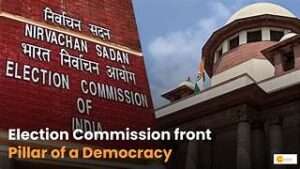
West Bengal now finds itself at a potential inflection point. The term “Parivartan” (change) is no longer just campaign rhetoric; it is being whispered in analytical circles with increasing seriousness. When voter turnout rises sharply in a politically charged environment, it often signals not satisfaction, but pent-up demand for change. Tamil Nadu presents a different, yet equally intriguing, story. Traditionally marked by stable voting patterns and entrenched party loyalties, the state’s unusually high turnout hints at churn beneath the surface. The ruling Dravida Munnetra Kazhagam (DMK), led by M. K. Stalin, faces subtle but significant headwinds. Dynastic signalling—particularly the projection of his son as political heir—has not gone unnoticed in a state that prides itself on political awareness. Complicating the equation is the emergence of Vijay and his party, which has begun to nibble at established vote banks, including minorities and sections of Dalits. Even marginal shifts—3 to 5 percent—can disrupt the arithmetic in a tightly contested landscape. The opposition All India Anna Dravida Munnetra Kazhagam (AIADMK), now aligned with the Bharatiya Janata Party (BJP), is banking on precisely such disruption. More interestingly, there is growing chatter around a factor long considered muted in Tamil Nadu politics: Hindu consolidation. The so-called “Deepam controversy”—seen by many as emblematic of cultural disregard—appears to have triggered a degree of polarization, nudging even undecided voters toward the polling booth. To dismiss this as mere communal consolidation would be intellectually lazy. What we are witnessing is a layered response: cultural assertion, political fatigue, and a desire for accountability converging into higher electoral participation. In that sense, Tamil Nadu’s turnout is not just about who wins, but about what issues are finally being forced into the mainstream. The larger takeaway is this: institutions matter. When the Election Commission acts with clarity and firmness, it does more than conduct elections—it restores faith. That faith, once rekindled, manifests in the most fundamental democratic act: voting. For too long, high turnout in India was romanticized without questioning the conditions under which it occurred. This time, the numbers tell a more reassuring story. They suggest that when fear recedes and credibility rises, democracy does not just function—it flourishes.