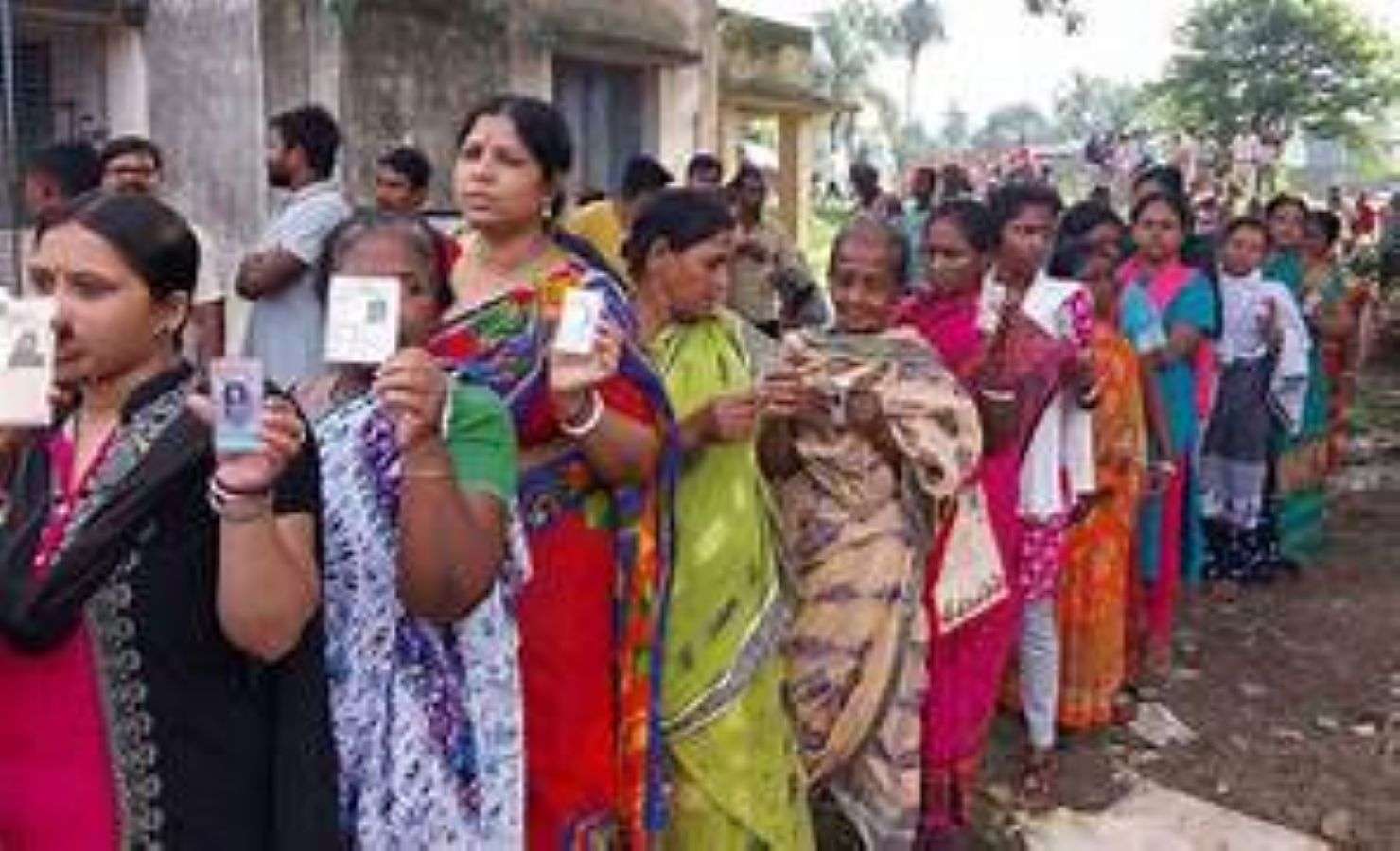
The din has finally settled. The rallies are over, the slogans have faded, and the relentless trading of accusations has come to a halt. What remains is the only voice that truly matters in a democracy—the voter. As Tamil Nadu heads into a single-phase election for all 234 seats and West Bengal continues its staggered battle for 294, the stage is no longer for politicians, but for citizens to decide their future with clarity and courage.
The Election Commission of India has reiterated its commitment to conducting free and fair polls, even in regions with a troubling history of electoral violence. West Bengal, in particular, carries the burden of a past marred by intimidation and post-poll reprisals. Yet, the assurance of institutional vigilance must now be matched by public resolve. Democracy cannot function if fear dictates participation.
There is another layer to this election that demands attention—the long-overdue cleansing of electoral rolls. The Special Intensive Revision (SIR), aimed at removing duplicate entries, deceased voters, and illegal infiltrators, has sparked predictable political resistance. But the principle is simple: the sanctity of the vote depends on the integrity of the voter list. In border states like West Bengal and Assam, where illegal immigration has been a persistent and politically sensitive issue, the weaponization of demographics for electoral gain is not a conspiracy theory—it is a lived reality. Any attempt to correct this imbalance should be seen not as exclusion, but as restoration.
Beyond the mechanics of voting lies a deeper, more uncomfortable conversation—history and its lingering shadows. West Bengal’s trauma during Partition, especially the horrors of Noakhali, remains a stark reminder of how communal fault lines can be exploited with devastating consequences. The response of national leadership at the time, urging restraint from the majority while advocating protection for minorities, continues to be debated even today.
Tamil Nadu, though geographically distant, has its own ideological past that cannot be conveniently erased. The early strands of the Dravidian movement openly flirted with the idea of secession, even imagining alignment with Pakistan. While such positions have since been politically abandoned, their historical existence underscores a pattern—regional politics in India has often been shaped by narratives that challenge national cohesion.

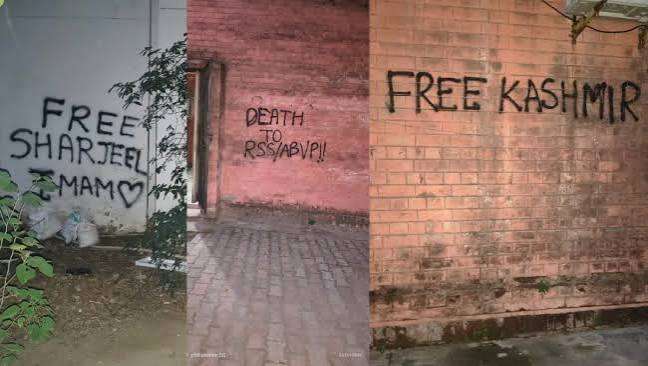
What binds these two states today is not geography, but a political method. The cultivation of vote banks through religious polarization has become an entrenched strategy. In Tamil Nadu, alliances that include parties with a long history of soft-pedalling or even endorsing anti-majority rhetoric raise legitimate questions about ideological consistency. In West Bengal, the last decade has seen repeated allegations of targeted intimidation—of communities being coerced into silence or migration, particularly in sensitive districts.
This is not merely about party politics; it is about the direction of governance. For decades, Tamil Nadu has oscillated between two dominant Dravidian parties, creating a closed loop of power. West Bengal, too, has seen ideological continuity—from decades of Left rule to the current regime under Mamata Banerjee’s Trinamool Congress. The faces may change, but the underlying strategies often remain intact.
The consequence? A slow but perceptible shift in social and demographic balances, accompanied by a growing sense of unease among sections of the population. Comparisons with Kerala—another state witnessing significant demographic transitions—are increasingly being drawn, not without reason.
At its core, this election is not about isolated promises or short-term gains. It is about choosing between two visions: one that prioritizes balanced governance, rule of law, and coexistence; and another that risks deepening divisions for electoral arithmetic. The language used in recent campaigns—where the majority faith has at times been derided in extreme terms—should concern anyone invested in social harmony.
The Indian Constitution does not merely grant the right to vote; it entrusts citizens with the responsibility to shape the republic. The Election Commission can enforce rules, and the Supreme Court can uphold them, but the ultimate safeguard of democracy lies in public participation.
This is, therefore, a moment of reckoning. Not just for Tamil Nadu and West Bengal, but for the idea of India itself. The country has, over the past decade, made significant strides—economically, militarily, and infrastructurally. From expressways to high-speed rail ambitions, from digital expansion to global diplomatic assertiveness, the trajectory is unmistakable.
But progress is not irreversible. It depends on the choices made at the ballot box—quietly, individually, decisively.
The campaigns may be over, but the real test begins now. Step out, vote without fear, and choose not just a government, but a direction.