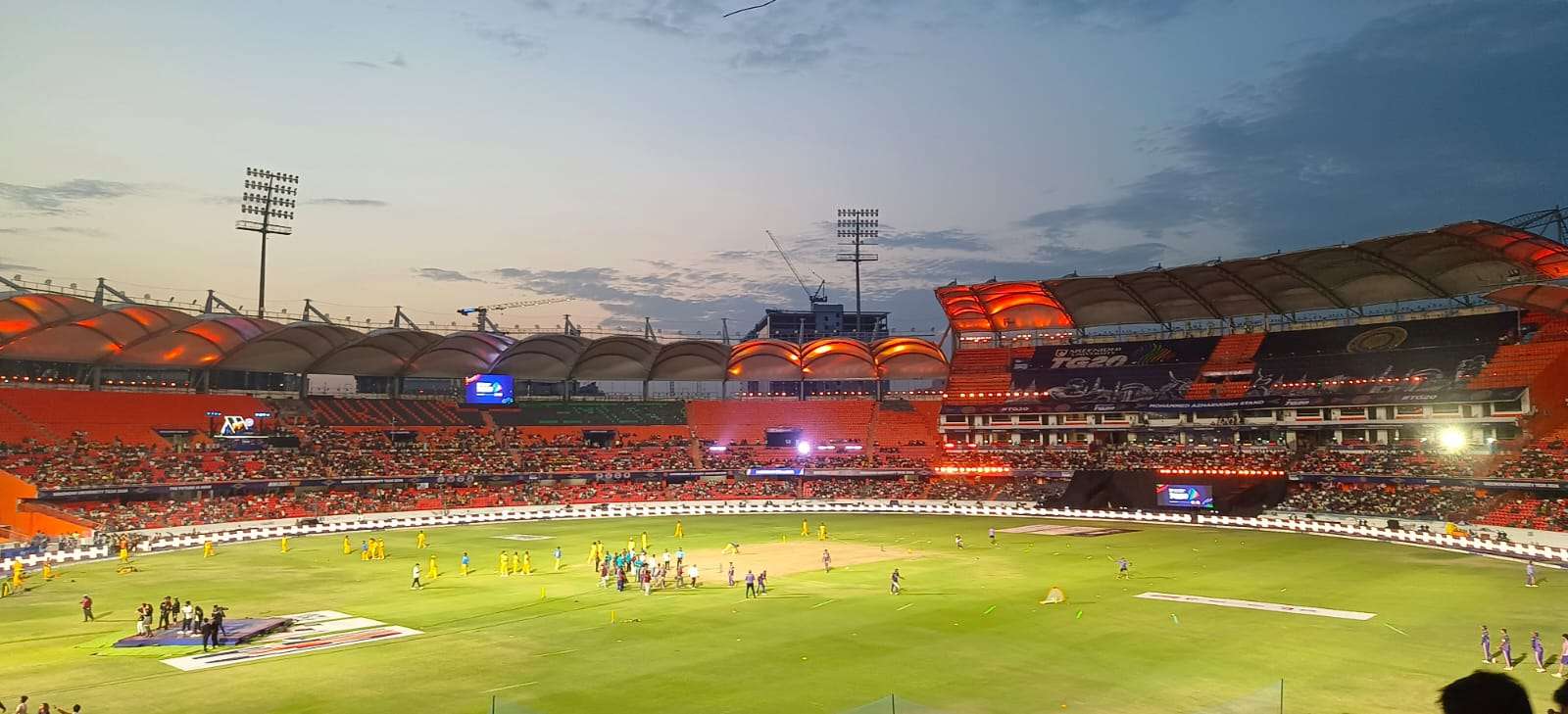

Prime Minister Narendra Modi’s visit to Telangana assumes considerable political significance at a time when the Bharatiya Janata Party is looking to consolidate its gains in the state and prepare for the next round of electoral battles. His visit, the first to the state after returning to office for a historic third consecutive term, is expected to inject fresh enthusiasm into the party cadre and strengthen the BJP’s long-term mission of emerging as a serious contender for power in Telangana.
The mood within the BJP ranks is already upbeat following the party’s recent electoral successes in states such as Assam and West Bengal, where the party has either retained power or expanded its influence significantly over the past few years. Party workers in Telangana see these victories as evidence that the BJP continues to remain the principal national political force under Modi’s leadership.
In Telangana too, the BJP has steadily grown from being a marginal player into a formidable political force over the last decade. The party’s performance in the 2023 Assembly elections and the 2024 Lok Sabha elections demonstrated that it has managed to carve out a substantial support base across both urban and rural regions of the state.
The BJP currently holds eight of Telangana’s 17 Lok Sabha seats, a significant achievement considering the party once struggled to establish a strong presence in the region. In the 2023 Assembly elections, the party won eight Assembly seats in the 119-member Telangana Assembly. While these numbers may still place the party behind the ruling Congress, BJP leaders believe the momentum is gradually shifting in their favour.
Under the leadership of Telangana BJP president N. Ramchander Rao, party cadres have intensified grassroots mobilisation efforts. Leaders claim the encouraging performance in recent local body elections and growing support in urban pockets indicate that the BJP is steadily positioning itself as the principal alternative in the state.
For the BJP, the immediate political objective is to improve its performance in the upcoming Greater Hyderabad Municipal Corporation (GHMC) elections, where the party had earlier emerged as a strong challenger. The larger target, however, remains the 2028 Telangana Assembly elections.
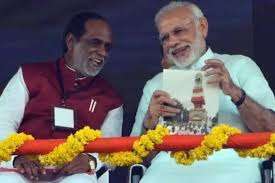
The BJP leadership believes Telangana presents a unique political opportunity. Unlike several other states where regional parties dominate identity-based politics, Telangana’s increasingly urban and aspirational electorate is believed to be more receptive to the BJP’s development-oriented narrative centred around infrastructure, welfare delivery, national security and governance reforms.
The party also sees Prime Minister Modi’s personal popularity as one of its biggest strengths. Over the last decade, the BJP has consistently projected Modi not merely as a political leader, but as a symbol of decisive governance and strong national leadership. Supporters frequently point to infrastructure expansion, welfare schemes, digital governance reforms and India’s enhanced global profile under his tenure.
The BJP’s political messaging in Telangana also focuses heavily on national security and internal stability. Party leaders argue that incidents of terror-related violence across India have reduced considerably over the past decade compared to earlier years. Hyderabad, which had witnessed a series of terror attacks and serial bomb blasts during the 2000s and early 2010s, has remained relatively peaceful in recent years. BJP supporters attribute this partly to a stronger security approach adopted by the NDA government at the Centre.
At the same time, the BJP continues to counter allegations from opposition parties that it promotes communal politics. BJP leaders maintain that the party stands for inclusive development and accuse several opposition parties, particularly those in the INDIA bloc, of indulging in selective minority appeasement for electoral gains.
Interestingly, BJP leaders also claim that sections of moderate Muslim voters are gradually reassessing their political choices, particularly among younger voters who are increasingly prioritising development, education, employment and governance over traditional vote-bank politics.
The BJP’s rise in Telangana has been built over decades through the efforts of several senior leaders, including M. Venkaiah Naidu, Bandaru Dattatreya, Dr Laxman, G. Kishan Reddy and Bandi Sanjay Kumar, among others. Their organisational groundwork helped the party gradually expand beyond its traditional pockets in Hyderabad and northern Telangana.
Today, the BJP believes Telangana could eventually become another major southern breakthrough for the party after Karnataka. Whether that ambition materialises will depend on the party’s ability to sustain organisational momentum, broaden its social coalition and effectively challenge both the Congress and the Bharat Rashtra Samithi in the years ahead.
For now, however, Modi’s visit is less about immediate electoral gains and more about energising the cadre, strengthening political confidence and reinforcing the BJP’s long-term ambition of making the lotus bloom in Telangana as well.