



At a moment of pure insight, freed from greed and awakened to human limitation, Sanjaya gave to Dhritarashtra a living vision of the earth, seeking to preserve the land from the ruin of war. He first spoke of the vastness of the universe, of its unity and harmony, and then gently declared the earth to be supreme, hinting that such a treasure survives only through the effort and care of mortals, and thus deserves protection above all else.
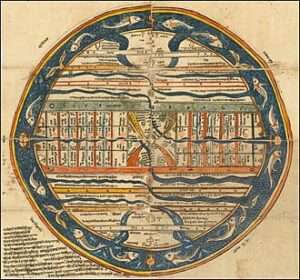
“O King,” he said, “Jambu Dweepa is divided into nine regions called varshas, each marked by its own culture and way of life. The land stretching between the northern sea and the mountain Srungavantha is known as Airavatha Varsha. The region between the Swetha and Srungavantha mountains is called Hiranmaya Varsha. The land lying between the blue mountains to the north and south is Ramanaka Varsha. The sacred region to the east of Mount Meru, naturally secure, is Bhadraswa Varsha. The long expanse to the west of Mount Meru is Kethumala Varsha. The rich and fertile land north of Mount Hemakuta is Harivansham. Beyond the Himalayan range lies the rugged terrain known as Kimpurusha Varsham. The land guarded by the Himalayas is Bharatha Varsha, and in its northern stretches people inherit strength, power, endurance, robust health, admirable longevity, comfort, and devotion, striving always to excel.” He wisely pointed out that these regions are the roots of culture and growth, and that history supports this vision, for the Aryan culture and ancient customs were born, nurtured, and expanded in the northern parts, later spreading toward the south and east of Bharatha Varsha.
Dhritarashtra, turning Sanjaya’s vision away from Hastina and Kurukshetra, subjects of pain to him, asked instead about the other islands and their nature. Sanjaya replied that an island is a land lovingly nurtured by nature and surrounded on all sides by the ocean. The surface of Jambu Dweepa measures about eighty thousand and six hundred yojanas, each yojana being nine miles or approximately thirteen kilometres. Plaksha Dweepa is twice the size of Jambu Dweepa, and each succeeding island is similarly twice the size of the former, namely Salmali, Krouncha, Kusa, Saaka, and Pushkara, making seven islands in all, known as Dweepas.
He then described the extreme northern regions as vast and formidable, flourishing with mountains, rivers, forests, caves, hills, villages, and hamlets, vibrant with life, culture, and spirituality. At the end of this stretch rises a resplendent mountain adorned with eight golden circles like petals, beside the ocean of milk, flowing with vibrant energy. There, Narayana reclines in yogic posture upon the living serpent bed, sustaining the universe and delighting in the joy of the worlds. At the northern edge of this ocean lies Vaikuntha, the cherished abode of sages and celestials.
At this point, Dhritarashtra spoke with sorrow, saying that Bharatha Varsha is but a small portion of the earth, yet for such a tiny land the Kauravas and Pandavas wage war, fighting to destroy one another, and he lamented whether there exists any people more consumed by greed than these. Sanjaya replied, “O King Dhritarashtra, the Pandavas are pure in thought and deed, free from evil even in their dreams. Your son Duryodhana, however, is naturally greedy, influenced by the harmful counsel of Shakuni, and walks a path of peril. This attitude has brought the stage of destruction. Some kings have joined his side not out of loyalty, but from selfish desire to expand their realms, feigning devotion while seeking only their own gain.”
Sanjaya continued, saying that it is not fitting to condemn the kings and lords prepared to fight for the Kauravas, for in ancient times Bhageeradha, Raghu, Yayathi, Nahusha, and many others waged wars to expand their lands and attained fame, progress, wealth, and glory through battle. Many kings in Bharatha Varsha have fought for land and riches, and he then described the surface of this cherished land. There are seven mountain boundaries known as the garland of Kula Parvatas: Malaya, Sukthinatha, Vindhya, Pariyathra, Mahendra, Rukshavanth, and Sahya, all vital to Bharatha Varsha. It is said that these seven mountains uphold the earth in steadiness and order, and their depths contain vast treasures of diamonds, emeralds, sapphires, and rubies. Their subregions abound in gold, silver, copper, iron, tin, and lead, resources beyond mortal measure, drawing forth the minds of explorers toward such wealth.
Yet, he taught, true possession lies not merely in mountains and oceans, but in the fundamental human qualities of skill, perseverance, discipline, and ethical conduct. When these qualities harmonize, they yield wealth and prosperity. He then named the great rivers: Ganga, Nethravathi, Vadavathi, Krishnaveni, Penna, Yamuna, Tamasa, Siravathi, Kaveri, Godavari, Narmada, Bahuda, Sarayu, Sathadru, Vithastha, Vipasa, and Tamraparni, along with countless streams born of the mountains. These waters bring rich harvests of fruits, vegetables, pulses, and crops, treasures of the human mind, while forests teem with animal life, each resource being wealth to the discerning soul.
Finally, Sanjaya reminded that kings should employ gentle methods and wise negotiation to acquire such wealth, for the deeper meaning is that the forest dwellers, though unrefined and exposed to the ways of the world, accept the path of conciliation, for fear is foreign to them, living as they do in harmony with the dangers of the wilderness. Through this unfolding vision of the earth, Sanjaya sought to restore balance to the king’s mind, knowing that Dhritarashtra alone held the authority to halt destruction, and thus his vivid description continued, striving to awaken restraint before the storm of war.

