


(Barageramma- Tippinagattamma) & Bheti Festival – Chitradurga
The Akka–Tangi temple tradition is associated with the historic town of Chitradurga, famous for its grand hill fort and rich heritage. The shrines of Goddess Barageramma and Goddess Tippinagattamma are situated within the town, especially around the central areas like Raja Beedi, where the main festival procession takes place. This location becomes spiritually vibrant during the annual celebrations, drawing devotees from across Karnataka.
The exact origin of these temples is not clearly documented, but the tradition is believed to be several centuries old, going back to the period of the Nayaka rulers of Chitradurga. It is closely associated with the reign of Madakari Nayaka, during the 16th to 18th centuries. Since then, the worship of these sister goddesses and the unique Beti festival has continued uninterrupted as a strong local tradition.
The temples are dedicated to two powerful sister goddesses, Goddess Barageramma, who is considered the elder sister, and Goddess Tippinagattamma, the younger sister. They are worshipped as fierce and protective Grama Devatas (village guardian deities), believed to safeguard the people and the land of Chitradurga. Another important deity connected with this tradition is Goddess Ekanatheshwari, who plays a key role in the legend by bringing reconciliation between the two sisters and establishing the annual meeting ritual.
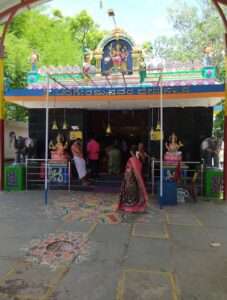
The temples reflect simple and traditional South Indian architectural styles typical of local Karnataka shrines. They are not known for grand structures or elaborate carvings but instead focus on spiritual significance and ritual practices. The sanctums are modest, and much of the religious importance lies in the open street processions and community participation rather than the physical grandeur of the temple buildings.
Historically, the worship of these goddesses was closely linked to the rulers of Chitradurga, especially the Nayakas, who considered them protectors of the fort and the region. The temples and associated rituals gained prominence during their rule and became an integral part of the cultural identity of the town. Over time, the Akka–Tangi tradition evolved into a major annual event that reflects both devotion and local folklore.
The Sthalapurana of Akka–Tangi is deeply emotional and carries a strong social message rooted in human relationships. According to the legend, there were two divine sisters, Barageramma (elder) and Tippinagattamma (younger), who shared a close and affectionate bond. However, the elder sister remained childless, while the younger sister was blessed with many children.
In those times, society placed great importance on motherhood, and the elder sister often faced humiliation and emotional pain due to her childlessness. When she decided to visit her younger sister, the latter, influenced by social pressure and fear of negative beliefs, hid her children to avoid any perceived ill omen.
When the elder sister discovered this act, she felt deeply hurt and insulted. In a moment of anger and sorrow, she cursed the hidden children, and according to belief, they turned into stone. This tragic incident broke the bond between the sisters, leading them to separate and live apart, vowing never to meet again.
As time passed, the divine mother Goddess Ekanatheshwari intervened, understanding the pain and misunderstanding between them. She mediated and convinced the sisters to reconcile partially by agreeing to meet just once every year. This symbolic reunion was established as a ritual to preserve the sacred bond of sisterhood while also reminding people of the consequences of social prejudice and emotional hurt.
Thus, the annual Akka–Tangi Beti festival came into existence, representing reunion, forgiveness, and the enduring connection between siblings.
The Akka–Tangi Beti Utsava is the main festival, celebrated about fifteen days after Ugadi, usually on a Tuesday. It marks the symbolic annual meeting (Bheti) of the two sister goddesses.
A week before, the Saaru ritual is performed to announce and prepare for the event. On the festival day, both deities are taken in grand processions through Chitradurga, with the main activities centered along Raja Beedi. The highlight is their brief, sacred meeting, witnessed by thousands of devotees.
The festival is a vibrant expression of devotion, tradition, and community unity.

