


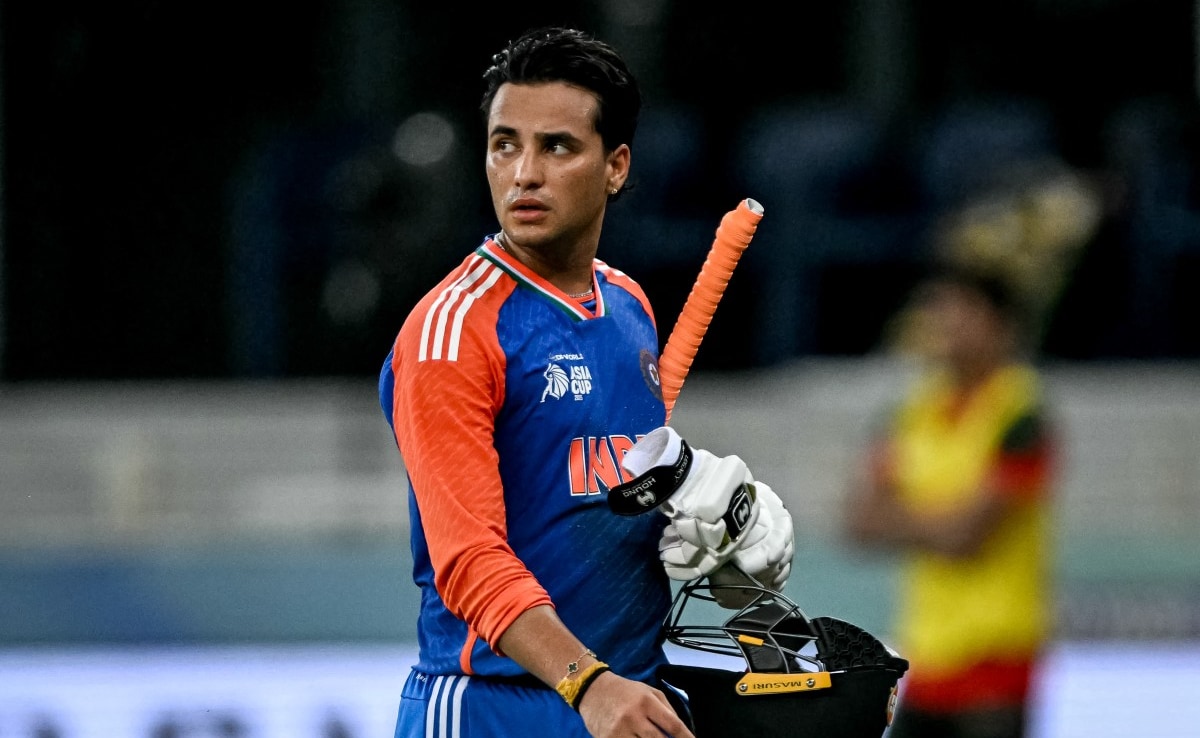
The time has come to take a hard, honest call on Abhishek Sharma.
Let me be clear: this is not a dismissal of his talent. Abhishek is one of the most explosive young batters in Indian cricket today. His range, his bat speed, and his ability to clear the ropes at will make him a rare commodity in modern T20 cricket. But talent without temperance can quickly become a liability — especially in knock-out cricket.
Three ducks should have been a warning enough. At that stage, a slight recalibration was expected. A batter doesn’t have to abandon aggression, but he must learn to respect match situations. In the Super 8 clash against Zimbabwe, Abhishek appeared to have turned a corner. His patient half-century was mature, calculated, and timely. He chose his balls, built an innings, and helped India stay alive in the tournament. That knock showed growth.
But in the must-win encounter against West Indies, the old impulse returned. The rash stroke early in the innings was not just a technical lapse — it was a lapse in judgement. Semi-finals are not won on bravado; they are built on discipline.
This is where team management must be brave. Just as tough decisions were once taken regarding Shubman Gill’s role and form, the time may have come to rest Abhishek for the crucial semi-final against England in Mumbai on March 5. A short break is not punishment — it is sometimes the best reset for a young cricketer struggling with confidence and clarity.
There is a strong case to open with Sanju Samson alongside Ishan Kishan. Samson’s fluent 97 against West Indies was not just a knock; it was a statement of temperament under pressure. He paced the chase superbly and looked in complete control. Kishan, meanwhile, seemed unsettled after being shuffled down the order. Restoring him to his natural opening slot could revive his rhythm.
Tilak Varma, in my view, fits neatly at No. 4. He has been consistently contributing 20s and 30s — valuable in context — but he now needs to convert starts into substantial innings. The ability is unquestionable. His name appears among the leading six-hitters this tournament. What he needs is the hunger to build partnerships and anchor phases before accelerating.
The middle order otherwise looks settled. Suryakumar Yadav’s presence brings unpredictability. Shivam Dube and Hardik Pandya add power and flexibility. And then comes Rinku Singh — perhaps the most underrated asset in this squad. Rinku offers finishing ability, composure, and superior fielding standards. In high-pressure games, his temperament may prove more valuable than raw aggression. If one change is to be made, replacing Abhishek with Rinku for the semi-final is a tactical option worth serious consideration.
On the bowling front, continuity is key. Jasprit Bumrah remains the spearhead. Arshdeep Singh has delivered crucial breakthroughs. The spin combination of Varun Chakravarthy and Axar Patel appears balanced — attacking yet economical. Over-experimentation, as seen with Kuldeep Yadav and Washington Sundar in earlier matches, must now stop. Knock-outs demand stability.
England, however, will not be easy opponents. They thrive in big tournaments and possess match-winners across departments. India may be favourites on paper, but semi-finals are rarely decided on paper. They are decided by clarity of roles, discipline in execution, and emotional control.
One striking feature of this World Cup has been the rise of big hitters from emerging nations — the USA, Scotland, Canada. The globalisation of power-hitting is complete. Bat technology, leverage, and improved understanding of bat swing mechanics have transformed the modern game. Straight-bat hitting and balance at impact are now as important as brute strength. Young cricketers watching this tournament should note that timing and shot selection remain foundational, regardless of format.
India are in a strong position. Net Run Rate calculations are out of the equation. Key players like Samson and Axar have stepped up at the right time. Even Abhishek showed signs of adapting — focusing more on singles, adjusting his trigger movement, reducing the exaggerated “move-away-and-swing” approach. Those are encouraging signs.
But semi-finals are about minimising risk. If management believes Abhishek needs breathing space, they must act now — not later.
This Indian team is close to something special. One disciplined week can define a generation.
The learning process continues. The waiting begins.


