


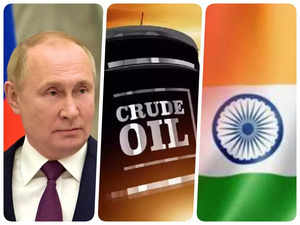
For observers of international relations, the latest decision by the United States to grant India a 30-day waiver to continue purchasing Russian oil marks yet another diplomatic victory for New Delhi. It reflects a growing acknowledgement in Washington that India cannot be pressured into compromising its national interests merely to suit shifting geopolitical narratives.
For years now, India has maintained a clear and consistent position: its energy security cannot be hostage to great-power rivalries. As one of the world’s fastest-growing major economies, India’s demand for energy is enormous and constantly rising. Ensuring uninterrupted and affordable access to crude oil is not a matter of diplomatic convenience but an economic necessity.
In that context, however, a crucial question arises. Can such a waiver realistically remain limited to just 30 days?
The rapidly escalating conflict in West Asia suggests otherwise. The ongoing war triggered by joint military actions by the United States and Israel against Iran has already shaken the foundations of the global energy architecture. What initially appeared to be a limited military confrontation is quickly evolving into a broader geopolitical crisis with potentially far-reaching consequences.
Iran has made it abundantly clear that it will not retreat easily despite continuing military strikes. Tehran’s retaliatory actions have already begun targeting strategic installations across the region. At the same time, other global actors—including several European powers—are increasingly getting drawn into the conflict in order to safeguard their own strategic and economic assets, some of which have reportedly come under threat or attack.
Given these circumstances, the likelihood of the war ending within a month appears extremely remote. Wars of this scale rarely conclude within such narrow timelines. Instead, they tend to deepen, expand and pull additional actors into their orbit.
If anything, the conflict now threatens to disrupt one of the most critical arteries of global energy supply: the Persian Gulf. Nearly a fifth of the world’s oil shipments pass through this volatile region. Any prolonged disruption in these supply routes would send shockwaves through global energy markets, triggering price spikes and economic uncertainty across continents.
Against this backdrop, the American decision to grant India even a temporary waiver carries deeper geopolitical implications.
It signals a reluctant but unmistakable recognition in Washington that India today occupies a very different place in the global strategic hierarchy. New Delhi is no longer a peripheral player that can be nudged or coerced into aligning with the priorities of major powers.

Instead, it has emerged as a pivotal actor whose cooperation is essential to maintaining economic stability and geopolitical balance in an increasingly fractured world.
This reality became evident soon after the outbreak of the Russia–Ukraine War in 2022. Western governments mounted enormous diplomatic pressure on India to halt its purchases of discounted Russian crude. However, New Delhi refused to succumb to that pressure.
India’s leadership made it clear that while it respects global concerns, it cannot jeopardise the welfare of its 1.4 billion citizens in order to satisfy geopolitical expectations of other nations.
Under the leadership of Prime Minister Narendra Modi, India has consistently revived and reinforced the doctrine of strategic autonomy — the principle that national interest must remain the ultimate guiding force of foreign policy.
External Affairs Minister Subrahmanyam Jaishankar articulated this position with remarkable clarity on several global platforms. His message to Western critics was straightforward: Europe may have the luxury of debating moral positions on energy imports, but developing nations like India must prioritise economic stability and affordable energy for their populations.
That argument gradually began to resonate across global capitals.
Even the United States, despite its initial reservations, appears to have realised that alienating India over its energy choices would be strategically counterproductive. India remains one of Washington’s most important partners in the Indo-Pacific and a crucial balancing force in the broader geopolitical contest with China.
In such circumstances, expecting India to abruptly abandon a critical source of energy supply would not only damage bilateral relations but could also destabilise global markets already under severe strain.
The unfolding West Asian conflict has further reinforced this reality. With uncertainty looming over energy supplies from the Gulf region, countries across the world are scrambling to secure alternative sources of crude. In such a volatile environment, the steady flow of Russian oil to major consumers like India becomes an important stabilising factor for global markets.
That is precisely why the 30-day waiver should be viewed less as a temporary concession and more as a diplomatic acknowledgement of India’s growing strategic importance.
Washington understands that pressuring India at a time when global energy markets are already under immense stress would only aggravate instability.
More importantly, the episode highlights a fundamental transformation in global diplomacy.
The era when powerful nations could dictate economic choices to emerging powers is steadily fading. Countries like India today possess both the economic weight and the diplomatic confidence to pursue independent policies aligned with their national interests.
In that sense, the waiver represents more than just a technical adjustment in sanctions policy. It is a subtle recognition that India’s voice in global affairs can no longer be ignored or overridden.
Whether the waiver ultimately extends beyond 30 days will depend on how the West Asian conflict unfolds in the coming weeks and months. But one conclusion is already unmistakably clear.
India’s steadfast commitment to strategic autonomy has once again paid dividends — reinforcing its position as a confident, independent power navigating an increasingly turbulent world order.

Personality matters determining National foreign policy goals and achieving them . The iconic style of National leadership in true democratic style pays its dividends. The world wide audience is watching the matured leadership vs panik chaotic leadership and the impact of the former cannot be ignored . Trump is caught in crossfires. Imagine “ No kings protest “ demonstrating the unpopularity of a country’s leadership which was hitherto regarded as a model of liberalism and democracy. The AI generated video of response to the protest also shows the Kiddish brat attitude, more as a comic show. This degenerative style of leadership is somewhere feeling secured with the intelligent leadership of a growing economy, moderate as it is closer to democratic model and heralded for its decentralised functioning as well as being best in steering a pluralistic society ie Indian leadership which has emerged as a global model of excellent national political culture. India is a nation today which cannot be ignored. Temporary concession doesn’t matter to India at all , it can still steer its way . The economic resources, indigenous culture, historical pride , the large peninsula and the huge geographical size and location assisted with cutting edge technology of rising national power of India cannot be dismissed . Today the present USA with its functioning doesn’t matter to India. ☺️👍🏼