


Is a United States–Iran war imminent? The question no longer belongs to speculative think tanks alone. It is now being whispered in diplomatic corridors, debated in military circles, and nervously tracked in global markets.
Seasoned Indian diplomat Deepak Vora and several former high-ranking military officials have publicly suggested that American strikes on Iran could be closer than the world assumes—perhaps even within days. Their assessment rests on a familiar but combustible premise: that Washington believes Tehran has become the principal obstacle to “permanent peace” in West Asia.
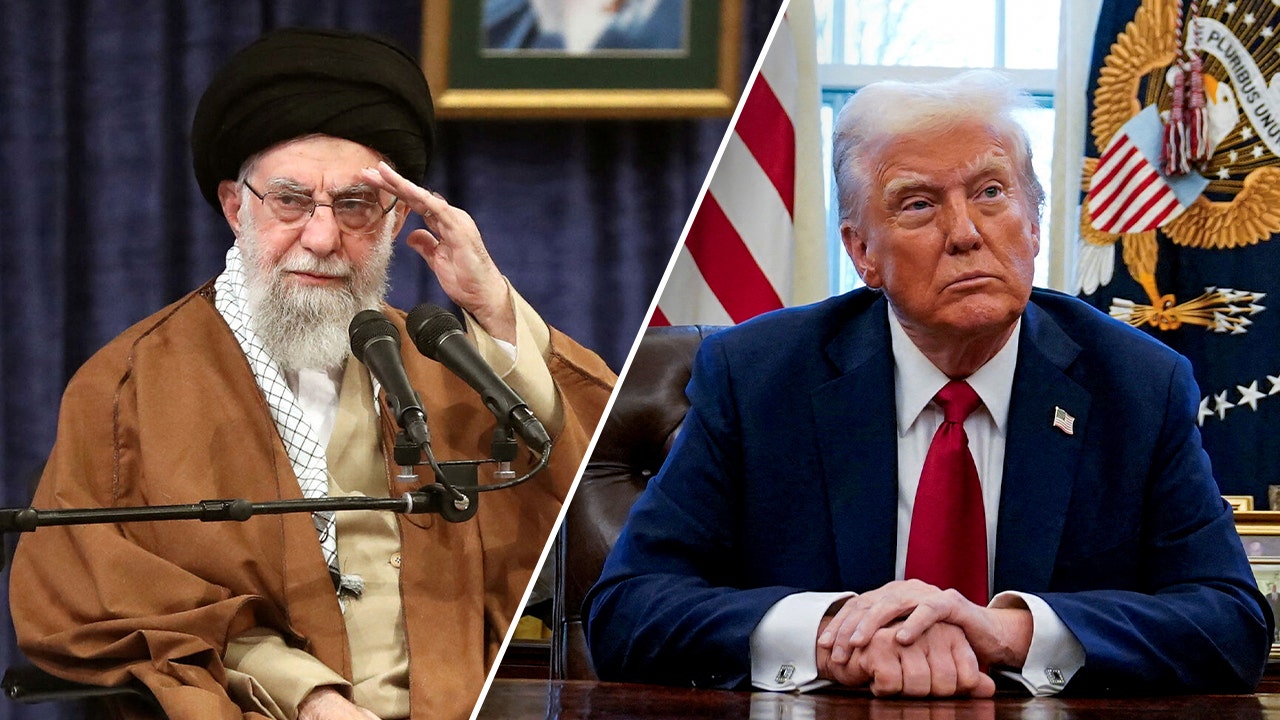
At the centre of this unfolding tension stands former U.S. President Donald Trump, whose approach to Iran has historically been blunt, transactional, and unapologetically muscular. During his presidency, Trump withdrew from the Iran nuclear deal and reinstated sweeping sanctions, arguing that Iran’s regional ambitions and nuclear posture were intolerable. The logic has not changed: pressure, isolation, and, if necessary, force.
Across the aisle stands Iran’s Supreme Leader Ali Khamenei, often portrayed as unyielding and ideologically resistant to Western overtures. Tehran insists it seeks strategic autonomy and regional influence, not confrontation. Yet its support for proxy groups across West Asia and its nuclear enrichment programme have kept it squarely in Washington’s crosshairs.
The immediate fear stems from military signalling. The United States maintains formidable naval and air assets in the Persian Gulf. Iran, for its part, commands asymmetric capabilities—missiles, drones, cyber warfare, and influence over regional militias. An encirclement narrative is gaining currency: that American forces have positioned themselves to neutralise Iran’s strategic infrastructure swiftly, should the order be given.
But wars are rarely as surgical as planners promise.
The crucial question is not merely whether strikes may occur—but what follows. Would it be a limited, high-intensity engagement lasting days? Or would it spiral into a prolonged confrontation, reminiscent of the grinding attrition seen in the Russia-Ukraine war?
Iran is not Iraq of 2003. It has terrain, nationalism, proxy networks, and hardened military installations. Even if its conventional forces cannot match American firepower, Tehran can retaliate indirectly—through disruptions in Iraq, Syria, Lebanon, or the Strait of Hormuz. A direct invasion appears unlikely; targeted strikes are more plausible. Yet even targeted wars carry unpredictable aftershocks.
The global consequences could be immediate and severe.
First, oil. Nearly a fifth of the world’s petroleum flows through the Strait of Hormuz. Any disruption would send crude prices soaring overnight. For energy-importing nations like India, already navigating fragile global growth, the impact could be brutal—higher inflation, currency pressures, and fiscal strain.
Second, regional destabilisation. Israel, Gulf states, and non-state actors would be drawn into the vortex. Missile exchanges could widen the theatre of war. Insurance premiums for shipping would spike. Aviation routes would be disrupted. Global supply chains—already battered by pandemic shocks and geopolitical fractures—would tremble again.
Third, the geopolitical chessboard. Would China and Russia intervene? Direct military involvement seems improbable. Beijing has deep economic ties with Tehran but avoids entanglement in direct confrontation with Washington. Moscow, stretched by Ukraine, may offer rhetorical and diplomatic backing but little more. The likelihood is a calibrated distance—condemnation without combat.
Yet absence of intervention does not equal absence of consequence. A weakened Iran could alter the regional balance of power dramatically. A prolonged conflict could embolden hardliners across the Middle East. Extremist groups thrive in chaos; history has shown that vacuums rarely remain empty.
For India, the stakes are complex. New Delhi maintains cordial relations with Washington while historically preserving strategic engagement with Tehran, particularly over connectivity projects like Chabahar Port. A war would force delicate recalibrations. Energy security, diaspora safety, and regional stability would all weigh heavily.
The larger question is philosophical: can military action deliver the “permanent peace” that strategists promise? Or does it merely reset the cycle of hostility?
War, once unleashed, obeys no script. It redraws alliances, reshapes economies, and often punishes the innocent more than the instigators. The prospect of U.S. strikes on Iran may appear tactically feasible. But geopolitically, it is a gamble of enormous magnitude.
As the world watches the Gulf with uneasy anticipation, one truth remains immutable: in a hyper-connected global order, no war is regional anymore. The first missile may fall on Iranian soil—but the shockwaves will be felt from New Delhi to New York.
The clouds are dark. Whether they burst into a storm depends not only on military readiness—but on political restraint.
