


For decades, one of the most corrosive myths circulating within India’s own strategic and defence “thinktank” ecosystem has been this: India cannot design, develop, and deliver complex military platforms on its own. That belief—often whispered in seminars, shouted in television studios, and sanctified by retired uniforms with colonial hangovers—was repeatedly aimed at Hindustan Aeronautics Limited (HAL), the Aeronautical Development Agency (ADA), and the Light Combat Aircraft (LCA) programme.
The Tejas was ridiculed as “too late”, “too little”, and “too ambitious for Indians”. Timelines were mocked, engineers sneered at, and every delay weaponised as proof of inherent incompetence. The irony? Many of the loudest critics had no hesitation in defending decades-long foreign procurement delays, ballooning costs, and complete technology denial from Western suppliers.
Today, those critics owe India’s engineers, technocrats, and scientists a public apology.
Because the HAL Tejas is no longer a prototype chasing relevance. It is a combat-certified, inducted, expanding fighter ecosystem, forming the backbone of India’s light fighter fleet and a symbol of something far more important: technological sovereignty.
India’s Light Combat Aircraft programme was not born out of vanity. It was born out of strategic compulsion.
By the late 1970s and early 1980s, the Indian Air Force was staring at an unavoidable crisis. The MiG-21—once the backbone of the fleet—was aging rapidly. Replacement through imports meant repeating the same dependency cycle: foreign engines, foreign spares, foreign sanctions, and zero control over upgrades.
Thus, in 1983, the Government of India formally launched the LCA programme, tasking ADA and HAL with something India had never attempted before: designing a modern, fly-by-wire, supersonic, multi-role combat aircraft from scratch.

Let’s be clear: this was not a screwdriver-technology assembly. Tejas required India to master:
- Digital fly-by-wire flight control systems
- Composite airframe design (over 45% composites, among the highest globally at induction)
- Mission computers, avionics integration, and software-intensive systems
- Radar, EW suites, and weapons integration
Countries that today lecture India on “efficiency” took 40–50 years to reach this level. India did it under sanctions, denial regimes, and zero foreign hand-holding.
The Tejas Mk1A is not a paper aircraft. It is ordered, funded, and in serial production.
Key facts sceptics conveniently ignore:
- 83 Tejas Mk1A aircraft ordered by the IAF (₹48,000+ crore contract signed in 2021)
- Follow-on orders expected to take the total Tejas numbers beyond 180 aircraft
- Over 65% indigenous content, rising toward 70–75% in later blocks
- Operational clearance achieved after thousands of test sorties
- Deployed with No. 45 “Flying Daggers” and No. 18 “Flying Bullets” squadrons
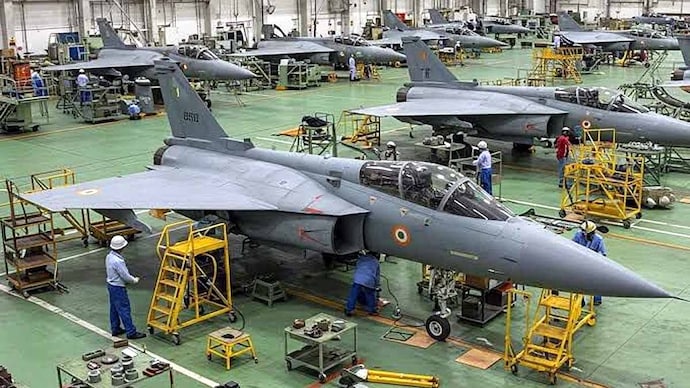
Performance metrics matter more than armchair cynicism:
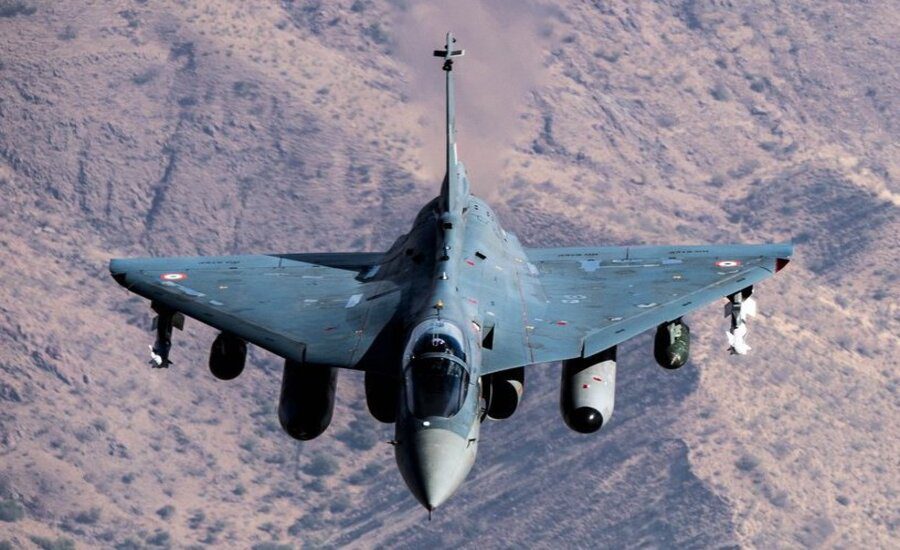
- Maximum speed: Mach 1.6
- Combat radius: ~500 km
- Service ceiling: 50,000+ feet
- 9 hardpoints with 5.3 tonnes of payload
- AESA radar (EL/M-2052 initially; Uttam AESA progressing)
- Advanced EW suite, BVR missiles, precision strike capability
This is not a “trainer with weapons”. This is a frontline, multi-role combat aircraft.
Tejas competes in the single-engine, lightweight to medium-weight fighter category—the same segment occupied by aircraft often hyped by India’s own pessimists.
JF-17 Block III (China–Pakistan)
Often projected as Tejas’ “cheaper rival”, the JF-17 is precisely what Tejas proves India does not need to emulate.
- Heavily dependent on Chinese subsystems
- Lower composite usage
- Inferior flight control sophistication
- Limited growth potential without Beijing’s approval
Tejas, by contrast, gives India upgraded sovereignty—a priceless strategic advantage.
Saab Gripen E
A capable aircraft, no doubt—but at a cost.
- Unit cost estimated at $85–100 million
- Tight U.S. export controls due to American engine and avionics
- Political strings attached
Tejas Mk1A comes in at $40–45 million, with far fewer geopolitical shackles.
F-16V (Block 70/72)
A proven fighter—but one India deliberately walked away from.
- Designed in the 1970s
- Export variants are permanently downgraded
- Sold liberally to India’s adversaries, including Pakistan
Tejas exists precisely because India refused to mortgage its air power to Washington’s approval cycle.
The biggest failure of Tejas critics is their inability to understand systems thinking.
Tejas is not an endpoint. It is a foundation.
- Tejas Mk2 (Medium Weight Fighter): larger, more powerful, deeper strike capability
- AMCA (5th-gen stealth fighter) drawing directly from LCA experience
- Indigenous AESA radar, EW systems, mission computers, flight software
- Private industry participation across avionics, structures, and maintenance
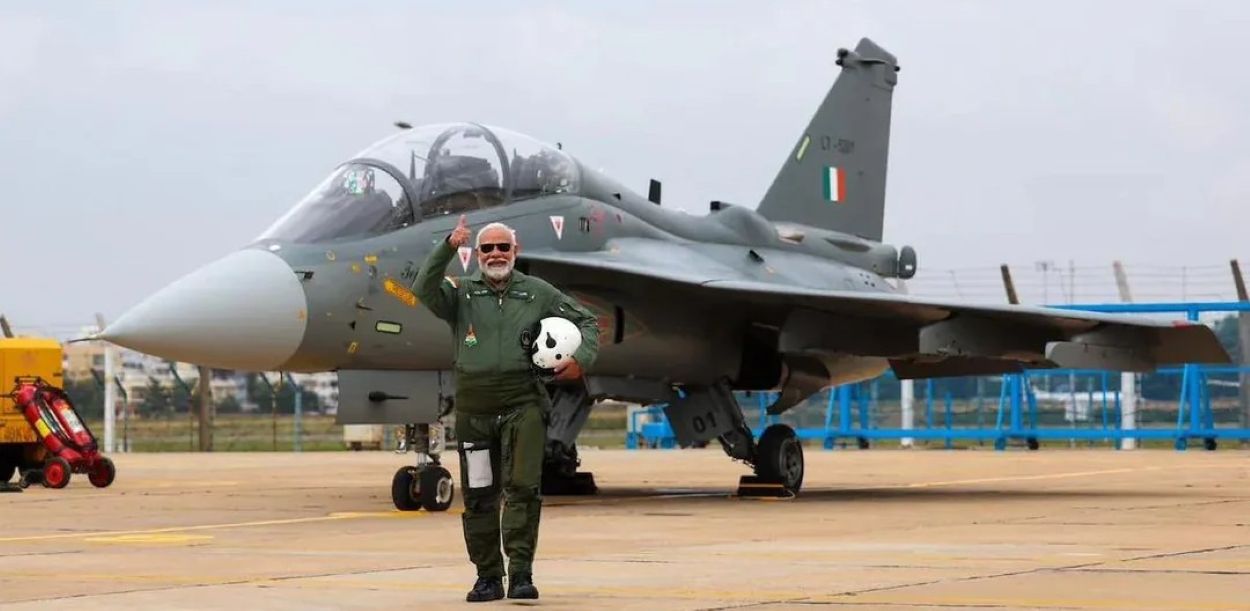
Every flight hour of Tejas compounds national capability. Every imported jet freezes it.
The real problem was never HAL, ADA, or Indian engineers.
The problem was intellectual colonisation—the reflexive belief that “foreign is better” and “Indian is inefficient”. Tejas has exposed that prejudice more brutally than any speech or slogan ever could.
Against sanctions, scepticism, and sabotage-by-commentary, India built a fighter.
Not perfect. Not overnight. But its own.
And that, for a nation serious about strategic autonomy, is not just competitive—it is non-negotiable.
Tejas doesn’t ask for applause.
It demands respect.
And it has earned it—metal, code, and Mach numbers at a time.

