


Pakistan today stands at a breaking point—morally, politically, and institutionally. The world may pretend otherwise, but the truth is unavoidable: a former elected Prime Minister, Imran Khan, remains effectively disappeared inside his own country, held under conditions so opaque, so alarming, and so vengeful that the United Nations has now stepped in with a rare and severe advisory. This is no ordinary political feud. This is a military state cracking down on its most popular civilian leader, and doing so with a brazenness that would shame even the region’s worst autocracies. When the United Nations Working Group on Arbitrary Detention declared that Imran Khan’s arrest and continued incarceration violate international law, Islamabad brushed it aside like an annoying fly. But the language of the UN assessment was unusually sharp—an unmistakable signal that the world now sees Pakistan’s justice system as little more than the Army’s personal enforcement wing. The UN called his prosecution politically motivated, his detention arbitrary, and his trials fundamentally compromised. Translation: this is not law; it is punishment. At the centre of this crisis stands one man—Army Chief General Asim Munir, a figure critics accuse of transforming himself into a de facto Field Marshal through raw force and institutional capture. Reports from human-rights monitors, ex-military whistleblowers, and Pakistani commentators paint a chilling picture: Munir allegedly conveyed, directly or indirectly, that Imran Khan’s political future would not merely be curtailed—it would be erased. While these allegations remain contested, their consistency across multiple independent sources is disturbing. And the pattern of events since 2023 makes the Army’s motives unmistakable. Khan was jailed in a flurry of cases, many fast-tracked overnight. His party, PTI, was systematically dismantled. His associates were abducted, coerced, or forced into televised “confessions.” His electoral symbol was taken away, gutting his party before the 2024 polls. Journalists covering his plight were intimidated, expelled, or threatened. And now comes the most sinister development of all: there is virtually no verifiable information on Imran Khan’s physical condition, personal safety, or daily treatment inside prison. When a former Prime Minister—backed by the votes of millions—disappears into a judicial black hole, it is not repression. It is a state-sponsored disappearance.
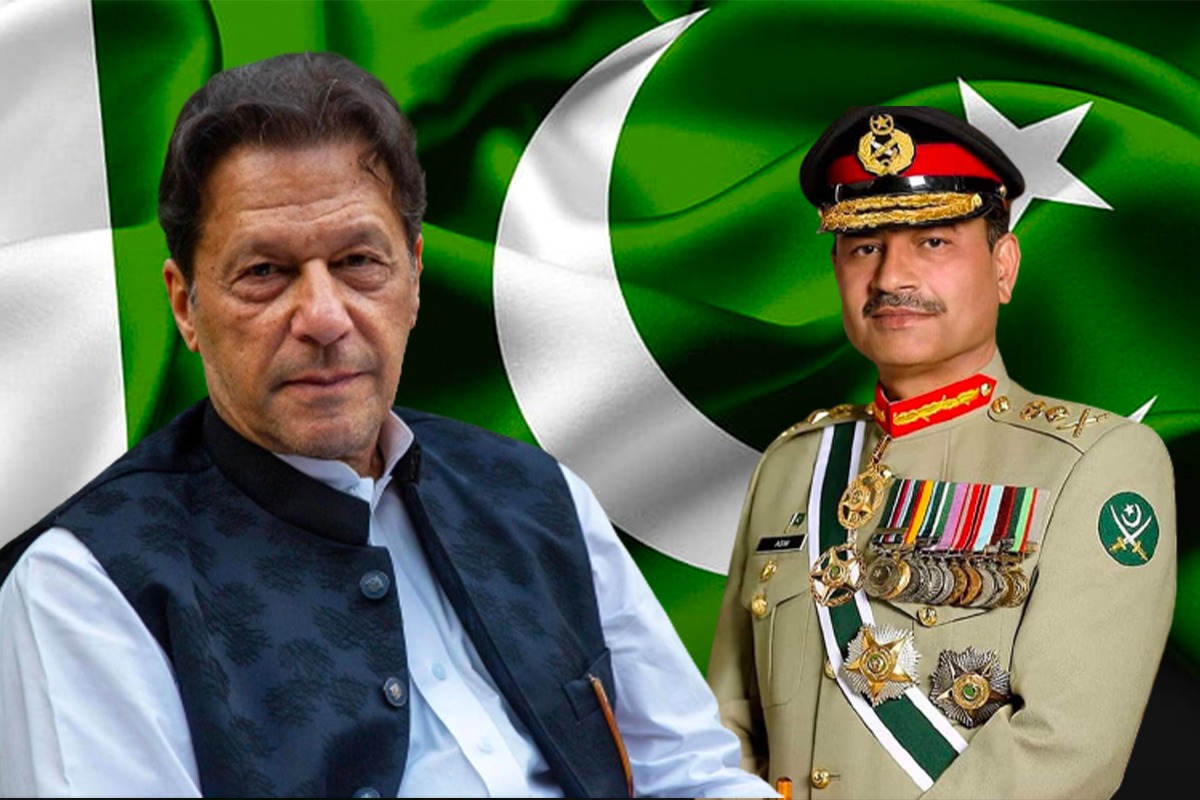
More shocking than Pakistan’s military overreach is the stunning indifference from Washington. Donald Trump, who loudly lectures the world about democratic backsliding, has opted for a selective blindness on Pakistan. Not a word. Not a whisper. It is as if the fate of Pakistan’s most popular leader does not even register on America’s geopolitical radar. The U.S. invokes human rights when convenient, but when Pakistan—its long-time transactional ally—crushes its democratic opposition, Washington pretends the world’s most famous political prisoner simply does not exist. Despite censorship, intimidation, and state-controlled media, Imran Khan remains Pakistan’s single most popular political figure. Every credible survey before and after his arrest placed him far ahead of Nawaz Sharif and Bilawal Bhutto. That is precisely why the establishment wants him erased—not defeated, not sidelined, but obliterated from the political landscape. What is happening to him is not an isolated abuse; it is the culmination of a decades-long pattern. Zulfikar Ali Bhutto was executed. Nawaz Sharif was exiled, jailed, and broken repeatedly. Benazir Bhutto was assassinated under the shadow of the military’s negligence or complicity. Now, Imran Khan is being crushed behind closed doors. The script never changes. Only the victims do. The UN’s intervention is a warning that Pakistan is sliding into a dangerous zone where institutions collapse, public anger explodes, and extremist forces rush to fill the vacuum. If Imran Khan’s safety cannot be independently verified soon, the possibility of irreversible damage—political, social, and human—looms large. Where is Imran Khan? Why will the Army not permit transparent access? Why has Pakistan’s most prominent elected leader been reduced to a ghost? The silence from Rawalpindi is an answer in itself.
