


Pakistan’s humiliation on the cricket field is now complete. After losing comprehensively to India in the Asia Cup, the Pakistan Cricket Board (PCB) has stooped to threatening the International Cricket Council (ICC) with a boycott of the remainder of the tournament unless action is taken against the match referee. Nothing could better expose both Pakistan’s insecurity and the folly of those in India who had earlier demanded a boycott of the game.
For weeks, some Opposition leaders and commentators insisted that the Indian government and the Board of Control for Cricket in India (BCCI) should prevent the national team from playing Pakistan in Dubai. They claimed that refusing to play would be a symbolic retaliation for Pakistan-sponsored terrorism and a mark of respect for the families of the Pahalgam victims. India, they argued, had already responded militarily and taken punitive steps, including cancelling the Sindh water treaty. But in reality, such a move would have been self-defeating. Under the ICC’s Participation Agreement, member boards are explicitly prohibited from boycotting multilateral tournaments.
Clause 2.9 of the agreement makes it clear: a country may refuse to engage in bilateral or domestic cricket, but it cannot unilaterally withdraw from ICC-sanctioned events like the Asia Cup, World Cup, or Champions Trophy. Doing so would amount to a breach of contract, open the door to disciplinary sanctions, and could even lead to suspension.

Had India heeded the Opposition’s call and boycotted Pakistan, the consequences would have been embarrassing. The ICC, far from backing India, would have hauled up the BCCI for violation of its rules. Pakistan, despite its repeated provocations, would have gained an undeserved upper hand.
This is why Prime Minister Narendra Modi’s decision to remain silent was both strategic and wise. By refusing to interfere, the government allowed the BCCI—headed in acting capacity by Rajiv Shukla, a Congress member—to act independently. The Home Ministry consciously avoided turning cricket into a political tug-of-war, recognizing the larger implications for India’s credibility as a global cricketing power and as the official host of the Asia Cup.
Instead of acknowledging this maturity, Opposition leaders like Rahul Gandhi and AIMIM’s Asaduddin Owaisi chose to grandstand. They demanded India boycott Pakistan after the Pehalgam terror attack, conveniently ignoring that India had already given Pakistan a military reply lasting four days, so much so that Islamabad was forced to seek a ceasefire. Their demands ignored the reality that multilateral tournaments are governed by international rules, not political whims.
The boycott demand from Rahul Gandhi and Owaisi now appears not only hollow but also dangerous. Their calls were never about protecting national interest; they were calculated attempts to corner the Modi government. Had India bowed to their pressure, the fallout with the ICC would have embarrassed the country, not the Prime Minister.
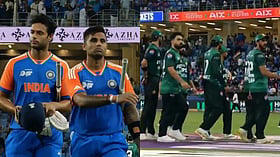
In contrast, India’s decision to play and win was the most effective answer possible. The players paid tribute to terror victims on the field by defeating Pakistan, not through empty gestures. The refusal to shake hands before (at the time of toss) and at the end of the match was itself a powerful symbol.
And now, as Pakistan fumes and threatens to quit the Asia Cup, the hypocrisy is laid bare. The very country that revels in demanding boycotts is itself violating the spirit of the ICC’s rules by using withdrawal as a pressure tactic. The PCB’s ultimatum to the ICC reeks of desperation—confirming not only their humiliation on the field but also their weakness off it.
The ICC rules are unambiguous: multilateral cricketing commitments are not subject to political bargaining. India understood this; Pakistan chose to ignore it. Modi’s quiet refusal to indulge the Opposition ensured India upheld its global obligations while simultaneously exposing Pakistan’s double standards.
The contrast could not be sharper. India abided by the rules, won convincingly, and earned respect. Pakistan, defeated and rattled, hides behind boycott threats that carry no credibility.
If there is one takeaway, it is this: when it comes to cricket’s global stage, discipline and maturity matter far more than loud posturing. Pakistan has only confirmed its humiliation by threatening to walk away. India, meanwhile, has shown that the best answer is to play—and win.

