


In a landmark ruling that cuts through decades of ambiguity, the Supreme Court of India has delivered a verdict that goes to the very heart of India’s reservation framework—and its integrity. A bench comprising Justice PK Mishra and Justice NV Anjaria has categorically ruled that a person who converts from Hinduism, Sikhism, or Buddhism to another religion cannot continue to claim Scheduled Caste (SC) status.
This is not just a legal clarification. It is a long-overdue moral correction.
For decades, India’s reservation system—designed as a tool of social justice—has been plagued by a fundamental contradiction. The Constitution (Scheduled Castes) Order of 1950 clearly restricts SC status to Hindus, later extended to Sikhs and Buddhists, because caste-based discrimination is rooted in these social structures. Yet, in practice, thousands who converted to other faiths continued to avail SC benefits, exploiting loopholes, administrative laxity, and political patronage.
The latest judgment shuts that door firmly.
At its core, the ruling is simple: you cannot exit a social system and yet continue to claim victimhood benefits tied to it. Conversion, by definition, is a renunciation of the religious and social identity in which caste disabilities are embedded. To then continue claiming SC reservation is not just contradictory—it is unjust to those who remain within that system and still suffer its consequences.
The case itself arose from a dispute involving a pastor who invoked provisions of the SC/ST (Prevention of Atrocities) Act, claiming caste-based discrimination. However, evidence showed that he had converted to Christianity and was actively practicing as a pastor. Both the Andhra Pradesh High Court and the Supreme Court rightly held that such a claim could not stand.
This verdict restores a principle that should never have been diluted: reservations are not poverty alleviation schemes; they are targeted remedies for specific historical injustices.
By allowing converts to continue claiming SC benefits, the system had effectively enabled a “double advantage”—freedom from caste identity in one domain, while retaining its benefits in another. This not only distorted the purpose of reservations but also deprived genuine beneficiaries—those who continue to endure caste-based discrimination within Hindu, Sikh, or Buddhist frameworks.
The implications are far-reaching.
First, it brings relief to countless deserving SC families who have long complained of being edged out by ineligible claimants. In states like Andhra Pradesh, particularly in coastal regions, the scale of conversions—often accompanied by continued claims on SC quotas—has been a subject of intense debate. This ruling will help correct that imbalance.
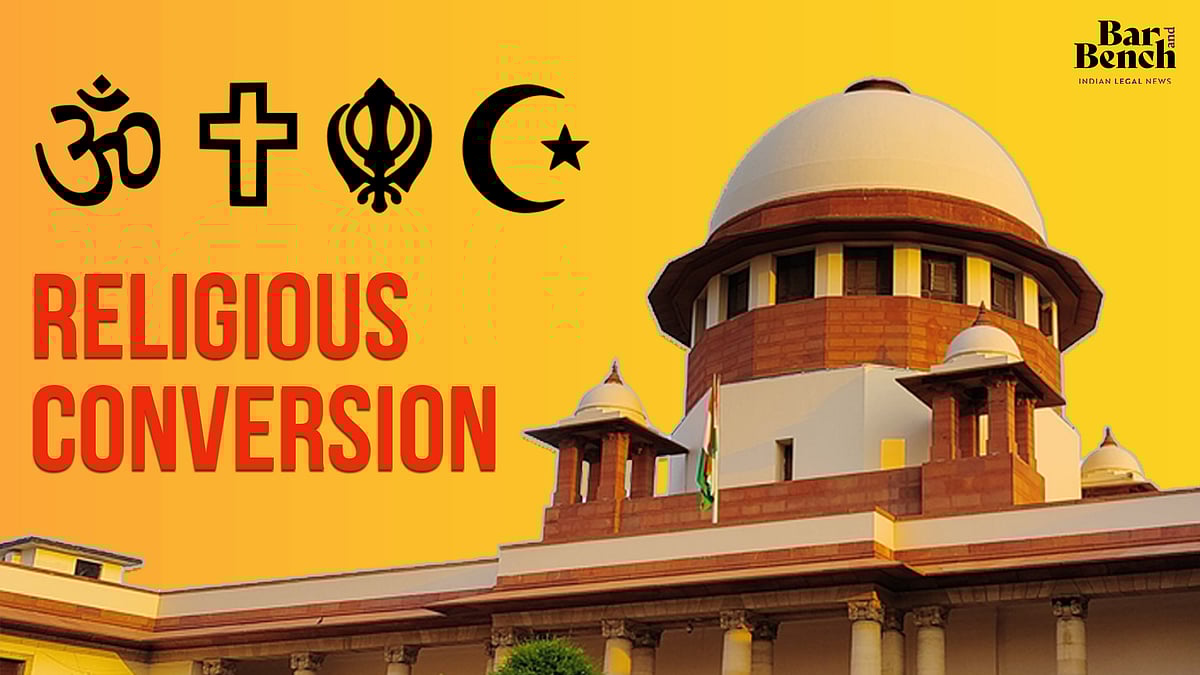
Image: Courtesy SC Bar Bench
Second, it sends a clear message to those who have treated conversion as both a spiritual shift and a strategic maneuver for material gain. Faith is a personal choice. But public policy cannot be gamed in its name.
Third, and perhaps most importantly, it reaffirms faith in the judiciary at a time when institutions are often questioned. The Supreme Court has demonstrated that it is willing to take a principled stand, even on politically sensitive issues, and uphold constitutional intent over populist pressures.
Critics may attempt to paint this verdict as restrictive or exclusionary. But such arguments miss the point entirely. The judgment does not prevent anyone from converting. It simply ensures that constitutional safeguards are not misused in the process.
India’s social justice architecture is far too important to be reduced to a loophole-ridden entitlement system.
This ruling must also serve as a springboard for broader reforms. The long-pending debate around a Uniform Civil Code, for instance, gains fresh relevance. A consistent, coherent legal framework—one that transcends religious silos—can strengthen the delivery of justice and eliminate ambiguities that invite exploitation.
For too long, political expediency allowed uncomfortable questions around conversion and reservation to be brushed under the carpet. Successive governments hesitated, wary of electoral consequences. Meanwhile, conversion activities—often backed by foreign funding—expanded unchecked in several parts of the country. The judiciary has now stepped in where politics faltered.
And rightly so.
This is not about targeting any community. It is about protecting the sanctity of a system meant to uplift the most vulnerable. It is about ensuring that benefits reach those for whom they were intended—not those who have found ways to game the system.
Above all, it is about restoring balance.
The Supreme Court’s verdict stands as a powerful reminder: justice is not merely about inclusion—it is also about fairness. And fairness demands that rights and responsibilities go hand in hand.
India’s reservation system has survived because it is rooted in a moral logic. This judgment strengthens that logic. It draws a clear line where ambiguity once thrived.
And in doing so, it delivers not just a legal verdict—but a necessary course correction for the nation.

