


By Vinay Rao
Hyderabad’s senior cricket season has ended not with clarity or confidence, but with a familiar sense of drift. This was not a campaign undone by bad luck or transitional growing pains; it was shaped by flawed selection logic, poor squad balance, and a visible absence of competitive hunger at the senior level. The draw against Chhattisgarh was not an anomaly—it was a fitting summary of a season that promised reform and delivered repetition.
The final match against Chhattisgarh encapsulated everything that went wrong. Hyderabad had the opposition reeling at 218 for 8, poised for an innings victory and a statement finish. Instead, the match drifted into a tame draw. What should have been a declaration of intent became yet another missed opportunity. For supporters seeking direction and momentum, the ending felt depressingly familiar: promise, once again, unconverted.
The reasons were plain to see. The bowling attack exposed an unhealthy overreliance on left-arm spin and a striking lack of variety. Tanay Thyagarajan and Aniketh Reddy bowled a combined 85 overs on the final day without finding a breakthrough. The absence of penetration allowed the eighth-wicket pair to add close to 200 runs, transforming a winning position into a stalemate and underlining the structural imbalance in Hyderabad’s bowling composition.
There were, to be fair, moments of genuine encouragement. Abhirath, Himateja, and Pragnay Reddy displayed the temperament and technical assurance to shoulder future batting responsibility. But beyond these three, both the batting and bowling units remain unsettled, offering little clarity about the team’s shape or spine for next season.
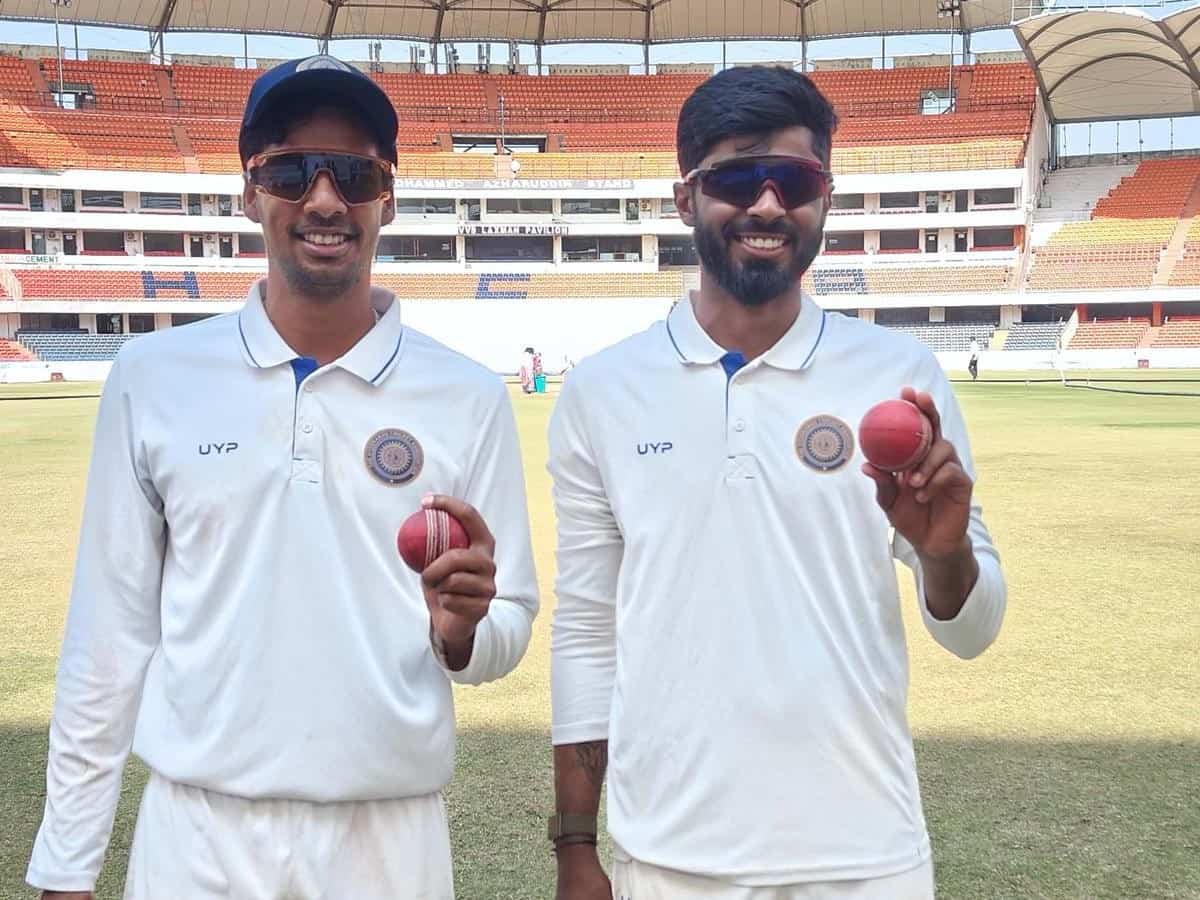
Tanay Thyagarajan and Aniketh Reddy
leads to the central question:
Has Hyderabad cricket truly progressed, or are isolated performances being mistaken for systemic improvement?
Administration Delivered, Selection Did Not
Credit is due to the Association for successfully conducting league cricket and providing a competitive platform for players to stake claims. The machinery of domestic cricket ran.
What failed was the bridge between performance and opportunity.
Selections this season appeared driven more by perception than production. The evidence is hard to ignore:
- Ashish Srivastava, the highest wicket-taker in league cricket, did not receive a single opportunity.
- A leg-spinner was overlooked, while multiple left-arm spinners were retained despite clear overlap and diminishing returns.
- Pranav Varma, Puniahah, and Nitin Yadav were fast-tracked from junior cricket, while consistent league performers such as Dinesh Rathod were sidelined.
- Players like Shashank Mehrotra, an Indian junior representative, and Rishiket Sisodia were never given a genuine breakthrough window.
- Proven domestic performers, including H K Simha, Sai Vikas Reddy, Sai Purnanand, Mickhil Jaiswal, Satwik, and others were not tried at all.
- At the same time, players linked to private academies—such as Nitish Kanala and Nitish Reddy—continued to receive extended runs.
- The continued backing of Varun Goud, while Rahul Buddi was repeatedly dropped, remains unexplained.
When selection patterns consistently contradict on-field performance, questions are not political—they are inevitable.
Three Years In: What Has Actually Been Built?
The selectors now stand at the end of a three-year tenure—long enough to leave behind a tangible legacy, not just a list of moments.
On paper, there are achievements:
- Promotion from the Plate Group
- Two Buchi Babu Trophy titles
- A Syed Mushtaq Ali Trophy group-topping finish this season
But context matters. The third year—the phase where stability, succession, and sustained competitiveness should converge—has been underwhelming.
Post Buchi Babu Trophy results tell a sobering story:
- Ranji Trophy: 5th out of 8
- Vijay Hazare Trophy: 6th out of 8
These are not the markers of a system moving forward with purpose. They reflect a team treading water.
Selection is not an exercise in certainty; it is an exercise in judgment. Winning squads and succession pipelines are not built through rigid belief systems. Unlike writing a script, cricket selection demands listening, learning, and recalibrating with what the scoreboard and league performances are actually saying.
Leadership Without a Map
Perhaps the most alarming takeaway from the season is the vacuum in leadership planning.
Hyderabad cycled through five to six captains in a single season. If merit and form dictate next year’s squad, several of them may not even feature.
There is:
- No long-term captain groomed
- No vice-captain in waiting
- No visible leadership roadmap
Equally troubling is the continued dependence on a small, familiar core of players who overlap with the association’s most controversial period and have remained in the system for close to a decade without approaching national contention. Their persistence appears driven less by sustained excellence and more by seniority, comfort, or influence.
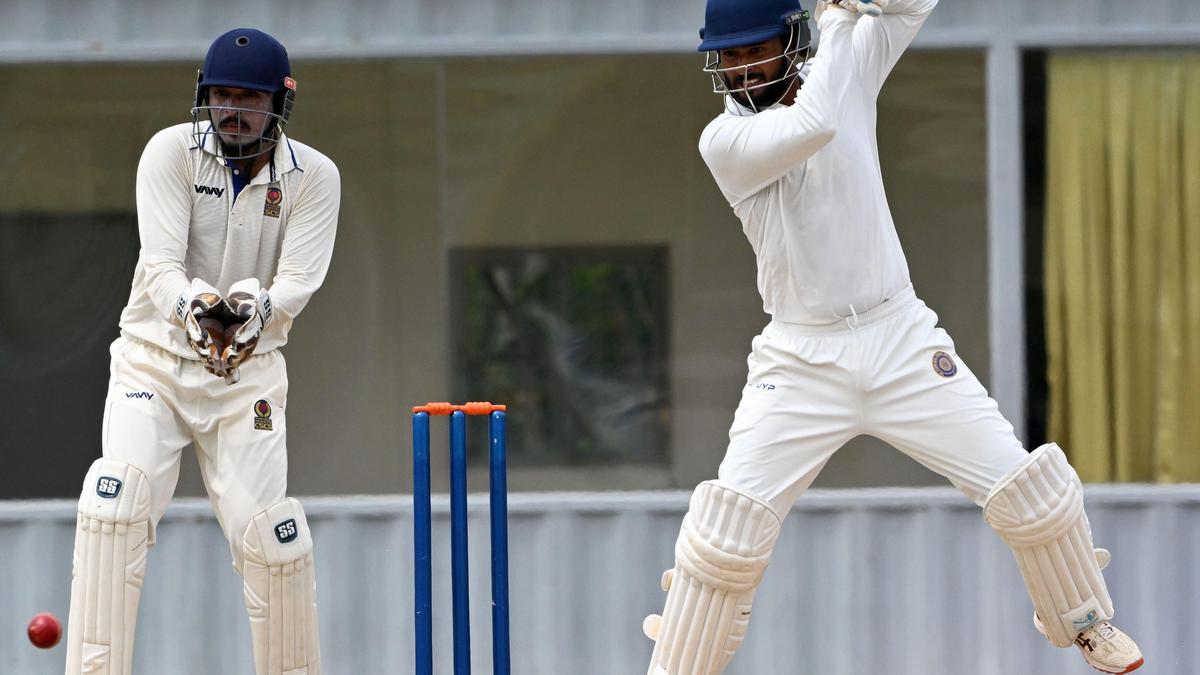
Abhirath Reddy
The problem is not the absence of talent.
It is the absence of imagination and courage in identifying and trusting replacements.
Buchi Babu: Triumph or Temporary Shield?
Hyderabad deserves credit for winning the Buchi Babu Trophy. But honesty demands context.
Most associations use this tournament to test second or third-string squads and broaden their talent pool. Hyderabad fielded its strongest possible XI. That decision should have triggered a conversation about depth and succession.
Instead, the victory became a shield—deflecting scrutiny of inconsistent selections and the subsequent underperformance in marquee tournaments.
A Rare Bright Spot
Aman Rao’s IPL selection stands out as a genuine positive—a reward for persistence through lean phases and a reminder that pathways can work when form is recognized.
How Successful Associations Think Differently
Consistently competitive associations operate on simple, ruthless principles:
- Performance drives selection, not perception
- Top performers are rarely ignored without explanation
- Transitions are planned two to three seasons in advance
- Future leaders are identified and groomed early
- Talent pools expand every season
- Pre-season tournaments test bench strength, not entrench hierarchies
- Selectors are evaluated on the depth created, not isolated trophies
These systems produce continuity, clarity, and credibility.
Conclusion: A Season of Questions, Not Answers
This season began with a promise—that performance would matter and Hyderabad cricket would turn a corner.
It ends with a ledger of uncertainty:
- No settled leadership
- No visible succession plan
- No expanded talent base
- No consistent reward for performance
If the senior structure looks fragile, the state of junior cricket is even more worrying—and demands urgent, independent examination.
Hyderabad cricket does not lack talent.
What it lacks is clarity of thought, courage in selection, and a vision that extends beyond the next match or the next headline.


