


Can there be a more stirring tribute to India’s 77th Republic Day than a roaring 3–0 lead over a visiting New Zealand side at Guwahati—just days before the T20 World Cup countdown begins? As the tricolour rises each January, so too does a familiar rhythm in Indian life: the crack of willow, the hum of a charged stadium, and the quiet confidence of a nation that has learned to compete—and win—on its own terms.
I write this not merely as a spectator, but as someone who grew up inside the game—an aggressive Ranji batter who learned early that cricket, like the Republic, is a story of evolution. From dusty maidans to floodlit coliseums, from borrowed kits to billion-dollar broadcasts, India’s cricketing journey mirrors the country’s march from scarcity to self-belief.
When India played its first Test in 1932, cricket here was a colonial inheritance. For decades, we were plucky underdogs—technically gifted, emotionally rich, but often short of depth and resources. The 1983 World Cup win changed the national psyche; television beamed belief into living rooms. Liberalisation in the 1990s brought sponsorships, academies, and professional pathways. The Indian Premier League (IPL), launched in 2008, then turned India into the game’s economic and cultural epicentre. Today, the Board of Control for Cricket in India (BCCI) is the sport’s most powerful institution, and the IPL is valued in the billions—an ecosystem that has redefined talent identification, fitness standards, and tactical innovation.
Statistically, the rise is staggering. India now boasts the largest player base globally, produces more international cricketers than any other nation, and regularly fields teams across formats that rank in the top three of ICC standings. Our domestic structure—Ranji Trophy, Syed Mushtaq Ali, Vijay Hazare, Under-19 pipelines—has become a conveyor belt of ready-made professionals.
Every era finds its spearhead. Krishnamachari Srikkanth’s audacity in the 1980s gave India a taste for early aggression. Sachin Tendulkar brought a classical, near-poetic dominance—100 international hundreds, 34,357 runs, and a global reverence few athletes in any sport have commanded. Virender Sehwag arrived like a storm, redefining what an opener could do—two Test triple hundreds, both scored at a run-a-ball tempo that felt heretical at the time. Rohit Sharma, on his day, turned batting into a demolition job—three ODI double centuries, a world record.
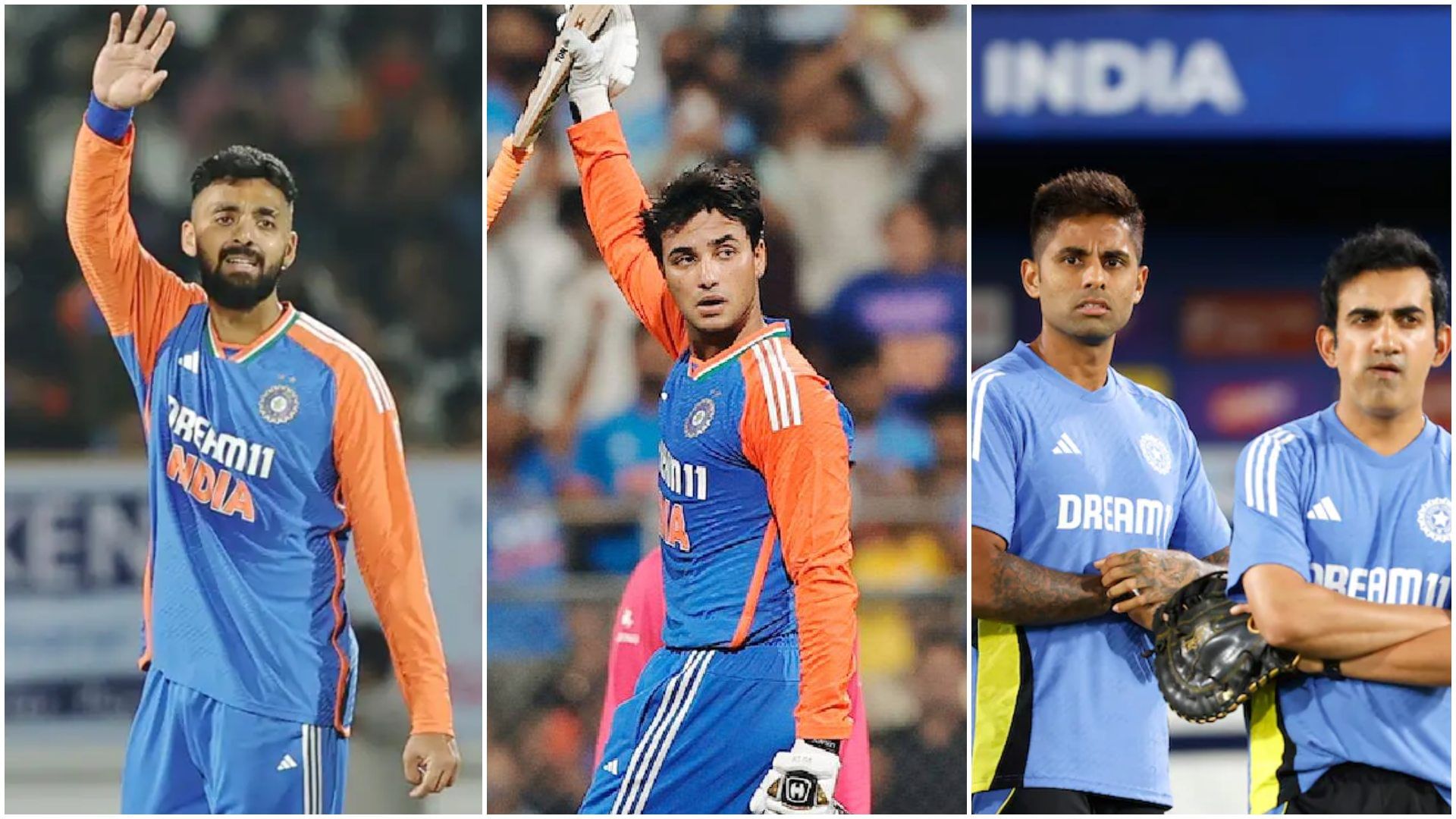
Now, a new generation carries the torch in the shortest format. Suryakumar Yadav—India’s T20I captain—plays 360-degree cricket, turning good balls into boundaries and pressure into possibility. Tilak Varma has shown composure beyond his years. And Abhishek Sharma, fearless at the top, embodies the modern creed: attack from ball one. Comparisons are always unfair, but the lineage is unmistakable—each generation stands on the shoulders of the last, swinging a little freer.
For context, the ceiling of T20 scoring keeps rising. International cricket’s highest total stands at 314/3 (Nepal vs Mongolia, 2023), while among Full Member nations, India’s 297/6 against Bangladesh (2024) and Australia’s 263/3 against Sri Lanka (2016) remind us that 300 is no longer fantasy—it’s a frontier.
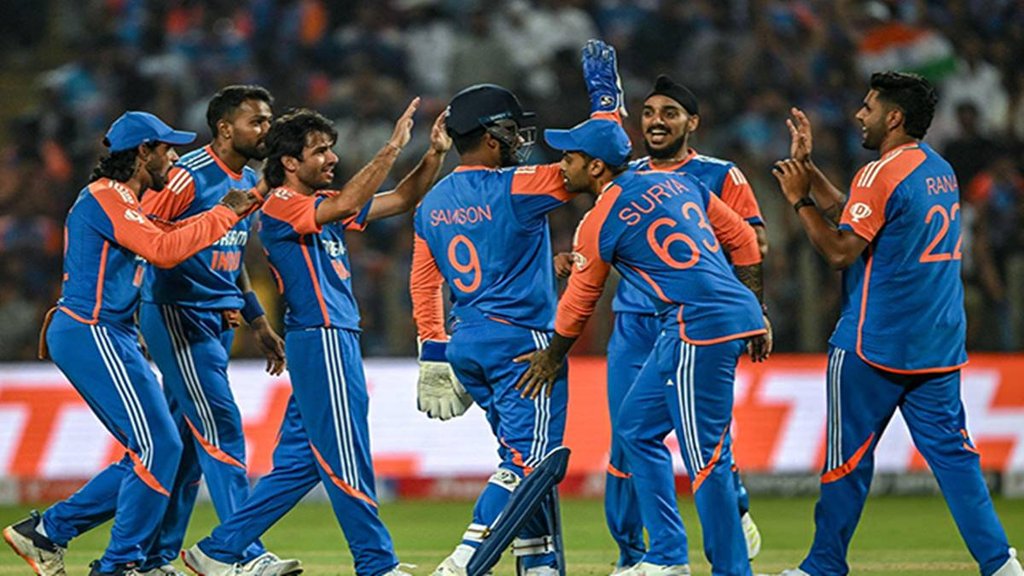
What separates contenders from champions is not star power at the top, but resilience down the order. India’s current T20 setup reflects that philosophy. Ishan Kishan and Sanju Samson—both wicketkeepers—are selected as much for their strike rates as their gloves. Shivam Dube and Hardik Pandya bring muscle and medium pace. Rinku Singh has made a habit of turning lost causes into last-over miracles. Axar Patel and Kuldeep Yadav offer spin with batting insurance. And then there is Jasprit Bumrah—arguably the finest fast bowler of his generation, a death-overs artist whose economy rates defy logic.
It’s this blend—power, precision, and versatility—that makes India look formidable heading into a World Cup where injuries have already thinned the ranks of rivals like Australia, England, South Africa, and New Zealand. Cricket, at its best, is a contest of equals, and one hopes every side arrives fit and fearless.
Sport in India today enjoys a visibility and encouragement that earlier generations could only dream of. Stadiums fill not just with fans, but with families. Grassroots academies dot towns and districts. National recognition of athletes has become routine, not rare. Cricket, once an elite pastime, is now a shared language across classes and regions.
As for geopolitics and scheduling disputes, the game has always lived in the shadow of larger realities. My hope remains that cricket continues to build bridges, even when nations disagree. The pitch, after all, is one of the few places where competition can coexist with respect.
On the eve of Republic Day, as fireworks crackle and anthems echo, Indian cricket stands as a reflection of the nation itself—confident, diverse, occasionally chaotic, but relentlessly ambitious. From borrowed bats to global broadcasts, from tentative footwork to fearless hitting, we have learned to play on our own terms.
If the men in blue lift the T20 crown again, it will be more than a sporting triumph. It will be another chapter in a longer story—of a Republic that keeps finding new ways to express its spirit, its swagger, and its will to win.
At 77, India doesn’t just celebrate its Constitution. It celebrates its confidence. And on the cricket field, that confidence is written in bold, unmistakable strokes—straight down the ground.


