


When Rohit Pawar, grandson of Sharad Pawar and son of former Maharashtra leader Ajit Pawar, hints that his father’s air crash was not an accident but a conspiracy allegedly involving the Telugu Desam Party and Union Aviation Minister Kinjarapu Rammohan Naidu, he is not merely raising suspicion—he is detonating a political firecracker without a fuse.
It is one thing to demand a thorough probe into an aviation mishap. It is entirely another to casually float allegations that an NDA ally orchestrated it—without a shred of publicly available evidence—simply because the same aviation company’s aircraft had previously been hired by N. Chandrababu Naidu or others in political circles. By that logic, every corporate flyer would become a suspect in every crash.
Let us apply basic reasoning. Political leaders across party lines charter aircraft from private operators. Aviation companies provide services to whoever pays. The mere fact that an aircraft operator had business dealings with a political leader does not transform routine commercial engagement into criminal conspiracy. If such tenuous links were sufficient to indict, half the political class would be perpetually under suspicion.
India’s political history is no stranger to conspiracy theories. During the long decades of Congress dominance, whispers of internal sabotage, power struggles, and “high command” machinations were commonplace. Even tragic deaths have not escaped speculation. The 2009 helicopter crash that killed former Andhra Pradesh Chief Minister Y. S. Rajasekhara Reddy spawned endless theories, some pointing fingers within his own party. Yet, no credible evidence ever substantiated those claims. Suspicion, however emotionally satisfying, is not proof.
What makes Rohit Pawar’s insinuation particularly curious is the political backdrop in Maharashtra. The state’s ruling alliance—the BJP-led Mahayuti—has already witnessed dramatic splits and re-alignments. Ajit Pawar broke away from his uncle Sharad Pawar’s NCP faction, aligning with the BJP after years of internal friction. That friction stemmed not merely from ideology, but from succession politics—ambition, legacy, and the desire for relevance in a shifting power matrix.
After the 2019 Assembly elections, Maharashtra saw one of the most dramatic post-poll sagas in recent memory. The BJP, despite emerging as the single largest party, fell short of a majority when its long-time ally Shiv Sena walked away over the chief ministerial post. Ajit Pawar briefly aligned with the BJP before political equations shifted again. Later, the Eknath Shinde-led split in Shiv Sena toppled the Maha Vikas Aghadi government, reshaping the state’s political arithmetic. Eventually, Ajit Pawar joined the BJP-Shinde dispensation, consolidating the Mahayuti’s hold.
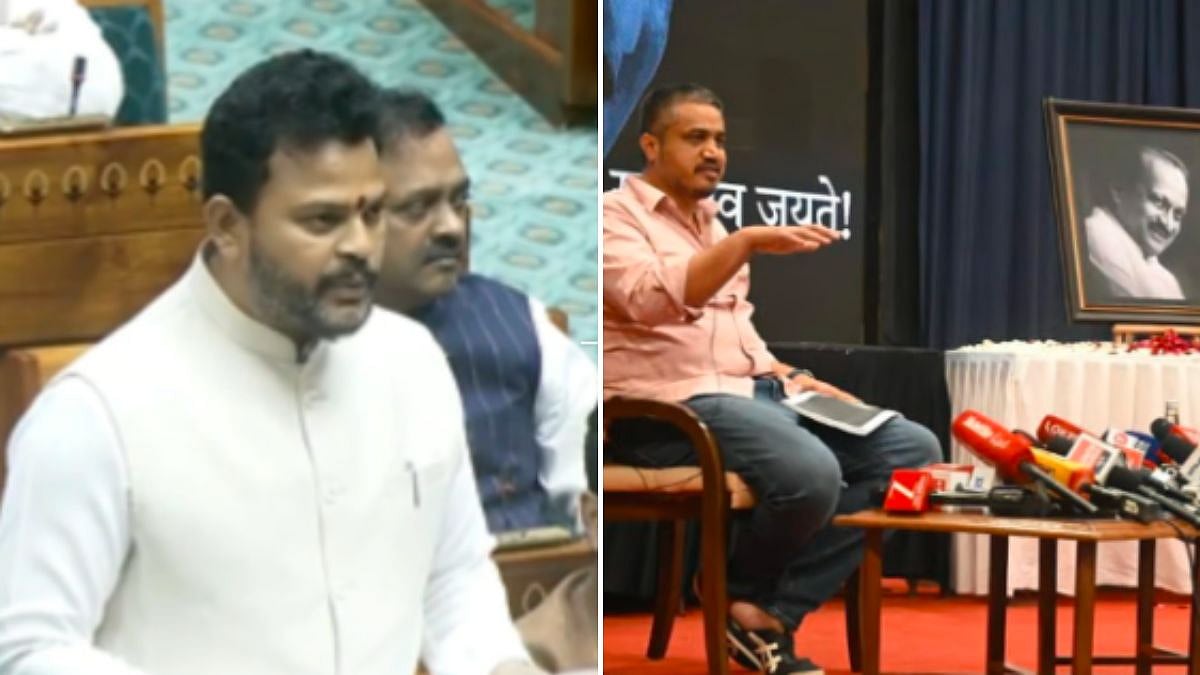
Against this turbulent backdrop, municipal elections delivered another blow to opposition factions. The BJP expanded its footprint, even capturing key urban bodies such as the Brihanmumbai Municipal Corporation. The Shinde faction performed reasonably well. In contrast, both NCP factions and the Congress suffered setbacks. Political capital shrank; bargaining power diminished.
It is in this climate of diminished leverage that Rohit Pawar’s conspiracy theory emerges. Is it grief speaking? Or strategy? Political observers suspect the latter. By casting a shadow over an NDA ally and a Union Minister, Rohit Pawar effectively signals discontent—perhaps an attempt to renegotiate space within the alliance framework, or to exert pressure amid talks of potential NCP reunification.
But such tactics carry risks. Accusing a Union Minister of complicity in an air crash without verifiable evidence is not a casual remark; it is an allegation that strikes at institutional credibility. Civil aviation accidents are investigated by professional bodies, not adjudicated in political press conferences. If there are lapses, they must be proven through data—flight records, maintenance logs, weather reports—not innuendo.
There is another uncomfortable contradiction. Reports suggest that soon after Ajit Pawar’s death, his widow aligned politically to secure a position of power. If the alliance was suspect enough to orchestrate a fatal conspiracy, would immediate political collaboration follow? The optics do not align with the accusation.
India’s democracy thrives on robust debate, not reckless insinuation. The threshold for alleging political assassination must be extraordinarily high. Otherwise, every tragedy risks being weaponised for tactical advantage. Grief deserves empathy; investigations deserve patience; politics demands responsibility.
Rohit Pawar may believe he is exposing a hidden plot. But absent compelling evidence, the charge appears less like a revelation and more like a pressure tactic—an attempt to regain relevance in a rapidly consolidating political landscape. In politics, narratives can be powerful tools. Yet when narratives outrun facts, they cease to illuminate truth and instead cloud it.
Conspiracies may excite public imagination. Evidence alone sustains credibility.


Very well analysed.