



In the last seven decades, Indian Railways has been synonymous with slowness, ticketless travel, poor value for money, dirty environment, security problems, and corruption. Introduction of the first indigenous state-of-the-art Vande Bharat train in 2019 marked the completion of Modi’s mantra cycle of Reform, Perform, and Transform in land transportation. In the last half-decade,164 Vande Bharat trains (82 services in both directions) became operational across India, serving 284 districts in 24 states and Union Territories, and the sleeper train version is becoming a dream come true, very soon.
This is a remarkable performance of a government that believes in the Make in India philosophy.
Railways are more or less the identity of a country, though armchair sceptics and cynics, especially in the media and our intellectual elite under foreign payroll to show India in poor light, always point out that it is a waste of resources that can be put to better use in a poor country like India with more subsidised schools, hospitals, child nutrition and so on. I think this section of society is blind, purposefully, to the spectacular developments that have taken place in our country in the last decade. For me it is a cruel joke that the present leadership is being denied the credit for making the country the fastest growing economy in the world, which has become the fourth largest in 2026 overtaking Japan and likely to be the third very soon pushing out Germany.
Governments need to have a decadal vision at least, if not of 1000 years, as Prime Minister Narendra Modi has. After Independence, India started well in establishing institutions in space, atomic energy, higher education like IITs, agriculture, dams and industry, but self-interest, nepotism, and a single family rule with short-term interests for power and greed for money took its toll and put India ina downward spiral with a few exceptions.
Just go back to two centuries, people would not have comprehended the need for a train as horses and oxen did their job well. But today, it is hard to imagine India without its regional trains and Metros in cities that have become the quick means of transportation. Do we ponder whether it is good to invest in airlines and express trains when more people use passenger trains and buses or is it good to invest in buses and passenger trains when many villagers still use bullock carts? Should not the government be investing in the fastest bullock carts? These are absurd arguments that need not be taken seriously.
The same can be argued on investments in technology and space missions like Mars or Lunar landings or even the Solar mission, and planning a space station of our own when some basics like clean drinking water and electricity need to be fixed; just last week, more than 15 people lost their lives due to contaminated drinking water in Indore. For sure, we need to invest in the basic needs, but this idea of sequentially doing things doesn’t always work. We have to build the basics as well as the advanced sciences in parallel, which this government had sufficiently demonstrated by bringing out 25 crore people out of poverty in the past eleven years, forming a strong “neo-middle class” that is shaping the modern India.
It is time that India steps into the next era of innovation in technology. High-speed internet has become one of the basic necessities today. It gives access to an unlimited sea of knowledge and technology, which can be used to develop new products and create millions of jobs. Similarly, high-speed trains are the future, as we can see in the developed countries in Europe or in East Asia. They are far cleaner and more convenient than air travel and much more convenient than regular train travel. It would push both business and tourism.
Today, we realise the importance of travelling by air and how much time it can save, which can be used for doing many productive things. Time is money. Development cannot be brought in a single day. These are long-term projects, and their benefits are realized after their completion. Hence, it would be foolhardy to focus on one problem at a time and keep on waiting for its completion before starting new things in our country, which has varied problems to address.
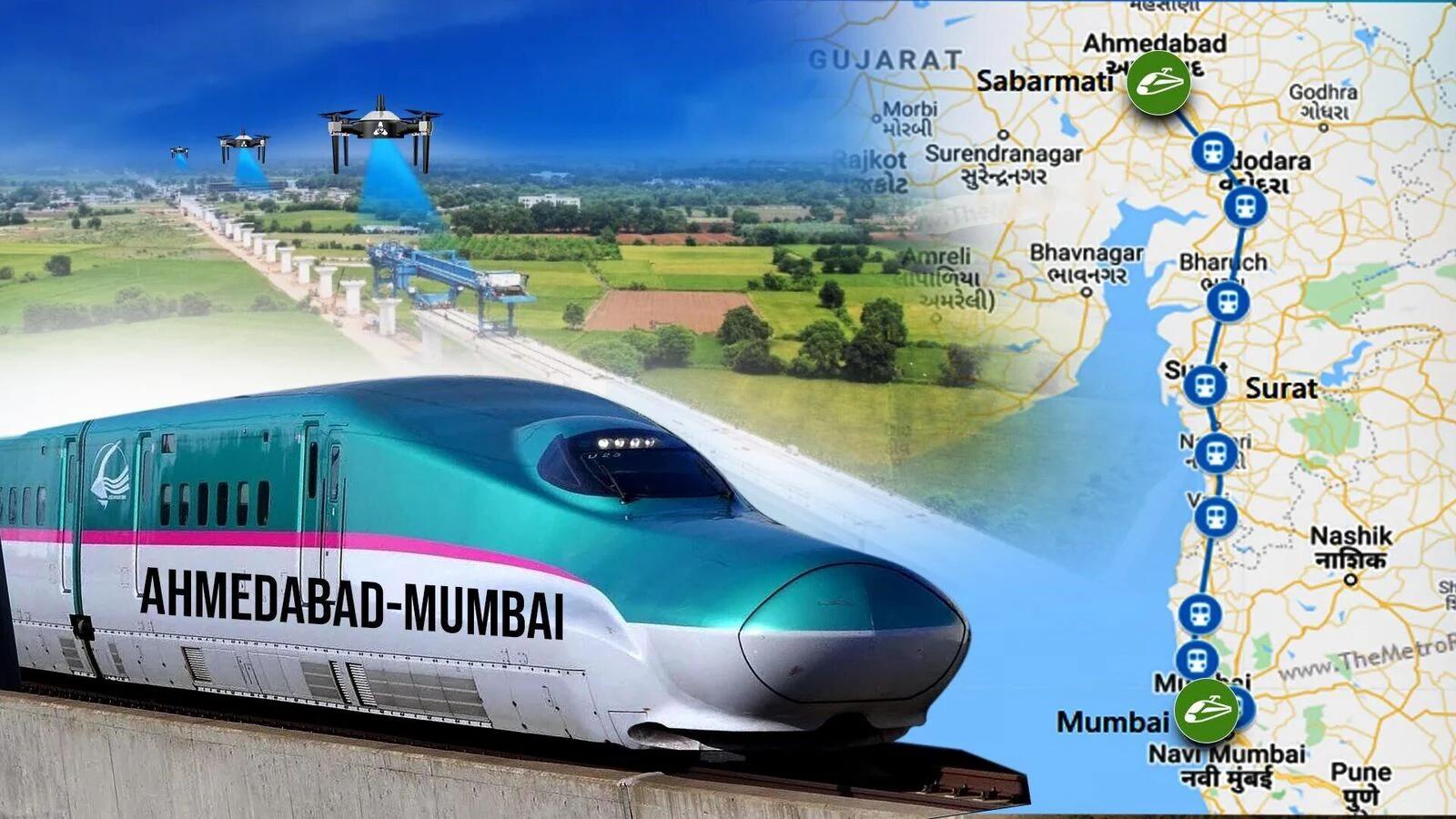
The Indian Bullet Train reflects India’s aspirations to make up for the lost time and become a developed nation before it completes a century of Independence. There are always some cynics belonging to the chip of the old block who did not pay attention to India, which was lagging behind in the last several decades. Basic things like toilets, electricity, and access to the banking system were absent from millions of people’s lives until Narendra Modi took over the reins. This section of society still doesn’t care much about the “neo-middle class” who are finally catching up, with gas stoves instead of wood-burning ones, accessing the world through cheap internet connections on their phones, and rapidly coming of age.
As Modi marches on, this section of society has become irrelevant. This bold initiative of the Modi government will go into history as the harbinger of change of the way railways are known for the same way Shri Vajpayee is identified with his initiative of golden quadrilateral highways. We cannot let our past cloud our future. Remember, the future is not something we enter; the future is something we create.
