


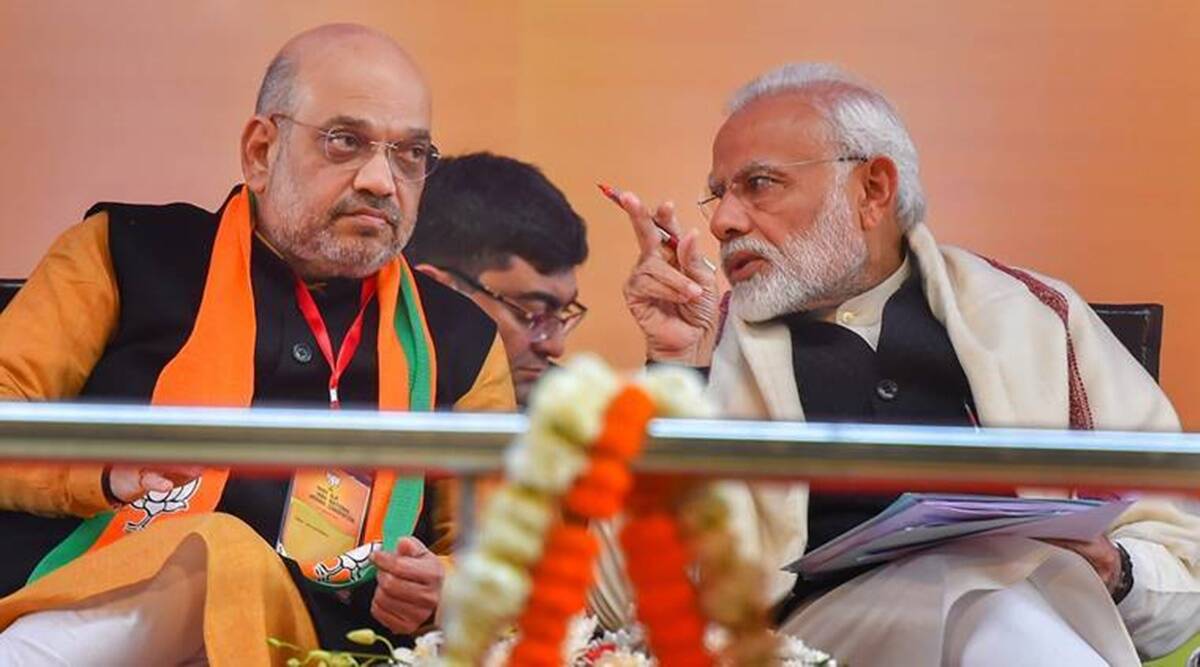
With Assembly elections approaching in Assam, West Bengal, and Puducherry, the Bharatiya Janata Party’s political trajectory for 2026 is no longer speculative—it is visible, deliberate and assertive. The Modi–Amit Shah combine continues to dictate the tempo of national politics, and increasingly, even their critics are forced to acknowledge this reality.
It is telling that Prashant Kishore—once celebrated as the Opposition’s master strategist—publicly admitted that the BJP remains electorally invincible for the next two decades. This admission did not emerge in isolation. It followed his own failed experiment in Bihar, where his political intervention failed spectacularly, even as the BJP–JD(U) alliance swept back to power with a commanding mandate. The scale of that victory sent tremors across the Opposition ecosystem.
The Bihar verdict proved more than a state-level outcome; it exposed the structural hollowness of the much-touted INDIA (Indi) alliance. The so-called 24-party coalition began unravelling almost immediately, with internal recriminations replacing grand rhetoric. For regional satraps like Akhilesh Yadav in Uttar Pradesh and Mamata Banerjee in West Bengal, Bihar served as a cautionary tale. The RJD’s worst-ever electoral drubbing underlined a harsh truth: caste arithmetic and emotional sloganeering are no longer sufficient substitutes for credibility and governance.
Within the alliance, dissent has grown louder—particularly against Rahul Gandhi. Increasingly, Congress’s own allies privately and publicly concede that under his leadership, the Opposition has little chance of reclaiming power at the Centre. While few openly admit it, the Congress’s “vote theft” narrative in Bihar proved electorally disastrous, alienating voters rather than mobilising them.
More damaging was the collapse of trust. Welfare promises that worked as slogans failed the credibility test. The BJP-JD(U)’s targeted monthly financial assistance for women struck a chord, not merely because of the amount involved, but because voters trusted its delivery. In contrast, similar guarantees made by Congress governments in Karnataka and Telangana remain either partially implemented or delayed, reinforcing voter scepticism. Even promises of one job per family by the RJD–Congress alliance failed to generate enthusiasm. The message from voters was unambiguous: credibility matters.
Against this backdrop, the Election Commission of India’s Special Intensive Revision (SIR) of electoral rolls has emerged as a decisive political variable. In Bihar alone, nearly 64 lakh names were removed, including deceased voters and illegal migrants. Despite Opposition challenges in the Supreme Court, the exercise withstood legal scrutiny. Encouraged, the ECI has extended similar revisions across poll-bound states and beyond.
Reports suggest that nearly two crore illegal voters have already been identified nationwide. Nowhere has this caused greater political discomfort than in West Bengal, where the ruling Trinamool Congress has historically benefited from unchecked migration from Bangladesh and Myanmar. Demographic changes in several districts—where Hindus have reportedly become minorities—have triggered social anxiety and political churn, further weakening the TMC’s grip.
Ironically, what should have been an anti-incumbency election in West Bengal may turn into an opportunity for the BJP. Governance fatigue, demographic concerns and electoral roll cleansing together create fertile ground for a political shift.
Assam, meanwhile, presents a different picture. Under Chief Minister Himanta Biswa Sarma, the BJP combines governance delivery with firm action on illegal immigration. The ongoing SIR exercise is likely to further consolidate its core voter base, positioning the party for a comfortable return to power.
In Puducherry, anti-incumbency against the DMK—after nearly a decade in power—creates space for a BJP–AIADMK resurgence. As a Union Territory, Puducherry offers the BJP strategic visibility, and early indicators suggest a growing organisational foothold.
The irony of Prashant Kishore’s political journey deserves mention. From advising Narendra Modi in Gujarat to engineering Mamata Banerjee’s return in West Bengal and scripting the YSRCP’s victory in Andhra Pradesh in 2019, his successes once defined modern electioneering. Yet, his absence—or rejection—by parties such as the Congress and the BRS has coincided with their steady decline. Andhra Pradesh slipped out of the YSRCP’s grasp; the Congress lost multiple states and, despite doubling its Lok Sabha tally in 2024, failed to mount a credible national challenge.
Which destinations is the BJP now meticulously planning to conquer next? In my view, Telangana stands out. The intent is no longer subtle. Firebrand former state BJP president and Union Minister Bandi Sanjay Kumar has already signalled the party’s seriousness. The BJP cadre is working like a well-oiled machine, a fact evident in recent panchayat poll outcomes. This organisational strength is likely to have a visible impact in the upcoming civic and other local body elections scheduled later this year.
The broader lesson is unmistakable. Indian voters are no longer swayed by slogans alone. They reward consistency, governance, and institutional credibility. As 2026 approaches, the BJP’s political roadmap—anchored in leadership clarity, welfare delivery, and electoral discipline—stands in sharp contrast to an Opposition still struggling to define both its purpose and its direction.
For now, the BJP’s message is not just loud. It is strategically clear.

