


When senior Congress leader Digvijay Singh publicly praised the RSS–BJP ecosystem last week, calling it a disciplined organisation where even a grassroots worker can rise to the very top, it was not just another stray tweet. Accompanied by a telling photograph of Narendra Modi seated humbly at the feet of L.K. Advani, the remark detonated like a political bomb within the Congress party.
The outrage was instant, predictable—and revealing. For a party that prides itself on tolerance and pluralism, Digvijay’s candid observation was treated as heresy. Why? Because it exposed a truth the Congress leadership has spent decades denying: that merit has space in the BJP, while entitlement reigns supreme in the Congress.
The discomfort was not about Modi. It was about the mirror Digvijay Singh accidentally held up to his own party.
Here was no political lightweight speaking. Digvijaya Singh is a former Chief Minister of Madhya Pradesh, a Congress loyalist for decades, and long considered part of Rahul Gandhi’s informal “guiding circle”—the so-called ideological conscience of the party. When such a figure acknowledges the BJP’s organisational depth and internal mobility, it raises an uncomfortable question: was this frustration finally spilling over, or was it an involuntary admission of reality?
Digvijaya Singh’s remark touched a raw nerve because it highlighted what Congress insiders know but seldom say aloud. In the BJP, Narendra Modi rose from being a pracharak with no family backing, no political surname, and no inherited constituency. His ascent was slow, contested, and organisationally validated—first within the RSS, then the BJP, and finally through repeated electoral mandates.
Contrast this with the Congress, where leadership succession has been frozen for nearly five decades. From Indira Gandhi to Rajiv Gandhi, Sonia Gandhi to Rahul Gandhi, the party has functioned less like a democratic institution and more like a. Talent outside the Gandhi ecosystem may exist, but it rarely thrives. Loyalty matters more than competence. Lineage outweighs performance.
Digvijay’s praise, therefore, was not admiration—it was an indictment.
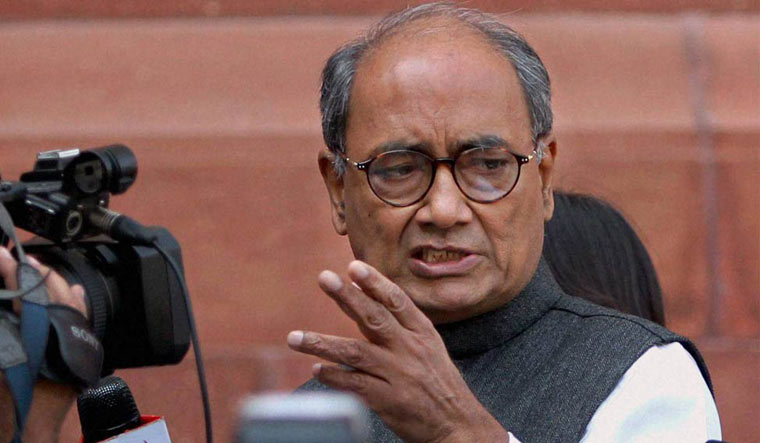
This was not the first time a senior Congress loyalist publicly unravelled under the weight of frustration. Mani Shankar Aiyar, once among the most articulate defenders of the Gandhi family, is a textbook example. Aiyar invested years trying to intellectually prop up Rahul Gandhi, even attacking Narendra Modi with elitist slurs like “chaiwala” and “neech aadmi” ahead of the 2019 general election.
Those remarks backfired spectacularly.
Instead of hurting Modi, they humanised him. Instead of helping Congress, they exposed its arrogance. The result? The BJP returned to power with an even larger mandate, while Congress slumped further—winning just 52 seats in 2019, its second-worst performance in history after the 2014 debacle.
Aiyar later admitted, almost ruefully, that the Congress rewards entitlement, not ability—and that real authority rests with the Gandhi family, not elected party bodies. It was less a confession than a surrender.
Digvijaya and Aiyar were not isolated cases. The rebellion simmered openly in 2020 when a group of senior leaders—later dubbed the G-23—wrote a letter to Sonia Gandhi demanding internal democracy, organisational elections, and decisive leadership. Among the signatories were stalwarts like Ghulam Nabi Azad, Kapil Sibal, Anand Sharma, Bhupinder Singh Hooda, and Manish Tewari.
Their demand was modest: reform or perish.
The response was predictable: denial, delay, and dismissal.
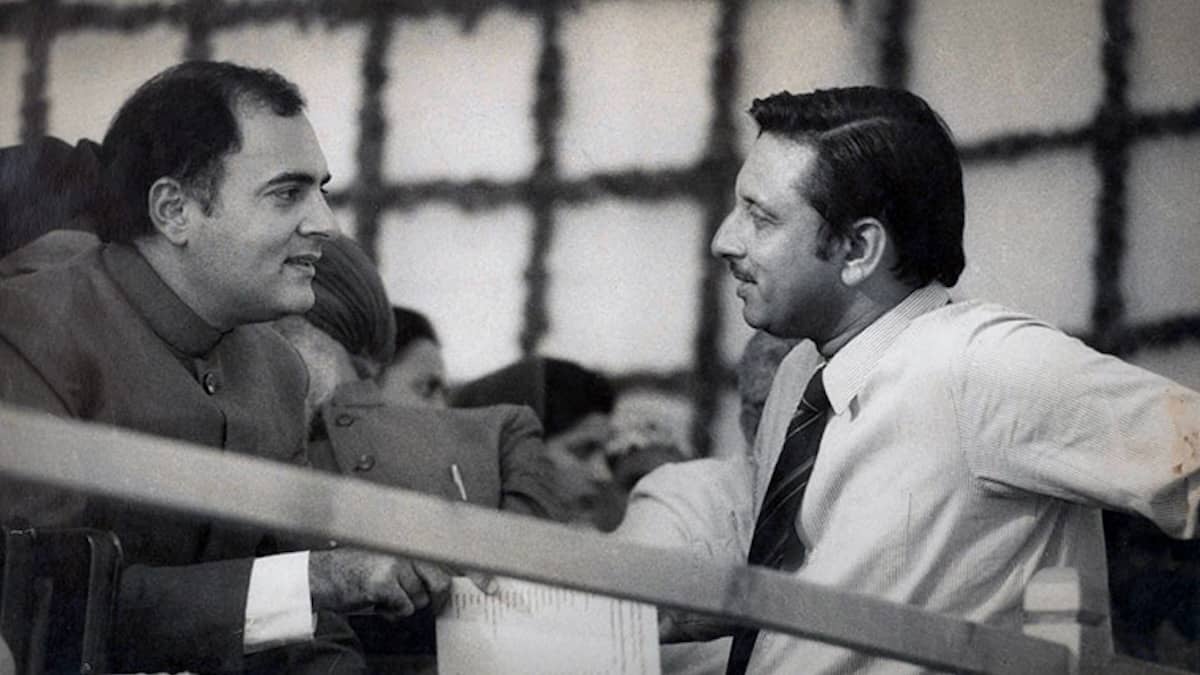
Within two years, Ghulam Nabi Azad quit the party, calling it “irrelevant” and “controlled by remote control.” Kapil Sibal left and later entered the Rajya Sabha with support from non-Congress parties. Others retreated into silence, marginalised but unwilling to openly rebel.
The Gandhi family remained untouched.
Since 2014, Congress has steadily lost political ground:
- Reduced to below 50 seats twice in the Lok Sabha
- Lost traditional strongholds across Uttar Pradesh, Bihar, West Bengal, Odisha, and even parts of the South
- Failed repeatedly to convert anti-incumbency into electoral revival
- Rejected by voters even when the BJP faced economic headwinds or global disruptions
Meanwhile, the BJP expanded—organizationally and electorally—into regions once considered Congress bastions. That did not happen by accident. It happened because the BJP invests in cadre-building, leadership grooming, and ideological coherence.
Digvijay Singh merely stated what election results have been screaming for a decade.
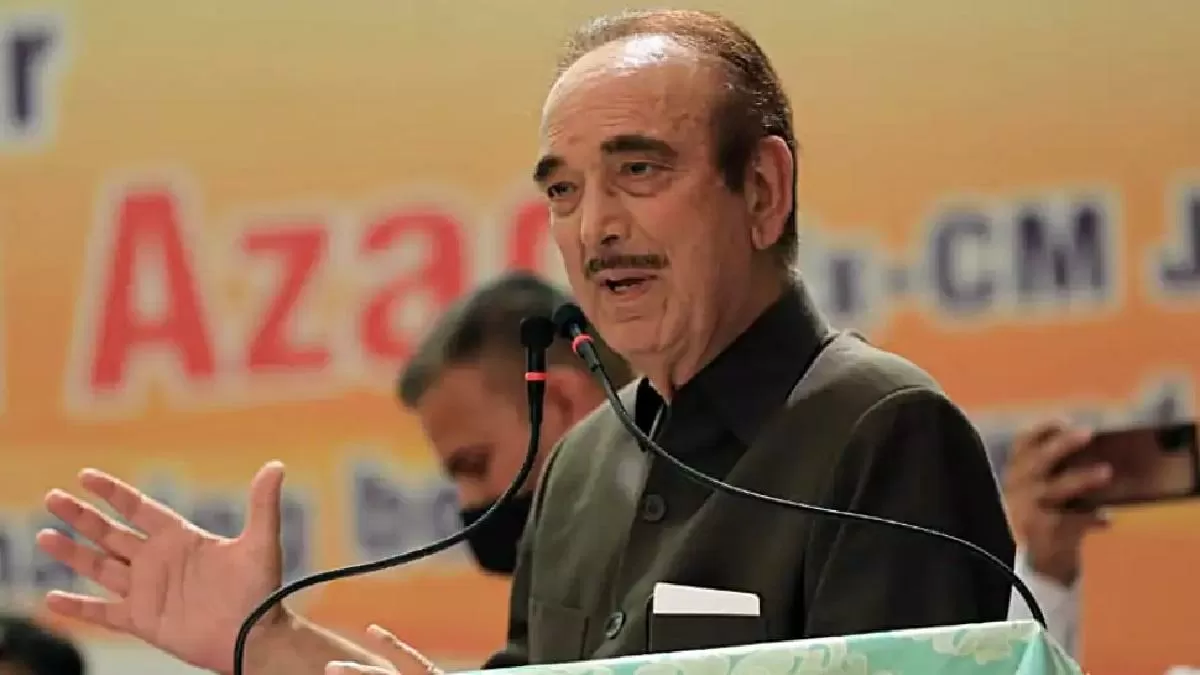
Was Digvijaya Singh’s tweet a carefully calculated move? Unlikely. It appeared spontaneous, almost unguarded—perhaps the most honest thing he has said in years. That is precisely why it rattled the Congress.
The party does not fear the praise of the BJP. It fears introspection.
Because the moment Congress accepts Digvijaya’s observation as fact, it must confront an inconvenient truth: no amount of attacking Modi can substitute for internal reform. No narrative can mask structural decay. And no dynasty can indefinitely command obedience without delivering results.
Digvijaya Singh’s praise was not about Modi. It was about Congress’ inability to produce one.
And that, more than any BJP victory, explains why the party continues to drift—leaderless, listless, and trapped in the shadows of its own surname.

