Upadhyayula Lakshman Rao
The inner dynamism of the Veda finds its serene culmination in the Upanishad. The one is the rising sun; the other its gathered radiance at noon. There is no rupture between them, no renunciation of life’s bubbling enthusiasm, but rather an enrichment of existence through knowledge refined by awareness. The Veda proclaims; the Upanishad interprets. The Veda sings; the Upanishad reflects. The Veda invokes the cosmic powers; the Upanishad gathers them into a single flame of consciousness.
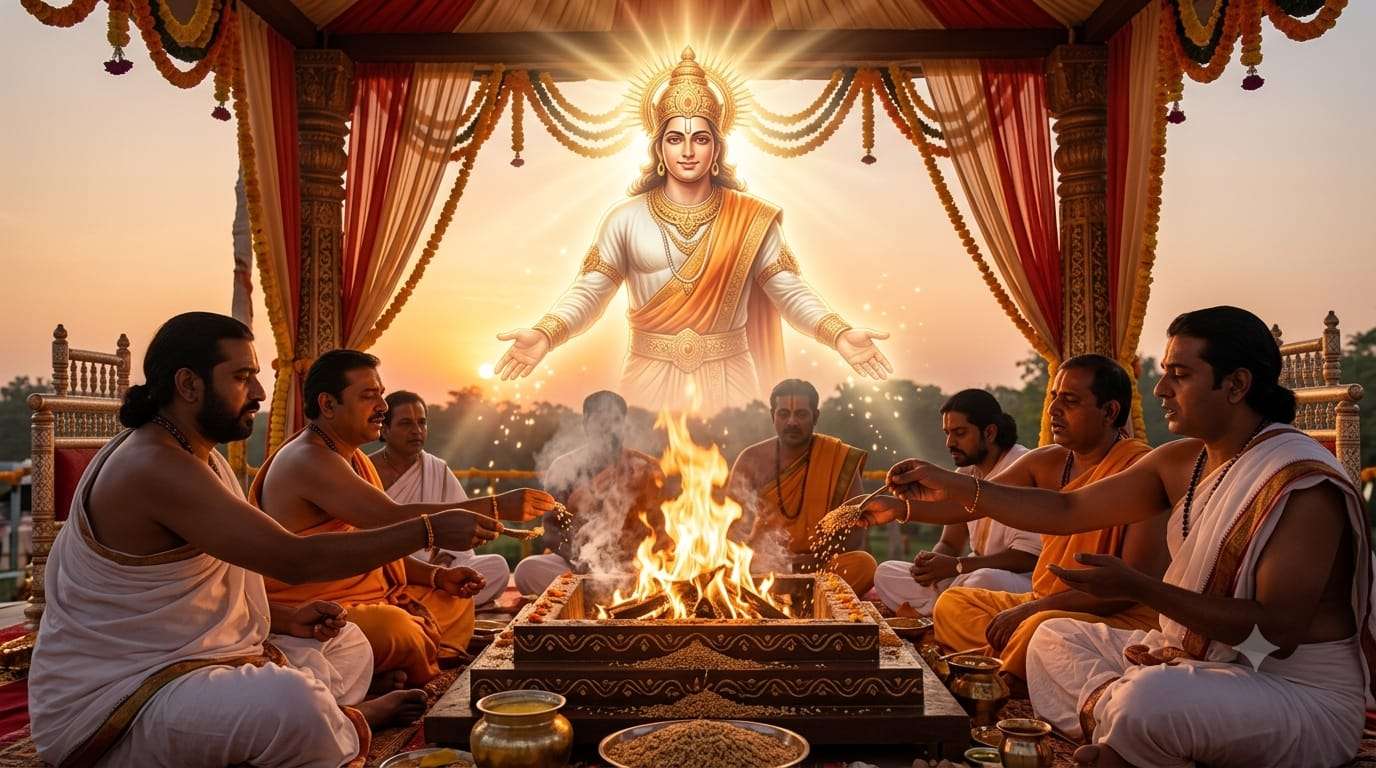
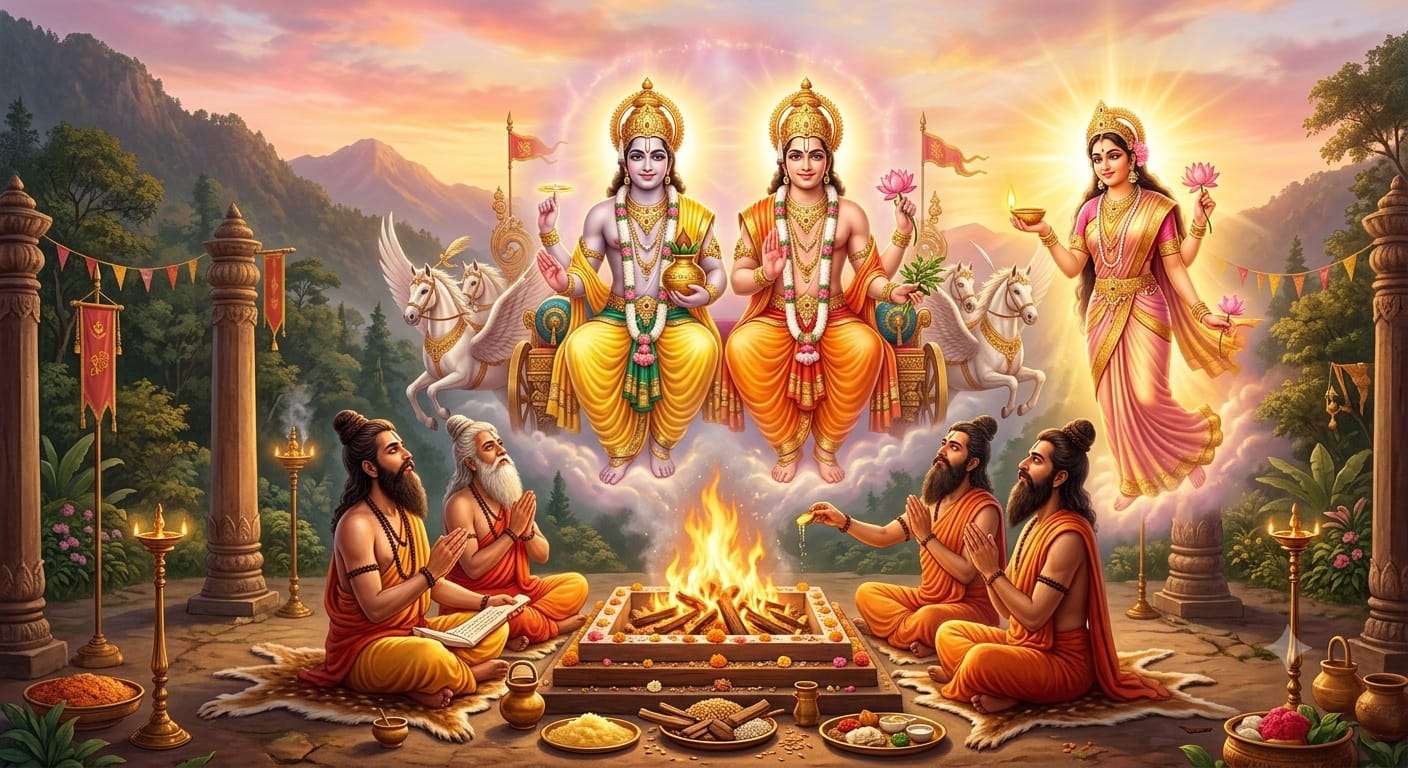
The hymns of the Rigveda resound with invocations to Agni, Indra, Varuna, and the many luminous manifestations of the Divine. To the untrained mind this plurality may seem a proclamation of many gods; yet within the very cadence of the Vedic mantras lies the seed of unity. The seer declares: “Truth is One; the wise speak of it in many ways.” This seed blossoms fully in the Upanishadic vision. The Chandogya Upanishad proclaims “Tat Tvam Asi”—Thou art That—dissolving multiplicity into a boundless oneness. Thus, the Upanishads do not negate the Vedic deities; they illumine their inner essence.
The Upanishadic enlightenment was never conceived as a withdrawal from life. It was not an escape into abstraction but a deepening of participation. Knowledge here is not cold speculation but transformative insight. It refines conduct, ennobles thought, and harmonizes action. The discipline of the ashram, often undertaken in youth, was not to suppress vitality but to direct it. The young brahmacharin, dwelling in forest hermitages, gathered brilliance in silence so that he might later illumine society with balanced wisdom.
In the forest academies described in the Brihadaranyaka Upanishad, we behold dialogues vibrant with inquiry. Yajnavalkya debates with Gargi Vachaknavi in a royal court, demonstrating that gender posed no barrier to spiritual pursuit. Gargi’s fearless questioning of the nature of reality stands as testimony that the Upanishadic wisdom was open to all minds endowed with sincerity and courage. Knowledge was not the preserve of lineage but the reward of earnest seeking.
The culture shaped by the Veda and the Upanishad did not forbid the householder’s life. Many sages were married, establishing families grounded in sacred knowledge. Yajnavalkya himself conversed profoundly with his wife Maitreyi, revealing that immortality is not attained through wealth but through realization of the Self. The ideal was not renunciation of responsibility but purification of motive. The householder, the hermit, and the wandering mendicant were seen as successive harmonies in a single symphony of life.
The initiation of youth in distant ashrams was a deliberate cultural design. Their energies, disciplined and merged with the rhythms of nature, were freed from untamed anger, restless ambition, and anxiety for results. Through service, contemplation, and study, they learned to act without bondage to fruit. When times of decay and degeneration arose, these trained spirits stood as luminous sentinels. Their strength lay not in weaponry but in clarity; not in dominion but in unity and faith.
This vivacious spirit gradually drew multitudes from devotion to many forms toward understanding the single cosmic principle of creation, sustenance, and dissolution. The Upanishads distilled the cosmic functions into the triadic vision later symbolized in Mandukya Upanishad as the waking, dreaming, and deep sleep states unified in the fourth Turiya, pure consciousness. Creation leads to growth; dissolution to regeneration. Thus the cycle itself becomes sacred, and decay is understood as preparation for renewal.
The strength of Vedic culture penetrated deeply into the human psyche. It struck chords of unity amidst diversity, shaping a civilization that saw the sacred in river and mountain, in teacher and student, in ritual and reflection. The beauty of the Upanishadic method lay in the intimate bond between preceptor and disciple. Knowledge was transmitted not merely through text but through living dialogue. The teacher did not impose dogma; he awakened perception. The disciple did not memorize mechanically; he assimilated truth through contemplation. This pure pedagogy, forged in the forest academies, stands unique in the ancient world—not easily imitated, for it demands character as much as intellect.
The Upanishads also performed a subtle miracle: they broke open the hard cage of poetic symbolism and rendered profound truths intelligible to earnest minds. Without diminishing the grandeur of the Vedic hymns, they translated vision into lucid insight. The cosmic sacrifice became the inward offering of ignorance into the fire of awareness. The outer altar found its counterpart in the heart.
Thus the dynamic Vedic culture, invigorated by Upanishadic introspection, flowed like a living ocean. Its waters were neither stagnant nor sectarian. They bore the conviction that this wisdom is a shared heritage, an ancient virtue belonging not to a tribe or age but to humanity. Through centuries of change, invasion, and reform, this current endured because it was rooted not in rigid structure but in living realization.
In the end, the Veda and the Upanishad are not two but one continuum—the call and its comprehension, the hymn and its heart. Together they forged a civilization where knowledge did not estrange man from life but united him with its deepest source; where youthful ardor was refined into luminous responsibility; and where unity in diversity was not a slogan but a realized truth.