


Come September, people in Delhi dread the worsening of the air quality they breathe. Media gets hyperactive at prime time with experts debating and spokespersons of political parties pointing fingers at each other on the high values of AQI (Air Quality Index) and the people of Delhi and NCR are left to the mercy of God Almighty to fend for themselves. It’s an annual affair and business as usual after February till the cycle repeats.
For people living in the southern part of India, we gather information from both the print as well as electronic media, that it’s a phenomenon that occurs post-Diwali, somewhere in October. Some argue that this is the time when the stubble or the Agri-waste burning at a massive scale by the farmers of Punjab, Haryana, and the neighbours of Delhi are primarily responsible for this annual ritual, to which the vehicular traffic and other construction activities add their contribution.
So, the question a hapless citizen of the country ask, “if the reason behind the disease is so precisely known, are we not competent enough to fix the problem?
It is the duty of the government to inform and support farmers to follow safe waste disposal methods. Agri waste can be used as an ingredient in preparing organic manure, and can also be used as fodder for cattle. In our country, we have diversity in every aspect, and it is applicable to our soil, too, where sowing and reaping the yield is staggered over the calendar year. So, surplus waste in one area can be shipped to other parts of the country to be used in manure making or for feeding livestock. This way, organic manure will also prevent our lands from dangerous pesticides.
The government needs to stop burning waste recklessly as we do everywhere in the country. Attractive schemes and encouragement on investment in large-scale biomass plants is the need of the hour. Some of the rural areas surrounding NCR and Delhi, still burn cow dung and wood for cooking; this needs to be eradicated. A whole bunch of factories and brick kilns that operate out of bounds of law need to be formalised, and stricter environmental laws need to be put in place.

We also need to come out with out-of-the-box ideas to address the issue. Creating enough viable cities surrounding Delhi could help alleviate population pressure on the city, thereby reducing vehicular movement. The government needs to use technology by having massive air filters in the city, clearing up air like what China does, though it has its own limitations. Carpooling should be encouraged, and metro services should be opted for online goods and groceries deliveries, or even the use of drones running on electric power should be tried as a pilot project.
There is no point on fighting over an agenda-driven issue like Diwali; there are several other reasons that collectively contribute to the problem. Some of the problems relate to natural causes beyond our control. Like the temperature inversion during winter when cold, dense air gets stuck under a layer of warmer air, preventing vertical mixing and dispersal. This phenomenon significantly worsens Delhi’s air pollution by trapping pollutants like smog, dust, and smoke near the ground, acting like a lid.
In general, air pollution has been a problem in northern India for over 2 decades. I vividly recollect a one-off Test match that I witnessed in Delhi’s Feroz Shah Kotla (now Arun Jaitley Stadium) from October 10-13, 1996. It was a historic moment when India beat Australia by 7 wickets, marking the start of the Border-Gavaskar Trophy rivalry, with Nayan Mongia starring with a match-winning 152, supported by Sourav Ganguly and Anil Kumble’s bowling. But the match was also marred by a threat to boycott by the Australian cricket team to play in Delhi due to severe winter smog, with players complaining of health issues, leading to media outcry and demands for government action, highlighting a major pollution crisis that affected international sports. Even as recently as in December 2025, fourth T20 match between India and South Africa was abandoned due to foggy conditions in Lucknow with AQI exceeding harzardous limit to more than 400.
So, it is not that the problems or solutions are unknown, just that we don’t put them on a high priority. No party so far has made pollution as their top electoral plank. The day it is done, things will change.
We must care for our environment as it is our mother. It gives us everything without asking, be it oxygen, fire or water, food in the form of plants or animals. We are all consumers, and what we give in return, carbon dioxide, sulphur, and many other acids, which are harmful to the environment, which threatens other living beings on earth. We should strive for a greater cause for generations and millennials to follow. Since we do not have the ability or the power to create or design an environment, we should at least give a thought to protecting it rather.
And this is what our ancient wisdom also tells us in Atharva Veda 12.1, The Bhūmi Sūkta, that presents Earth as an autonomous life-sustaining power, revered as mother, moral witness, and foundation of human diversity. It is one of the earliest and most comprehensive hymns dedicated to Mother Earth that articulates a proto-ecological worldview integrating cosmology, agriculture, social order and ethical responsibility.
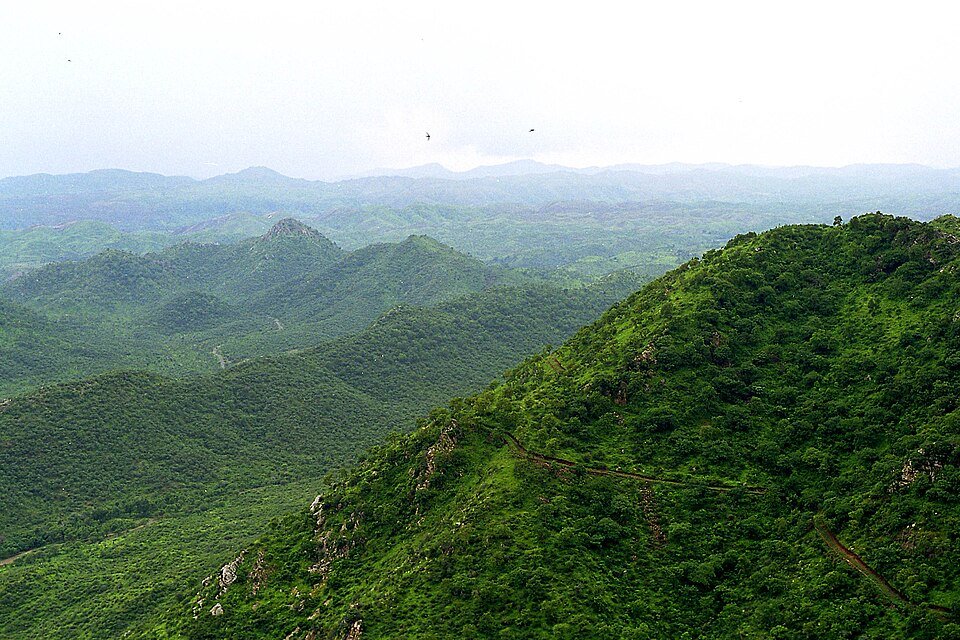
It will not be out of context to mention the recent controversy on the Aravalli mountain chain in northwest India. These mountains are natural barriers against the Thar Desert’s spread, protecting Delhi-NCR from sandstorms and pollution. It is the lifeline in northwestern India that underpins the region’s water security, climate moderation, biodiversity, soil stability, and human livelihoods. The oldest mountain chains of over 2 billion years serve as ancient “green lungs” despite severe threats from illegal mining. The government is duty-bound to save our oldest heritage by adopting sustainable development, wherever essential.
Remember, Nature provides a free lunch, but only if we control our appetites.

