


India’s space programme marked yet another defining moment with the flawless launch of LVM3-M6, ISRO’s heavy-lift “Bahubali” launcher, from the Satish Dhawan Space Centre, Sriharikota, at precisely 8.54 am IST on Wednesday. The majestic liftoff was not merely another addition to India’s growing list of space achievements; it was a loud, unmistakable statement that India has arrived as a reliable, high-capacity, commercial-grade launch power in the global space ecosystem.
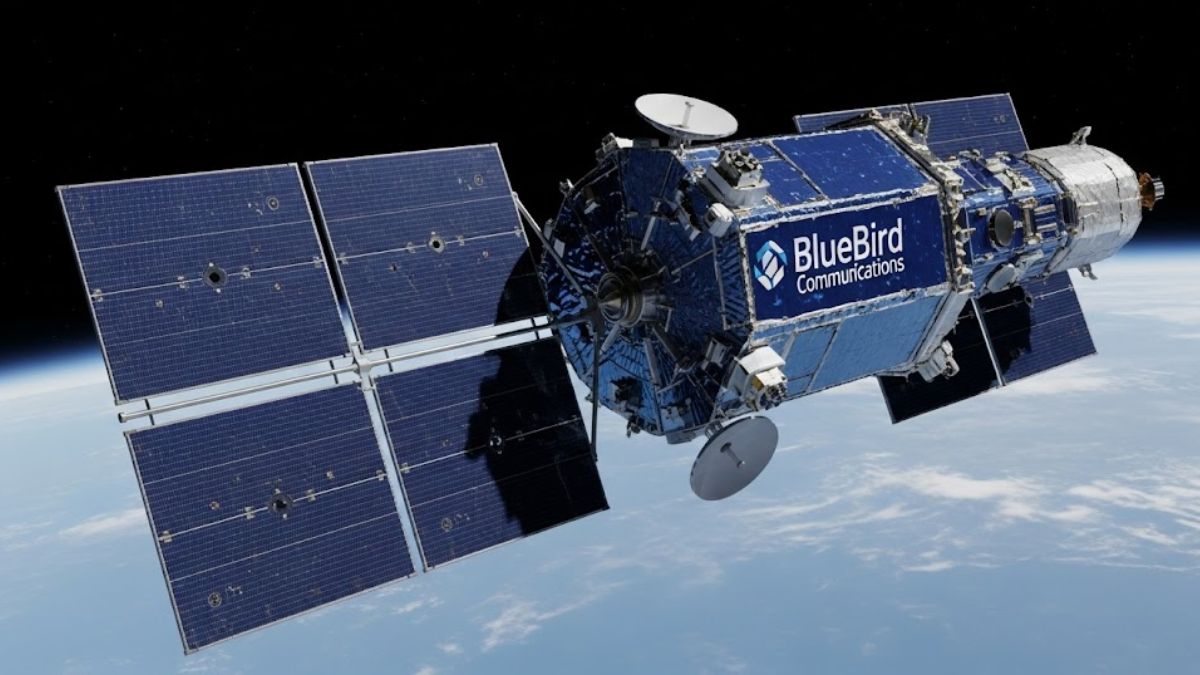
At the heart of the mission was BlueBird Block-2, a next-generation communication satellite developed by US-based AST SpaceMobile, designed to deliver direct-to-smartphone cellular broadband connectivity worldwide. Weighing a formidable 6,100 kg, BlueBird Block-2 is now the heaviest payload ever deployed into Low Earth Orbit (LEO) by the LVM3, underscoring both the launcher’s muscle and ISRO’s growing confidence in executing complex, high-stakes commercial missions.
This achievement decisively eclipses ISRO’s previous record held by LVM3-M5, which launched the Communication Satellite-03 weighing around 4,400 kg into Geosynchronous Transfer Orbit (GTO) on November 2. While that mission demonstrated India’s GTO capabilities, LVM3-M6 breaks new ground in the LEO heavy-lift domain, a segment increasingly critical for global broadband constellations.
The mission was executed under a commercial agreement between NewSpace India Limited (NSIL)—ISRO’s commercial arm—and AST SpaceMobile (AST & Science, LLC). This is significant. India is no longer merely launching its own satellites or friendly government payloads; it is now a trusted launch partner for cutting-edge private space enterprises from the United States, the most competitive space market in the world.
NSIL’s role highlights a quiet but transformative shift in India’s space policy—from state-led exploration to commercial integration, global partnerships and revenue-driven missions. Each successful launch strengthens India’s credibility as a cost-effective, precise and dependable alternative to traditional Western launch providers.
ISRO’s confidence was evident even before liftoff. In a formal update a day earlier, the space agency confirmed:
“LVM3-M6 is set to launch the BlueBird Block-2 spacecraft tomorrow from Satish Dhawan Space Centre, Sriharikota. Final countdown begins. Launch on December 24, 2025, at 8:54 am IST.”
Ahead of the mission, ISRO Chairman V. Narayanan offered prayers at the Sri Venkateswara Swamy Temple in Tirumala on December 22, blending India’s scientific pursuit with its civilisational ethos—a familiar yet powerful reminder of how tradition and technology coexist in India’s space narrative.
Standing 43.5 metres tall, the LVM3, also known as GSLV Mk III, is ISRO’s most powerful operational launch vehicle. It is a three-stage rocket, meticulously designed to handle heavy payloads and human-rated missions.
- The launch vehicle uses two S200 solid rocket boosters, developed by the Vikram Sarabhai Space Centre (VSSC), Thiruvananthapuram, which generate the enormous thrust required during liftoff.
- The core stage is powered by liquid engines, while the upper cryogenic stage, developed by ISRO’s Liquid Propulsion Systems Centre (LPSC), enables precise orbital insertion—one of the most challenging aspects of any space mission.
After a smooth ascent lasting about 15 minutes, the BlueBird Block-2 satellite was
The real revolution, however, lies in the payload itself.
BlueBird Block-2 is part of a global LEO constellation aimed at enabling direct-to-mobile connectivity—without the need for ground towers or special satellite phones. Designed to operate at an altitude of around 600 km, the satellite boasts a massive 223 square metre phased-array antenna, making it the largest commercial communications satellite ever deployed into Low Earth Orbit.
This constellation promises:
- 4G and 5G voice and video calls
- Text messaging
- High-speed data and streaming
- Seamless coverage anywhere on Earth
In essence, it aims to eliminate connectivity black spots—from oceans and deserts to disaster-hit regions—by allowing ordinary smartphones to connect directly to satellites.
AST SpaceMobile has already demonstrated momentum, having launched BlueBird 1–5 in September 2024, providing continuous internet coverage across the United States and select regions. The company has partnerships with over 50 mobile network operators globally, signaling massive commercial and strategic potential.
For India, LVM3-M6 is more than a launch—it is a strategic milestone.
- Commercial Credibility: Successfully placing the heaviest LEO payload enhances India’s standing as a go-to launch provider for mega-constellation projects.
- Technological Maturity: It validates India’s cryogenic and heavy-lift capabilities at par with global leaders.
- Geopolitical Significance: Strengthens India–US cooperation in high-technology and space domains.
- Economic Potential: Positions NSIL and ISRO to tap into the booming global satellite broadband market.
As the world moves towards space-driven digital infrastructure, India is no longer watching from the sidelines. It is designing, launching and shaping the future.
The successful launch of LVM3-M6 carrying BlueBird Block-2 is a powerful testament to how far India’s space programme has come—from modest beginnings to commanding global respect. With precision engineering, commercial foresight and carefully cultivated strategic partnerships, ISRO has once again demonstrated that India’s space ambitions are no longer aspirational; they are decisively operational.
In this new era of space commerce and global connectivity, the message is unambiguous: India is not merely reaching for the stars; it is building the highways that will connect the world through them. It is little wonder, then, that Indian space scientists deserve unreserved praise for making every Indian proud. The sense of collective achievement was palpable across ISRO, reflected in the visible joy and satisfaction of its scientists, including ISRO Chairman Dr V. Narayanan, following the flawless launch of such a massive and technologically complex satellite—yet another emphatic demonstration of India’s expanding space capabilities.


