


The India–US trade deal has finally happened. And no, this is not the moment to play childish games of who blinked first or who had the last laugh. Diplomacy is not a street fight; it is a chessboard. Those who mistake it for arm-twisting eventually discover that patience, not pressure, decides the endgame.
The India–US relationship, contrary to fashionable opinion, was not born yesterday. It has evolved over decades—sometimes warmed by cooperation, often chilled by suspicion, and frequently poisoned by the unmistakable arrogance of a self-styled “Big Brother.” The United States did try, from time to time, to stall India’s economic and strategic rise. But let us be honest: such bullying succeeded largely because successive governments in New Delhi allowed it to succeed.
From Jawaharlal Nehru to Dr Manmohan Singh, India spoke the language of idealism abroad while practicing hesitation at home. Congress governments proudly advertised “Nehruvian foreign policy” as a moral compass, even as it left India strategically confused, economically weak, and diplomatically submissive. New Delhi sought approval rather than parity. Friendship rather than firmness. Lectures rather than leverage.
The Nehru–Kennedy era is often romanticised, but the reality was confusion masquerading as principle. India flirted with the West, leaned on the Soviet Union, and mastered the art of strategic ambiguity—without possessing the economic or military muscle to sustain it. Only twice in post-Independence history did India truly look the United States in the eye and refuse to blink.

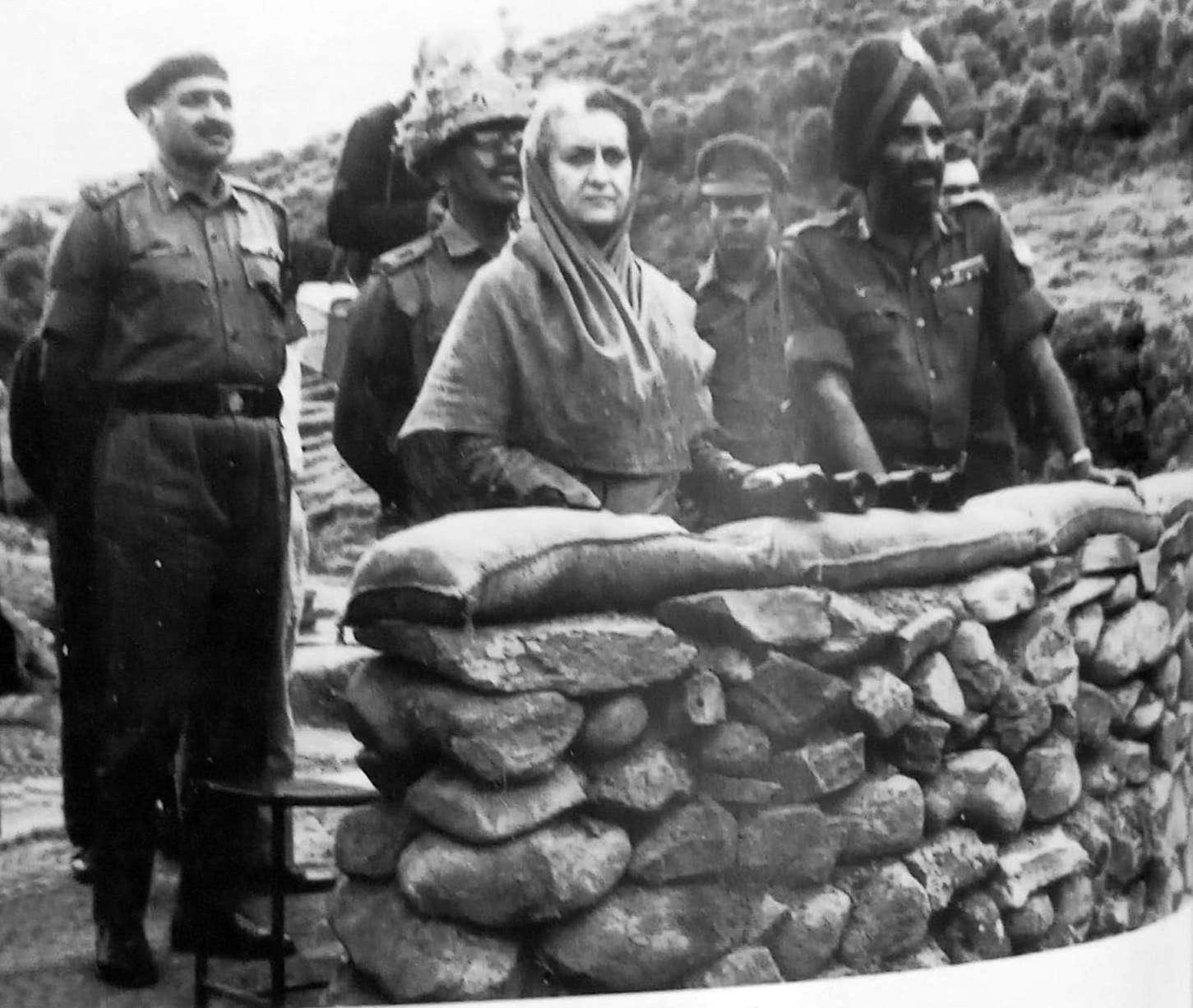
First, in 1971, when Indira Gandhi ignored American threats and the intimidating presence of the USS Enterprise in the Indian Ocean and went ahead with the liberation of Bangladesh. Second, in 1998, when Atal Bihari Vajpayee conducted the Pokhran nuclear tests, fully aware of the sanctions and outrage that would follow. Those moments mattered because they were rare. Spine was the exception, not the rule.
India’s natural ally has historically been Russia, a fact known to every serious student of geopolitics. Yet even that truth was whispered nervously during the Congress rule, never declared with conviction. Strategic clarity was sacrificed at the altar of diplomatic approval.
That timidity ended decisively in 2014.
Narendra Modi is not a Prime Minister produced by dynastic entitlement or party coronation. He is an elected leader with a brute parliamentary mandate—something Congress leaders governed without for decades while claiming moral superiority. For the first time since Independence, India began dealing with the world as an equal, not a supplicant.

The transformation was not accidental. It was deliberate. And it was anchored in a radical overhaul of India’s foreign policy architecture—most visibly through the Modi–Jaishankar combination. If Modi and Amit Shah dismantled Congress’s domestic political monopoly, Modi and S. Jaishankar quietly re-engineered India’s global posture.
Gone was the appeasement of any bloc. Gone was the nervous deference to Islamist pressure groups and oil-rich theocracies. India stopped treating the OIC as a theological authority and started treating it as what it is—another interest group. Relations with Israel were normalised without apology. Ties with Russia were maintained without embarrassment. Engagement with the United States was elevated without surrender. And China was confronted without theatrics.
This balance—cold, calm, unsentimental—is not a Western invention. It is Chanakya’s statecraft, refined two millennia ago. The Arthashastra never preached confrontation for vanity or submission for comfort. It taught patience, leverage, timing, and silent pressure. In short, it taught how to win without shouting.
Which brings us to the India–US trade deal.
For months, the deal sat on the back burner while a volatile American President oscillated between threats of 25 percent and 50 percent tariffs. Rhetoric was loud. Pressure was public. But India did not react. No megaphone diplomacy. No reciprocal tantrums. New Delhi simply waited—confident in its market size, strategic indispensability, and growing global relevance.
Meanwhile, India went ahead and signed trade agreements with 39 countries, including what is being described as the “mother of all trade deals” with Europe. The message was subtle but unmistakable: India has options. India will not be rushed. India will not be threatened.
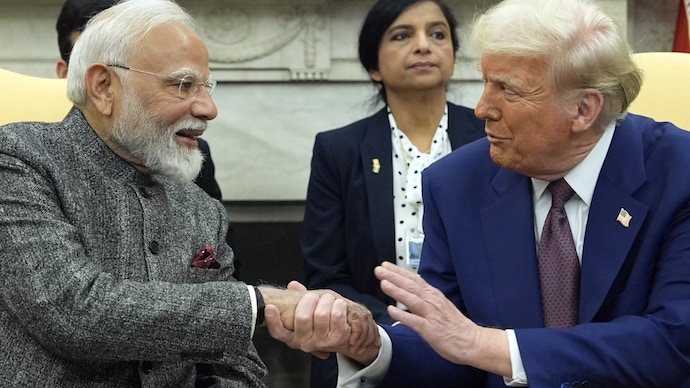
Eventually, reality asserted itself. A rattled Washington rediscovered pragmatism. President Donald Trump, keen on “making America great again,” realised that greatness is not achieved by browbeating the world’s fastest-growing major economy. The phone call followed. The climb-down was quiet. And the agreement—once stalled by the US itself—was revived, reduced, and scheduled for formal signing.
So, who won?
Those obsessed with Western optics may argue endlessly. But India’s civilisational instinct tells us something deeper: patience prevailed over provocation.
This is where India’s ancient philosophy deserves its due. The Upanishads do not glorify conquest; they glorify equilibrium. Indian civilisation never chased expansionism or coercion. Its idea of strength was inner stability, not external domination. That worldview—mocked by modern cynics as “soft”—has, in reality, delivered durable outcomes.
India did not bully the US into a deal. It negotiated. It did not threaten. It waited. It did not posture. It positioned itself.
And that, perhaps, is the real lesson for a world addicted to instant outrage and transactional diplomacy. Global peace is not built through intimidation but through balance. Not through shouting but through staying power.
America’s desire to protect its interests is legitimate. Every nation does. But greatness—real greatness—comes from recognising that others have interests too.
India understood this centuries ago. The world is merely catching up.
In the end, the India–US trade deal is not just an economic agreement. It is a quiet validation of an ancient truth: those who master patience ultimately shape outcomes. And those who mistake bullying for strength eventually learn—sometimes the hard way—that wisdom outlasts noise.
Chanakya would have approved.

