



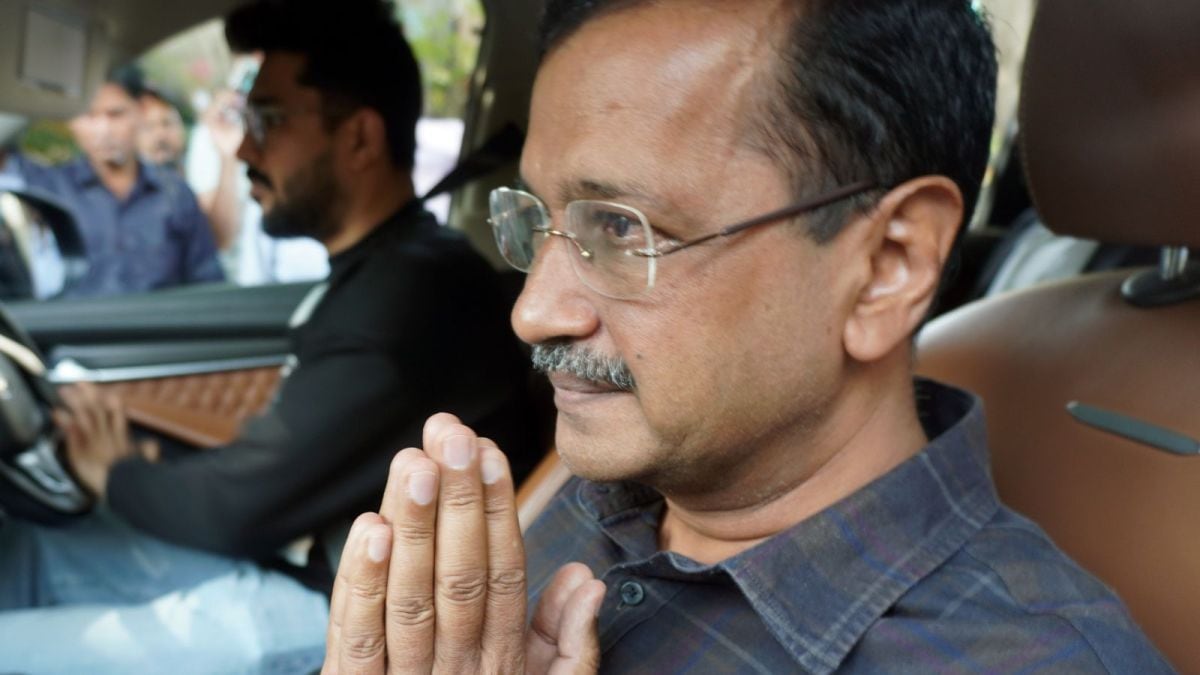
The acquittal of former Delhi Chief Minister Arvind Kejriwal in the Delhi excise policy case is being celebrated by the Aam Aadmi Party (AAP) as moral and political vindication. For Kejriwal, who walked out of court with moist eyes and folded hands, the trial court’s judgment is not merely legal relief — it is a declaration that his repeated claim of “political vendetta” has been validated.
But is it truly the end of the road? Or merely an intermission in a long and winding judicial journey?
A Delhi trial court held that the Central Bureau of Investigation (CBI) failed to provide clinching evidence to sustain charges of corruption and conspiracy in the controversial 2021–22 excise policy. Twenty-three others were acquitted alongside Kejriwal, including Kalvakuntla Kavitha of the Bharat Rashtra Samithi (BRS) — a reminder that this case was never just about Delhi. It had national ripples from the start.
The trial court’s reasoning rests on a fundamental principle: suspicion, however grave, cannot replace proof beyond reasonable doubt. The prosecution, the court said, could not establish a clear money trail or demonstrate an airtight criminal conspiracy. In a democracy governed by the rule of law, that standard is sacrosanct. No one can be convicted because it appears politically convenient or morally satisfying.
And yet, this is where the story becomes layered.
During earlier proceedings, while hearing Kejriwal’s bail plea, a bench of the Supreme Court of India had observed that there appeared to be “prima facie” material in the case. Those observations were preliminary, made in the limited context of bail — not a declaration of guilt. Still, they cannot be wished away. They signal that the highest court in the land saw enough material to consider the allegations worthy of serious judicial scrutiny.
Now, with the CBI preparing to challenge the acquittal before the Delhi High Court, the case enters a decisive phase. Indian judicial history is replete with instances where acquittals have been overturned and convictions reversed. The appellate system exists precisely because trial courts are not infallible. The High Court will have the authority to reappreciate evidence and test whether the trial court’s reasoning holds up under closer examination.
Politically, however, the optics are immediate.
For AAP, this verdict is oxygen. After months of relentless allegations, arrests, and media trials, the party can now claim institutional validation. Kejriwal’s narrative — that the excise case was crafted to derail a rising political challenger — gains fresh momentum. Supporters see the acquittal as proof that investigative agencies were weaponised.
The Bharatiya Janata Party (BJP), on the other hand, faces a narrative setback. Though it maintains that central agencies function independently, perception often trumps technicalities in politics. If the case weakens further in higher courts, questions will inevitably arise about prosecutorial overreach and the political cost of high-decibel corruption charges that fail to culminate in a conviction.
But let us pause before drawing sweeping conclusions.
An acquittal does not automatically transform allegations into fiction. Nor does it establish innocence in the philosophical sense. It simply means that the prosecution could not prove its case beyond a reasonable doubt at this stage. That is both the strength and the restraint of our legal system.
The deeper concern lies elsewhere — in the erosion of public trust. When investigative agencies announce sensational arrests, when courts make prima facie remarks suggesting substance in allegations, and when, years later, a trial collapses for lack of “clinching evidence,” the ordinary citizen is left confused. Was the case overhyped? Was the investigation flawed? Or is the truth trapped somewhere between politics and procedure?
The answer may emerge only after appellate scrutiny.
For now, Kejriwal and his colleagues are justified in celebrating legal relief. But seasoned observers know that in India’s layered judicial architecture, finality is elusive. Today’s triumph can become tomorrow’s test. The CBI’s move to the High Court ensures that this saga is far from concluded.
So, is this a verdict that settles the matter? Or merely a pause before the next round?
In the theatre of Indian democracy, legal battles and political narratives often unfold simultaneously. The excise case is no exception. The trial court has spoken — clearly and decisively. The higher judiciary will now decide whether that clarity withstands scrutiny.
Until then, jubilation and doubt will walk hand in hand.


Well said Shanker ji. There is always a slip between the lip and cup, the way our judiciary functions.
People are cynical about courts. Better wait till she gets commensurate or even more stronger verdicts in her favour. Judiciary is compromised at different levels and so better wait and watch. A bigger chess game seems to be at play.