


There is an adage in politics and warfare alike: success has many fathers, failure is always an orphan. The brief but decisive India–Pakistan military confrontation of May 7–10, 2025, has proven this saying truer than ever. Months after the dust has settled, global power centres are queueing up to claim credit for “stopping” a conflict that India has categorically stated was resolved bilaterally—without mediation, pressure or intervention from any third party.
First came the US President Donald Trump, who has repeatedly—by some counts over 80 times—claimed that it was Washington that prevented a full-blown war between India and Pakistan. This claim has been denied, directly and indirectly, by New Delhi through consistent official statements. Neither Prime Minister Narendra Modi, nor External Affairs Minister S. Jaishankar, nor Defence Minister Rajnath Singh has ever endorsed Trump’s version. The Ministry of External Affairs (MEA) has instead placed the facts firmly on record.
At a press briefing on May 13, the MEA stated unambiguously: “The specific date, time and wording of the understanding was worked out between the DGMOs of the two countries at their phone call on 10th May 2025, commencing at 15:35 hours.” India has also reiterated its long-standing and non-negotiable position—there is no space for third-party mediation in matters concerning India and Pakistan.
Yet, just when Trump’s claims had begun to sound repetitive, almost comical, a new and far more audacious claimant has entered the scene: China.
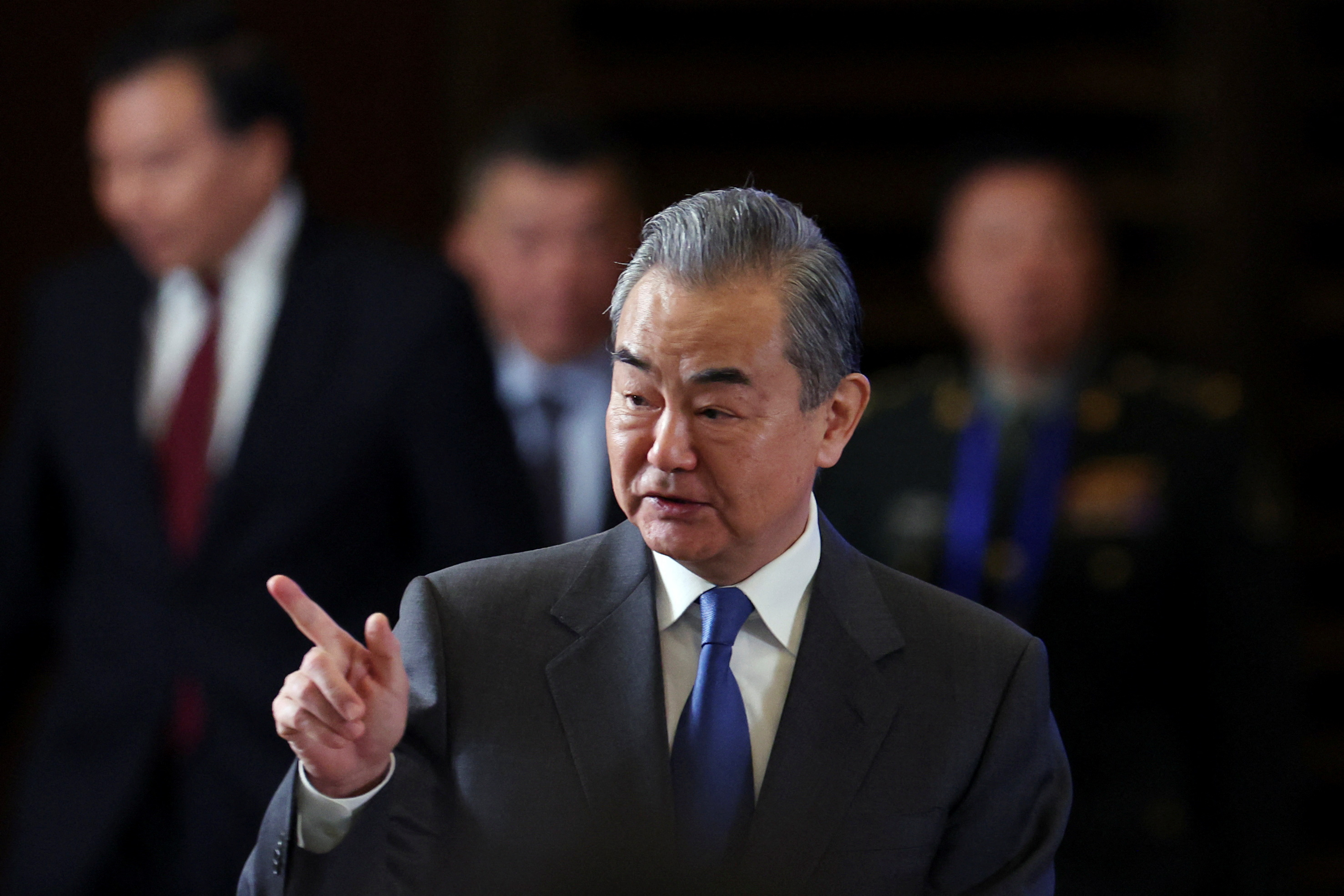
Chinese Foreign Minister Wang Yi, speaking at a symposium in Beijing this week, casually listed “tensions between India and Pakistan” among global hotspots that China had “mediated” this year. The assertion was slipped in alongside conflicts ranging from Myanmar to West Asia, as if repetition could convert fiction into fact. The claim is not just incorrect—it is brazen.
China’s role during Operation Sindoor was anything but neutral or mediatory. On May 7, the very first day of India’s precision strikes on terror-linked infrastructure and Pakistani airbase assets, Beijing issued a statement expressing “regret” over India’s actions, while offering the routine and hollow line that it “opposes all forms of terrorism.” This studied ambiguity was telling. While pretending to urge restraint, China was actively backing Pakistan diplomatically and militarily.
The facts are well documented. Over 81 per cent of Pakistan’s military hardware originates from China. During Operation Sindoor, Beijing’s support to Islamabad—ranging from intelligence inputs to operational coordination—came under serious scrutiny. India’s Deputy Chief of Army Staff, Lt Gen Rahul R. Singh, publicly stated that China treated the conflict as a “live lab,” using Pakistan as a proxy to test strategies against India, drawing from its ancient doctrine of indirect warfare—“killing with a borrowed knife.”
What perhaps unsettled both Washington and Beijing was not any fear of escalation, but the unmistakable demonstration of India’s new military doctrine and indigenous strike capability. Precision missile strikes under Operation Sindoor reportedly hit high-value targets, including sensitive installations near Pakistan’s strategic zones. India’s growing arsenal—anchored by systems like BrahMos and the S-400 (developed with Russia, India’s most trusted strategic partner)—sent a clear message: India will respond decisively, independently, and without seeking permission from global power brokers.
That reality punctured the carefully curated image of Western and Chinese indispensability in South Asian security. It also exposed the discomfort of so-called superpowers watching India assert itself militarily and diplomatically.
China’s duplicity becomes even more glaring when viewed against its simultaneous attempts to project warmth towards New Delhi. Wang Yi spoke of “positive momentum” in India–China relations, referenced Prime Minister Modi’s invitation to the Shanghai Cooperation Organisation summit, and spoke glowingly of regional cooperation, BRICS expansion, and a “shared future.” These platitudes ring hollow when contrasted with Beijing’s actions on the ground—whether at the LAC or through its unwavering support to Pakistan, a state globally known for exporting terror.
The irony is hard to miss. A one-party communist state that crushes dissent lectures the world on peace-building, while a self-proclaimed global democracy like the US indulges in credit-seeking theatrics. Both, in different ways, are struggling to reconcile with India’s rise as a self-assured power that neither seeks validation nor tolerates interference.
Against this backdrop, the claims by both the US and China are not just hollow—they are laughable. The May 7–10 episode stands as a textbook example of India’s strategic autonomy in action. The ceasefire was negotiated directly, professionally, and firmly between the DGMOs of two sovereign nations. No mediator was invited. None was needed.
India neither requires tutors nor tolerates trespassers when it comes to its national security. The sooner global capitals accept this reality, the better for regional stability—and for their own credibility.

