



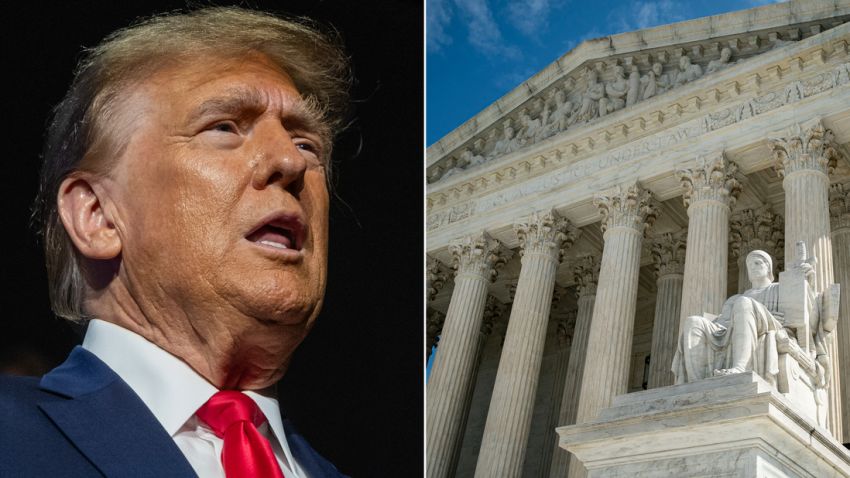
When the Supreme Court of the United States struck down a substantial portion of President Donald Trump’s emergency tariff regime, it did more than deliver a legal rebuke. It detonated the fiscal arithmetic of his administration, undercut his negotiating leverage abroad, and injected fresh uncertainty into global trade diplomacy—particularly the much-anticipated India–US trade deal.
For months, Trump had framed tariffs not merely as trade tools but as instruments of sovereign power. He called the case a matter of “LIFE OR DEATH” and warned that America would face “economic disaster” without them. The numbers explain his alarm. The nonpartisan Congressional Budget Office had projected that overall tariffs could generate $2.5 trillion over a decade, trimming interest payments on the national debt by another $500 billion. Emergency tariffs imposed under the 1977 International Emergency Economic Powers Act (IEEPA) formed a critical pillar of that projection.
Now, that pillar has cracked.
The Penn Wharton Budget Model estimates up to $175 billion in refunds may be due for unlawfully collected tariffs. Thousands of importers—from Costco to Revlon and Goodyear—have already lined up with claims. The Treasury may have the liquidity to stagger repayments, as Secretary Scott Bessent has suggested, but liquidity is not legitimacy. The Court has made clear that executive improvisation cannot replace congressional authorization.
This is not just a budget headache. It is a strategic humiliation.
Trump repeatedly argued that tariffs gave him “enormous leverage” in negotiations—on trade deficits, digital taxes, immigration cooperation, drug enforcement, even military commitments. Strip away the emergency power and you strip away the immediacy of threat. Section 232 of the Trade Expansion Act (1962) and provisions under the Trade Act of 1974 remain available, but they require investigations, findings, and procedural rigor. They are blunt instruments, slower to deploy and easier to challenge.
Foreign capitals have noticed. Canada’s business leadership has already warned that Washington may resort to “blunter mechanisms.” China, facing semiconductor-related hearings, will interpret the ruling as proof that US trade policy is not immune from domestic constraint. And India, negotiating its own comprehensive trade arrangement, will recalibrate accordingly.
Impact on the India–US Deal
For New Delhi, the verdict is both a risk and an opportunity.
India had approached talks wary of sudden tariff escalations—particularly on steel, aluminum, autos, pharmaceuticals, and digital services. The Court’s ruling reduces the probability of abrupt emergency tariffs being weaponized mid-negotiation. That enhances predictability, something Indian negotiators value deeply.
However, the flip side is more complicated. If Trump cannot rely on emergency tariffs to fund deficit reduction or to project strength, he may demand more visible concessions from partners like India to compensate for domestic political vulnerability. With mid-term elections looming and approval ratings dipping, he will seek demonstrable “wins.” Trade optics matter enormously in American electoral politics.
Expect Washington to press harder on:
- Greater market access for US agricultural exports.
- Reduction of Indian tariffs on high-value manufactured goods.
- Clarity on India’s digital economy rules and data localization.
- Intellectual property enforcement.
India, for its part, will insist on protection for its farmers, calibrated digital sovereignty, and relief from existing US duties on steel and aluminum. The asymmetry has narrowed slightly. The Supreme Court ruling reminds everyone that American presidents operate within constitutional guardrails.
The China Factor
The embarrassment deepens because this setback comes ahead of Trump’s planned visit to China—a trip expected to focus heavily on trade recalibration. Arriving after being judicially constrained weakens his aura of unilateral authority. Beijing negotiators, steeped in long-game strategy, will interpret the ruling as a sign that US policy continuity is fragile and legally contestable.
That does not mean China wins by default. Section 232 tariffs on national security grounds and Trade Act remedies remain potent. But the psychological edge shifts. The image of an all-powerful tariff wielder has been dented.
Domestic Political Fallout
The domestic optics are brutal. Democrats argue that average American families have paid nearly $1,700 in tariff costs. Refunds—if and when they arrive—will be framed as restitution for executive overreach. Fiscal hawks warn that without tariff revenue, deficit projections worsen. Advocacy groups already claim the ruling leaves the country “deeper in the hole.”
Trump’s options are therefore constrained but not extinguished:
- Legislative Route: Seek explicit congressional authorization for targeted tariffs. Politically arduous but constitutionally clean.
- Statutory Substitution: Pivot to Section 232 and Trade Act provisions. Slower, legally sturdier.
- Negotiated Settlements: Accelerate bilateral deals—India included—to showcase trade diplomacy rather than tariff warfare.
- Political Reframing: Present the Court’s ruling as judicial activism and rally his base around economic nationalism.
The mid-terms will determine which path dominates. If economic indicators stabilize and deals materialize, the tariff setback could be reframed as a temporary detour. If deficits widen and negotiations stall, it becomes a narrative of overreach checked by the judiciary.
At its core, this episode underscores a foundational American reality: even the presidency bends before constitutional limits. The Supreme Court’s intervention restores a measure of legislative primacy in trade policy. Markets may prefer predictability over brinkmanship. Allies may welcome reduced volatility. Adversaries may test new boundaries.
For India, the moment calls for strategic calm. The trade deal should proceed, but with a clearer reading of Washington’s domestic pressures. A weakened executive may negotiate more intensely, but also more pragmatically.
In the end, this is less about tariffs and more about power—how it is exercised, constrained, and recalibrated. Trump’s doctrine of tariff maximalism has met constitutional minimalism. The world, watching closely, will adjust its calculations accordingly.


