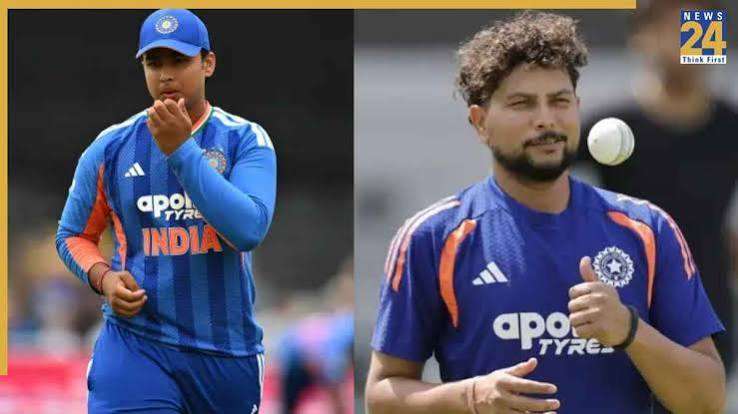
The BCCI’s decision to announce India’s T20I squad for the New Zealand series while holding back the ODI squad has triggered a familiar yet unavoidable debate: should Rohit Sharma and Virat Kohli be recalled for the three-match ODI series beginning January 11?
Whether this delay is strategic or merely procedural remains open to interpretation. But in the larger context of India’s ODI roadmap, the answer to the Rohit-Kohli question appears less complicated than it is being made out to be.
Age is often cited as the primary argument against the two former captains. Rohit Sharma (late 30s) and Virat Kohli (mid-30s) are no longer the future—but in ODIs, they remain very much the present.
India’s recent home ODI series win against South Africa (2–1) provided crucial evidence. Both batters contributed significantly with the bat, fielded with intensity, and—most importantly—handled pressure situations with assurance. This was not a ceremonial farewell act; it was competitive, match-impacting performance.
Selectors also appear to have kept a close watch on their participation in the ongoing Vijay Hazare Trophy. Scoring centuries in domestic 50-over cricket at this stage of their careers sends a clear message: their ODI rhythm remains intact. The format, after all, rewards experience, game awareness, and innings construction—areas where Rohit and Kohli continue to outclass most contemporaries.
India’s ODI setup is currently at a transitional crossroads. While grooming youngsters is essential, discarding proven match-winners in a format that demands stability is counterproductive.
In this context, I wish to express my strong displeasure over the inclusion of Prasidh Krishna. While he may have picked up a few wickets and undeniably possesses pace, he has, time and again, proved to be a consistent run-leaker. Speed alone does not make an effective ODI bowler. Ironically, he rarely uses his cricketing intelligence to pitch the ball up or bowl the right lines and lengths—an obvious flaw that competent batsmen are quick to exploit.
If the selectors are considering Jasprit Bumrah, then it would be far more prudent to build the pace attack around him, especially when the other two speedsters—Arshdeep Singh and Rana—have looked far more disciplined and effective. If Prasidh Krishna is being accommodated in the ODI side despite these glaring limitations, one is compelled to wonder whether considerations beyond pure cricketing merit are at play.
Against New Zealand—a disciplined, tactically sound ODI unit—India cannot afford volatility at the top. Rohit’s ability to control Powerplays and Kohli’s unmatched chase management are assets that no debutant can replicate overnight. Their presence also reduces pressure on the middle order, allowing players like Tilak Varma and KL Rahul to operate with clarity.
From a purely cricketing standpoint, their inclusion enhances India’s consistency, not obstructs transition.

Another likely inclusion is Hardik Pandya. His all-round performances in the recent T20I series against South Africa reaffirmed his value as a balance-restoring cricketer. In ODIs, Pandya’s dual role—finishing innings and providing a seam-bowling option—adds flexibility that India sorely needs, especially on flat home surfaces.
Shreyas Iyer, despite resuming batting, remains an unlikely pick. His back injury during the Australia ODI series and subsequent absence against South Africa suggest that the selectors are in no mood to rush him. Continued rehabilitation at the BCCI Centre of Excellence indicates a cautious, long-term approach.
Jasprit Bumrah presents a more nuanced dilemma. No selector would question his value, but workload management ahead of the T20 World Cup is critical. While his inclusion in ODIs remains possible, India may prefer to deploy him selectively rather than risk overexposure.
Shubman Gill’s anticipated return—possibly as captain—will also be closely watched. His absence in South Africa due to injury disrupted momentum, but a comeback should not translate into added leadership pressure that compromises his batting. Gill’s role must be clearly defined to avoid a repeat of recent inconsistencies.
Probable ODI Squad (Indicative)
Rohit Sharma, Shubman Gill, Virat Kohli, Tilak Varma, KL Rahul (wk), Rishabh Pant (wk), Hardik Pandya, Ravindra Jadeja, Washington Sundar, Kuldeep Yadav, Arshdeep Singh, Prasidh Krishna, Harshit Rana, Ruturaj Gaikwad, Dhruv Jurel
India’s ODI fortunes this season have been mixed—losing to Australia, recovering against South Africa, and showing dominance in T20Is. But the 50-over format is unforgiving of indecision.
Picking Rohit Sharma and Virat Kohli for the New Zealand ODIs is not about nostalgia or reputation. It is about performance continuity, tactical assurance, and match-winning pedigree. Until younger players consistently deliver under pressure, the debate should not be whether these two should return—but how India maximises their remaining ODI value.
In that sense, their recall appears not just likely, but inevitable. (The author is a former Hyderabad Ranji player)