



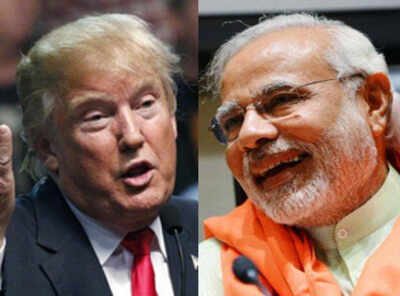
Diplomacy, in the hands of seasoned practitioners, is a craft. In the hands of amateur showmen, it is often a ping-pong match—complete with theatrics, overacting, and unforced errors. In the last few months, the India–US equation has offered a strange combination of both, as Prime Minister Narendra Modi and U.S. President Donald Trump engaged in what can only be called “hot-and-old diplomacy”—a throwback to Cold War ping-pong, but with contemporary frictions, tariffs, tweets, and the occasional nuclear bluff thrown in for effect.
That Modi called Trump amidst reports of India and the U.S. nearly finalising a trade agreement has naturally set the commentariat buzzing. Some see it as a strategic thaw, others as a tactical necessity, and a few as a simple diplomatic courtesy. But as always, beneath the photo-ops and press releases lies a far more complicated truth—one shaped by hard geopolitics, bruised egos, and the growing realisation in Washington that Modi’s India does not blink easily.
Donald Trump, never known for his disciplined relationship with facts, has now repeated—seventy times and counting—his favourite myth: that he personally stopped India and Pakistan from launching a nuclear war.
Seventy times.
If political fiction had an Olympic category, Trump would win gold without breaking a sweat.
The cold facts, however, are neither flattering to Pakistan nor convenient to Trump’s narrative.
When Pakistan came begging for a ceasefire, it wasn’t because of American persuasion or Trump’s “good offices.” It was because the Indian armed forces had inflicted damage so sharp and so swift that Rawalpindi simply couldn’t absorb more blows. The Indian strikes reportedly penetrated deeper than Islamabad was prepared to acknowledge—including, as defence sources indicated, landing near sensitive storage facilities that house Pakistan’s nuclear assets. That, more than anything, caused panic in the Pakistani establishment. The U.S. wasn’t upset because it stopped a war. It was upset because it had no control over what India did—and that was new.
And for Trump—the self-certified global dealmaker—to watch India execute decisive action without American pre-clearance was a rude awakening. So, he stitched together a heroic bedtime story in which he alone saved South Asia.
The trouble is, India’s strategic community actually reads facts, not tweets.
Why, then, did Modi pick up the phone now?
Because geopolitics isn’t a morality play; it’s a marketplace.
India is negotiating the final contours of a trade deal with the U.S. Even the strongest nations must occasionally nod to the reality that economic growth does not thrive amid perpetual hostilities—especially when the Western marketplace still matters for exports, technology, and capital.
Add to this the recent Mexican shocker: a country known for fiercely guarding its autonomy suddenly bowing to tariff pressures from the U.S. Trump extracted concessions from Mexico with surprising ease, and that episode served as a quiet reminder to many capitals—yes, including New Delhi—that Washington’s economic levers can still sting.
But here is the key difference: Modi’s India is not Mexico. And Trump knows this.
India is too big to bully, too proud to bend, and too indispensable to ignore. Trump’s pressure tactics—the same ones that worked on smaller economies—hit a wall when confronted by Modi’s strategic confidence.
So, while Modi may have chosen to reopen channels and smoothen edges for pragmatic reasons—including safeguarding economic momentum—he has done so without surrendering strategic autonomy. The U.S. respects power, not politeness. And Modi has repeatedly demonstrated power.
The real takeaway from this latest diplomatic warm-up may lie not in what Modi did, but in what Trump finally seems to be realising.
His old playbook—tariff threats, public arm-twisting, inflated claims, nuclear scare-talk—is simply ineffective against a nation that has already weathered far worse: sanctions after Pokhran, pressure after the nuclear deal, and decades of Western moralising. India under Modi has demonstrated that it can play the long game, withstand tantrums, diversify partnerships, and take decisive military action without waiting for Washington’s blessings.
That is a new India. Trump has had to learn the hard way.
And if he now chooses to recalibrate, it is less an act of magnanimity and more an admission of limitation. A recognition that India cannot be treated as a client state. The old Cold War hierarchies no longer exist. That a nation capable of precision strikes into nuclear-armed territory won’t be cowed by presidential bluster.
What we are witnessing now is neither capitulation nor confrontation. It is a resetting of terms.
Modi reaching out signals maturity, not weakness. Trump stepping back from pressure tactics signals acceptance, not defeat. Both nations need each other—economically, strategically, and technologically. The Indo-Pacific, from the Strait of Hormuz to the South China Sea, is too volatile for ego-driven estrangement.
But the days of one-sided diktats are over.
India will engage with the U.S.—but on equal footing. Trump will attempt to pressure—but will increasingly meet resistance. And both sides will occasionally revive a little “hot-and-old” melodrama, because geopolitics has always been part chessboard, part theatre.
In the end, the Modi–Trump call is not about trade alone. It is about two leaders navigating a new reality: pressure tactics don’t work on New India, and total enmity with the West no longer serves India’s economic aspirations.
The ping-pong continues—but this time, India is not just returning the ball. It is choosing the pace, angle, and timing.


