India prides itself on being one of the fastest-growing aviation markets in the world, yet at the very moment New Delhi was hosting Russian President Vladimir Putin—a visit laden with geopolitical symbolism and strategic recalibration—India’s aviation sector presented itself as an embarrassing national spectacle.
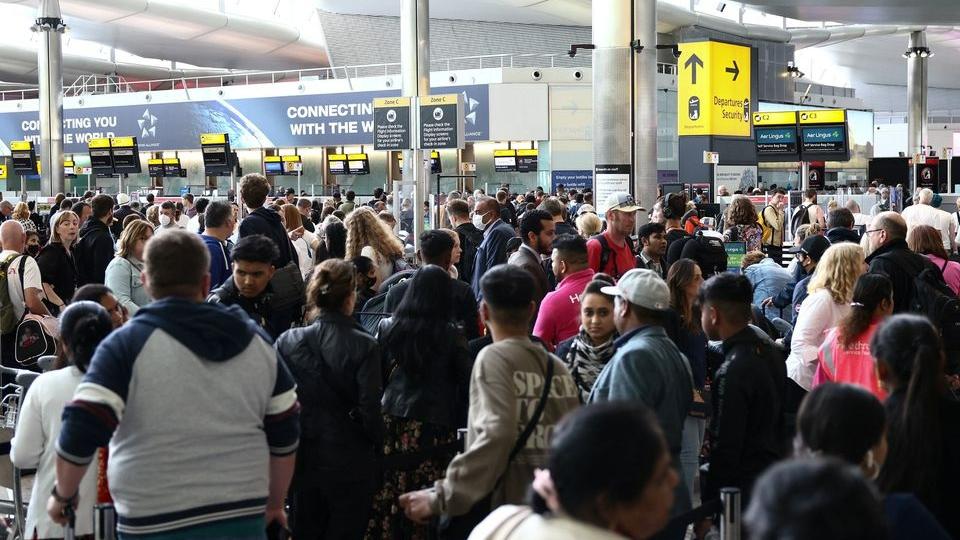
Hundreds of cancellations, thousands of stranded passengers, airports resembling chaotic transit camps, and the country’s largest airline, IndiGo, scrambling to craft an explanation that satisfied no one.
The timing was too stark to ignore. As Prime Minister Narendra Modi and President Putin worked to consolidate India–Russia ties, sending a clear message to the West and redefining the Asian strategic equation, domestic headlines were hijacked by aviation disorder.
Instead of national discourse revolving around diplomacy, defence cooperation, energy corridors, and India’s growing geopolitical autonomy, the focus shifted to bewildered passengers, cancelled flights, and operational paralysis. Whether by accident or coincidence, the effect was unmistakable: India’s global moment was drowned by sheer aviation dysfunction.
The core questions cannot be brushed aside. How could IndiGo—boasting India’s largest fleet, a dominant market share, and a reputation for clockwork efficiency—allow such a collapse? Why was there no contingency plan? How did crew-rostering failures, workforce shortages, or vague “operational circumstances” trigger a nationwide meltdown that crippled both public confidence and mobility?
Instead of raising these pertinent questions, it is absurd that certain irresponsible channels, which loudly claim to champion “national interest,” are busy blaming the government. Their misplaced outrage exposes not governance failure but their own ignorance—or worse, their habitual blackmail tactics—while the airline under fire escapes the scrutiny it deserves.
The explanations offered so far raise more suspicion than clarity. First, IndiGo blamed “unforeseen circumstances.” Then came whispers of crew shortages, pilot fatigue, and simmering labour dissatisfaction. Insiders quietly pointed to mismanagement, shoddy planning, and an obsession with expansion without strengthening the workforce.
But the publicly available facts tell a very different story. IndiGo, which commands nearly 60% of India’s aviation market, operates 417 aircraft with 5,500 pilots. Air India, by comparison, has 187 aircraft and 3,500 pilots. The rest—SpiceJet, AirAsia, Akasa—barely hold 5–10% market share with limited routes. By sheer numbers alone, IndiGo is the last airline that should be citing manpower shortages as an excuse for a nationwide meltdown.
What’s more, the Aviation Ministry itself has been pushing new norms restricting pilot flying hours—a safety-first reform meant to protect passengers. Yet, for reasons best known to the Ministry, it chose to concede to airlines’ requests to delay or dilute these norms. If anything, this makes the crisis look even more like a failure of coordination, foresight, and regulatory will.
But none of these explanations justify a breakdown of this magnitude.
If crew shortage was truly the cause, why was staffing not planned with basic discipline?
If pilot fatigue was the trigger, how did scheduling collapse at the most fundamental operational level?
If managerial oversight was the real culprit, why should passengers—and the nation’s dignity—pay the price?
IndiGo controls more than 60% of India’s domestic aviation market. When an airline of this size falters, the entire country suffers.
The crisis also exposed a larger structural problem: India’s aviation ecosystem has become dangerously over-dependent on a single operator. The collapse of Jet Airways, Kingfisher, and Go First has left the field uneven and fragile.
Competition is thin, capacity overstretched, and contingency non-existent. When one behemoth sneezes, India catches a fever. Has policy allowed a quasi-monopoly to form—one so oversized that it can destabilize national mobility within hours?
Amid the chaos lies another uncomfortable question: why are India’s major airlines—including the largest—often headed by foreign nationals? Is global expertise being prioritized over domestic capability? Are 140 crore Indians truly incapable of producing competent aviation leaders? While foreign leadership is not inherently problematic, the pattern suggests a deeper confidence deficit in homegrown managerial talent. It also raises practical concerns: do foreign CEOs fully grasp the cultural, operational, and logistical pulse of Indian aviation, or are they too distant from the realities faced by passengers and employees? And when leadership sits atop such a massive ecosystem, should the accountability standards not be higher, sharper, and more transparent?
What unfolded this week was not merely an operational hiccup; it was a national embarrassment. International observers did not fail to notice the coincidence: India showcased diplomatic strength abroad but displayed administrative weakness at home. Aviation is not just a commercial commodity—it is a strategic national asset.
The DGCA, the Civil Aviation Ministry, and IndiGo must be answerable. India needs complete transparency on what went wrong, firm regulatory action on operational negligence, stronger crew welfare systems, diversified competition to avoid structural vulnerability, and a serious re-examination of leadership pipelines across the aviation sector.
India is emerging as a global voice, a geopolitical pivot, and a rising economic power. But credibility abroad rests on competence at home. A nation that aspires to lead cannot afford broken systems, chaotic airports, and mismanaged monopolies. IndiGo owes the country answers. The aviation ministry owes passengers accountability. And India owes itself deeper introspection—because no country can hope to soar globally if it keeps stumbling in its own skies.