
By Vinay Rao
Hyderabad cricket is no stranger to turbulence. But what it faces today is not routine turbulence. It is an institutional credibility test.
The Hyderabad Cricket Association (HCA), already battered by allegations of corruption, nepotism, administrative paralysis and internal factionalism, now stands at a defining crossroads. And the central question before it is not who wins an election — it is whether the process itself can withstand scrutiny.
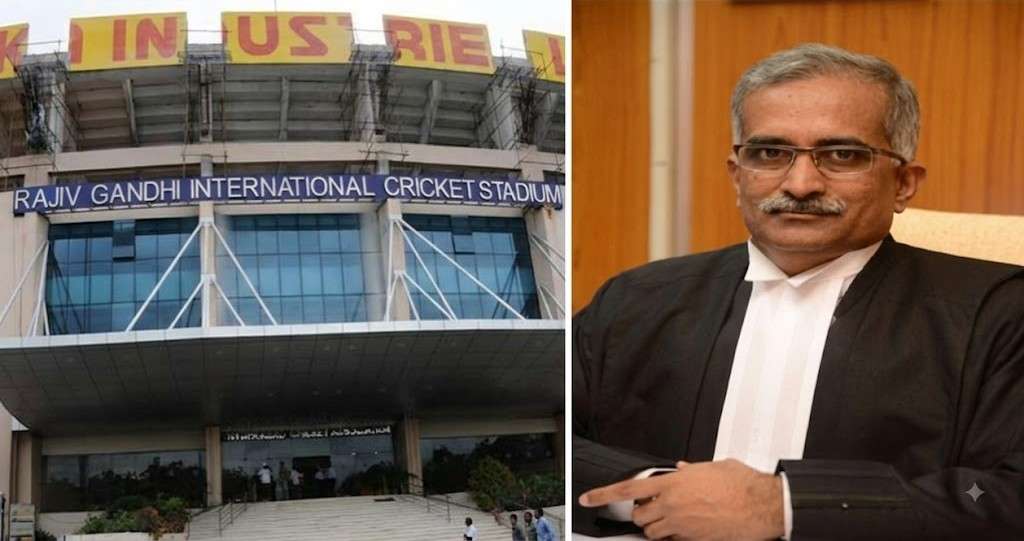
At a time when the Association is under the supervision of a High Court-appointed administrator, Justice Naveen Rao, the expectation was simple: stability, procedural discipline, and constitutional fidelity. Instead, what we are witnessing is a sequence of decisions that raise serious, legitimate questions about timing, authority, and necessity.
Let us be clear. These are not allegations of guilt. They are questions of governance.
Elections in a Hurry — But, Why?
The truncated Apex Council’s move to conduct elections to the posts of Secretary and Treasurer — months before the scheduled full elections reportedly due in October/November — demands clarity.
If the entire Apex Council is set to face elections in a matter of months, what compelling institutional necessity justifies conducting interim elections now? For a tenure that may effectively last only a few months?
In any democratic framework, elections are not ornamental rituals. They are constitutional exercises governed by sequence and necessity. Conducting piecemeal polls in the shadow of impending comprehensive elections naturally raises questions about prudence and proportionality.
This is not obstructionism. It is institutional common sense.
The Shadow of Pending Litigation
Complicating matters further are ongoing legal proceedings relating to the governance of the Association. Disputes concerning leadership positions, procedural validity, and the authority of a truncated Apex Council are reportedly pending before the Hon’ble High Court.
When foundational issues are under judicial consideration, institutional restraint is not weakness — it is wisdom.
If elections are conducted and subsequent judicial orders alter the legal position, the Association risks plunging itself into yet another cycle of confusion, counter-claims, and avoidable litigation.
Cricket deserves certainty. Not constitutional roulette.
The Suspension Controversy
The backdrop to all this cannot be ignored.
Following complaints from the IPL franchise Sunrisers Hyderabad regarding alleged ticket-related irregularities at the Rajiv Gandhi International Cricket Stadium, the matter escalated rapidly. The State Government reportedly initiated inquiries, including action involving investigative agencies.
Subsequently, certain office-bearers were arrested and later granted bail by competent courts. The truncated Apex Council then proceeded to suspend key functionaries.
Here lies a sensitive but vital principle: in law, an accused person is presumed innocent unless proven guilty by a court of law. Administrative action may be permissible within the framework of bye-laws — but it must strictly adhere to those very rules. Otherwise, it risks appearing punitive rather than procedural.
Institutions collapse not when allegations arise — but when procedure is compromised in responding to them.
The Uncirculated Minutes Problem
The Association’s Bye-Laws reportedly mandate circulation of AGM minutes within a prescribed timeframe, followed by confirmation at the subsequent meeting.
This is not a clerical formality. It is the backbone of accountability.
If minutes of the 87th AGM have not been circulated and formally confirmed as required, it creates a procedural vacuum. Decisions attributed to that meeting remain unverified in the eyes of members. Without documented confirmation, institutional memory itself becomes contestable.
No democratic body can move confidently forward when its last step is not formally recorded.
The “Adjourned AGM” Question
Equally important is the reliance on what has been described as an “Adjourned AGM.”
If such a mechanism is expressly provided for within the Bye-Laws, clarity would immediately settle the issue. If not, members are entitled to know the legal basis for its authority.
Without transparent documentation explaining:
- The validity of the adjournment
- The authority under which it was convened
- The specific business transacted
— uncertainty becomes inevitable.
Transparency does not weaken institutions. It fortifies them.
The Role of Oversight
Hyderabad cricket today functions under the supervision of Justice Naveen Rao, a retired High Court judge tasked with ensuring orderly governance. The electoral process itself is reportedly overseen by V. S. Sampath, a former Chief Election Commissioner of India.
Their reputations are rooted in constitutional fidelity and procedural integrity. Precisely for that reason, stakeholders now look to them for clarity.
Have all Bye-Law requirements been satisfied in letter and spirit?
What necessitates elections to limited posts months before full elections?
How does this exercise align with pending judicial scrutiny?
Clear, reasoned public clarification would silence speculation instantly.
Silence, however, feeds it.
This Is About Legitimacy
Elections derive legitimacy not merely from ballots cast, but from:
- Proper notice
- Documented minutes
- Confirmed agendas
- Adherence to constitutional sequence
- Absence of avoidable haste
When rules are visibly followed, disputes diminish. When sequence is disrupted, rumours rush in to fill the gap.
Hyderabad cricket has already spent far too much time in courtrooms and too little on the field.
This moment calls for restraint, transparency, and constitutional discipline — not procedural acceleration.
The solution is simple: place every document in the public domain, clarify the legal basis for each step, and explain the necessity for interim elections despite impending comprehensive polls.
Follow the rulebook.
Respect judicial oversight.
Choose stability over speed.
Because credibility, once compromised, is infinitely harder to rebuild than an election calendar.
Hyderabad cricket does not need another controversy.
It needs certainty.