



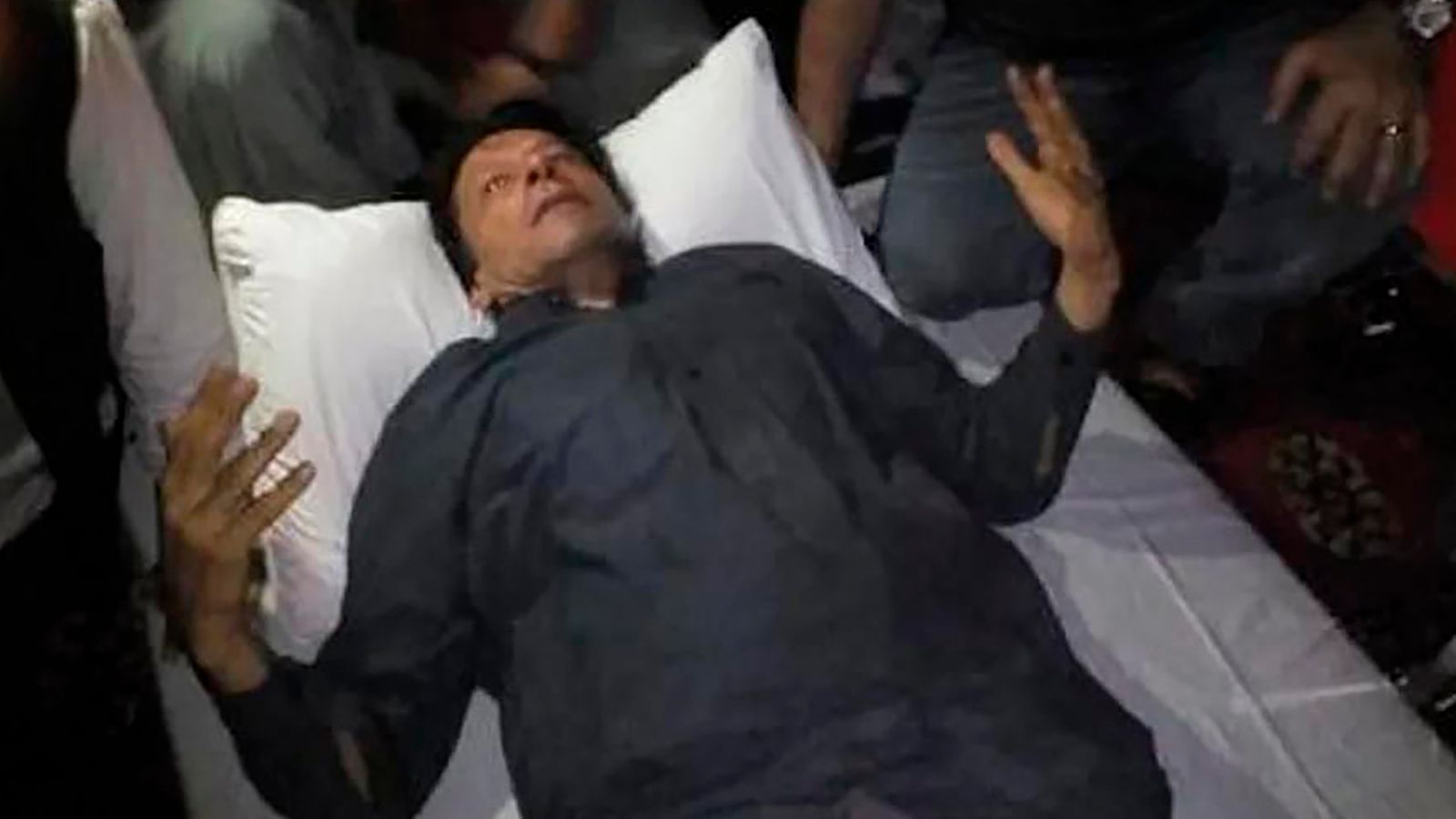
The plight of former Pakistan Prime Minister Imran Khan has once again thrown a harsh spotlight on Pakistan’s fragile democratic framework and its uneasy civil-military balance. A Pakistan Tehreek-e-Insaf (PTI) lawyer, deputed on the directive of the Supreme Court, recently met Khan in jail to assess his living conditions. The report that followed was disturbing: Khan, 73, has reportedly complained of losing nearly 85 per cent of vision in his right eye. The court has now ordered a comprehensive medical examination before February 16.
Whatever one’s political view of Imran Khan, the optics are troubling. A former Prime Minister, a globally known cricketer who once captained Pakistan to World Cup glory, now battling deteriorating health in prison, raises legitimate humanitarian concerns. In any civilized society, the basic rights of prisoners—especially access to adequate medical care—are not a matter of political discretion but legal obligation.
It is equally important to state that Khan is not above scrutiny. His tenure was controversial; critics accuse him of selective accountability, economic mismanagement, and confrontational politics. Courts in Pakistan have convicted him in multiple cases. His supporters insist these are politically motivated. The truth may lie somewhere in between, as it often does in polarized political environments.
Yet the central question transcends partisan loyalties: does the state have a moral and constitutional duty to ensure humane treatment, irrespective of political rivalry? If Khan’s medical condition is indeed serious, then delay, neglect, or opacity would reflect poorly on the government of Prime Minister Shehbaz Sharif and the powerful military establishment led by Asif Munir. Pakistan’s history is replete with episodes where political adversaries were jailed, exiled, or worse. From the execution of Zulfikar Ali Bhutto to the assassination of Benazir Bhutto, the country’s political narrative has often been written in tragedy.
This recurring pattern fuels suspicion. Is Khan’s incarceration purely judicial, or does it reflect a broader political settling of scores? Pakistan’s civil-military dynamics have long shaped its governance. Elected leaders who fall out of favour with the establishment often find themselves isolated or prosecuted. While the present government insists that the courts are acting independently, critics argue that power equations behind the scenes tell a different story.
The silence of international institutions has also drawn attention. Why has the United Nations not spoken more forcefully, if credible reports of deteriorating health and alleged mistreatment are emerging? At the same time, one must acknowledge that international bodies typically tread cautiously in what they classify as internal matters, unless there is overwhelming evidence of systemic abuse.
The United States, too, remains officially muted. President Donald Trump, known for his outspoken commentary on global affairs, has not made Pakistan a focal point of his human rights discourse. It would be simplistic to assume that one statement from Washington could dramatically alter Islamabad’s power equations. International diplomacy is rarely that linear. Strategic considerations—regional security, counterterrorism cooperation, and geopolitical calculations involving China and Iran—often temper public posturing on human rights.
That said, civil society—both within Pakistan and globally—cannot afford indifference. Respect for due process and humane treatment is not an endorsement of a politician’s ideology; it is a defense of principle. If today it is Imran Khan, tomorrow it could be another opponent of the ruling dispensation. Democracies erode not only when elections are manipulated, but when institutions are weaponized.
Comparisons with other countries must be made cautiously. The suggestion that such scenarios could unfold in established democracies underscores a broader anxiety about political polarization worldwide. However, robust institutions, transparent judicial oversight, and a vigilant press remain the best safeguards against abuse.
Pakistan stands at a crossroads. If the medical examination ordered by the Supreme Court is conducted transparently and the findings are made public, it could help restore some credibility. If not, suspicion will deepen, reinforcing the narrative that political rivalry in Pakistan is a zero-sum game, often settled through incarceration rather than persuasion.
Ultimately, the issue is not whether Imran Khan is innocent or guilty in the eyes of the law. It is whether Pakistan’s state machinery can demonstrate that even its fiercest political adversary is entitled to dignity, medical care, and fair treatment. A democracy’s maturity is measured not by how it treats its friends, but by how it treats its foes.


