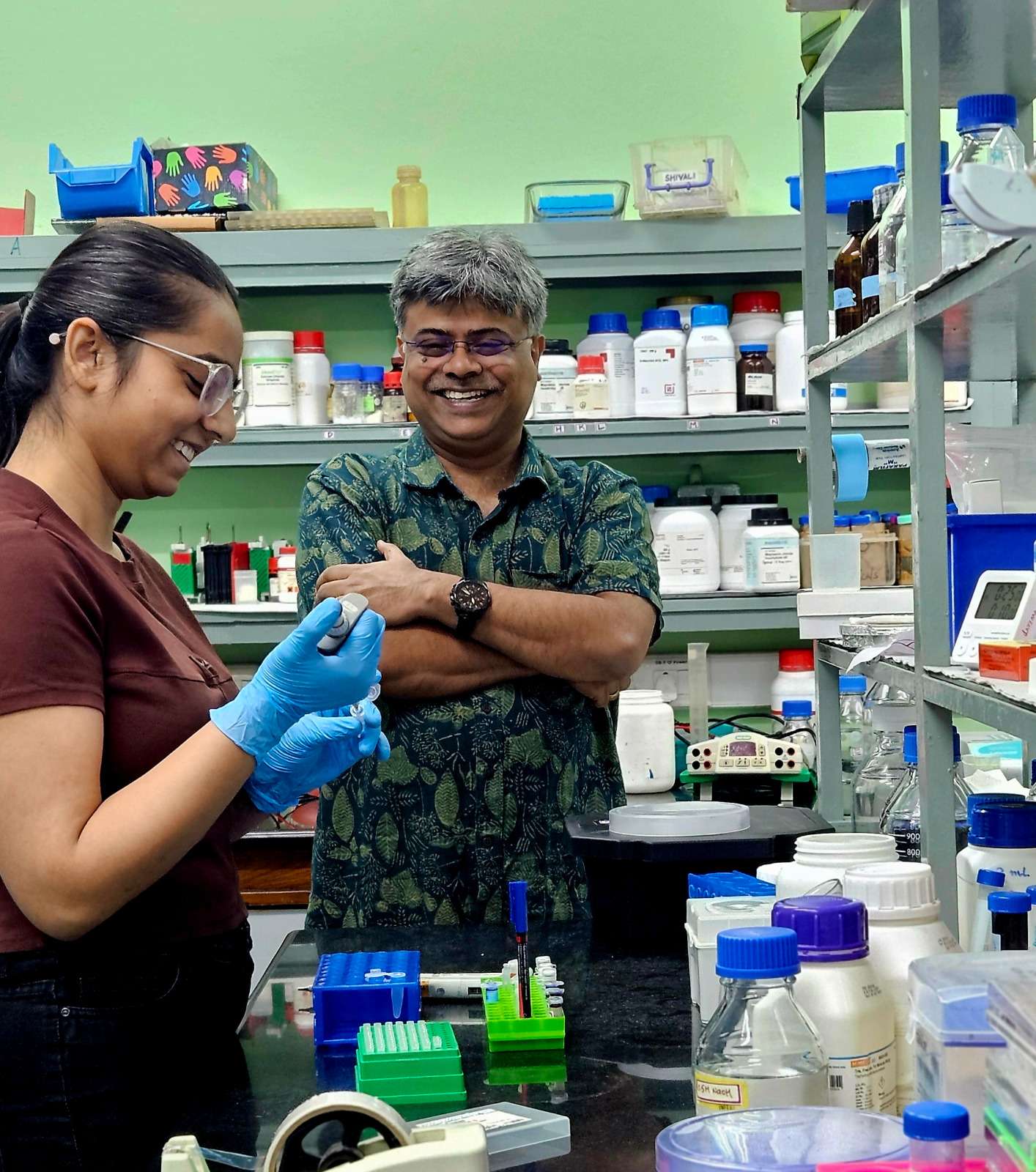
Hyderabad: Reinforcing the critical role of mentorship in building a robust scientific ecosystem, the TNQ Inspiring Science Awards (TNQ ISA) has once again recognized young researchers and their mentors for impactful contributions to life sciences research.
Instituted in 2016, TNQ ISA celebrates creative and high-quality research carried out by early-career scientists. Over the years, four PhD scholars and one postdoctoral fellow from the CSIR-Centre for Cellular and Molecular Biology (CCMB) have figured among the finalists.
The latest addition to this list is Dr Jotin Gogoi, whose research explored how cells tolerate certain errors during protein synthesis and how such flexibility may have contributed to the evolution of living cells. His work adds to the growing body of knowledge on fundamental cellular processes and evolutionary biology.
In a significant move this year, TNQ ISA also honoured two senior scientists from CCMB for their exemplary mentorship. Dr Rajan Sankaranarayanan and Dr Santosh Chauhan were recognized for guiding young researchers whose work earned accolades at the awards. Each of them has mentored four researchers whose studies were selected by the TNQ jury. The PhD scholars trained under Dr Chauhan were enrolled at the BRIC-Institute of Life Sciences, Bhubaneswar.
Dr Sankaranarayanan’s laboratory focuses on understanding how the structural features of enzymes determine their unique properties—functions that are essential for life. A key area of his research examines how cellular machinery ensures the correct orientation of amino acids during protein synthesis.
Dr Chauhan’s research group studies innate immunity, the body’s first line of defence against pathogens. His work has led to the emergence of a new research direction termed “Programmed Cell Revival,” which investigates how cells on the verge of death activate intrinsic molecular mechanisms to restore themselves.
Speaking on the occasion, both scientists underscored the indispensable role of young researchers in advancing scientific discovery. Dr Chauhan described mentorship as a process of nurturing independent thinking. “For me, mentorship is not about telling people exactly what to do. It’s about giving them space to think, ask questions, make mistakes, and slowly become confident and independent scientists,” he said.
Dr Sankaranarayanan emphasized the importance of fundamental research. He noted that awardees from his laboratory worked on basic biological questions rather than trend-driven topics. He expressed appreciation that the TNQ jury recognized foundational science, adding that such encouragement would inspire young scientists to pursue core biological problems.
The recognition highlights how sustained mentorship and fundamental inquiry remain central to strengthening India’s scientific research ecosystem.