By Vinay Rao
Hyderabad cricket is no longer merely battling on the field. It is battling for institutional credibility.
For over a year, the Hyderabad Cricket Association (HCA) has resembled an organisation trapped in administrative turbulence rather than a professional sporting body. Opaque selections. Disputed appointments. Byelaws allegedly stretched to convenience. Leadership legitimacy under challenge. Commercial ventures launched amid governance confusion. And now, talk of interim elections.
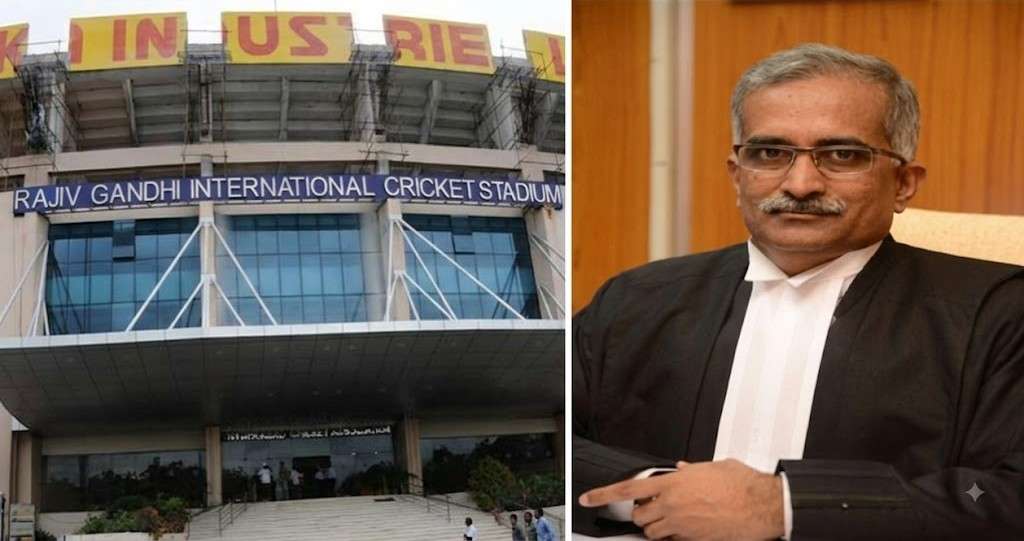
At the centre of this storm stands Justice P. Naveen Rao, appointed in a supervisory role over HCA.
The uncomfortable question being asked in cricketing circles is unavoidable: Has supervision restored stability — or has it merely overseen managed instability?
Governance Fatigue: When Rules Feel Elastic
This crisis did not erupt overnight. It accumulated.
Disputes over byelaws, committee formations, eligibility norms, and appointments gradually eroded trust within the association. Honoraria controversies and recovery directions added layers of friction. When internal processes appear inconsistently applied, members begin to question not just decisions — but the integrity of the framework itself.
In such spaces, governance fatigue sets in. And when governance loses clarity, politics inevitably fills the vacuum.
A sports association cannot afford rule elasticity. It must operate with predictable standards. Without that, every administrative move invites suspicion.
Leadership Legitimacy: Authority in Suspension
The presidential dispute deepened the instability.
An ombudsman reportedly identified procedural irregularities in a prior election and declared a rival claimant entitled to assume office. Court interventions followed. Certain actions were annulled.
The consequence was structural uncertainty.
When the top office is contested:
- Committees hesitate.
- Decisions are litigated in anticipation.
- Administrative continuity fractures.
- External stakeholders lose confidence.
Now proposals for interim elections have surfaced. Yet even here, stakeholders point to perceived delays, shifts in timelines, and reversals in position.
In governance, clarity must be steady. Even the perception of oscillation weakens institutional authority.
Selection Panels: Meritocracy or Marketplace?
Nothing strikes at the heart of a cricket ecosystem more than distrust in selection.
Critics argue that selection panels were constituted in ways inconsistent with governance reform principles aligned with the BCCI framework. Whether legally sustainable or not, the deeper crisis is perceptual.
Hyderabad’s underwhelming performances have not visibly triggered a structural overhaul. The same selectors, the same mentors, the same opaque evaluation criteria appear to persist.
In professional sport, failure invites review. In Hyderabad, critics argue continuity has prevailed without a transparent evaluation.
That perception is dangerous.
Young cricketers begin to ask not “How do I improve?” but “Who do I approach?”
When aspiration shifts from performance to access, meritocracy is wounded.
Conflict of Interest: Silence Is Not Neutral
The most sensitive issue concerns alleged conflicts of interest.
Questions have been raised about:
- Alleged links between the chairman of selectors and a selected player.
- Selectors functioning simultaneously as private academy heads or mentors.
- Players mentored by selectors repeatedly finding favour in squads.
These remain allegations, not adjudicated findings. That distinction matters.
But what also matters is transparency.
Where are the publicly disclosed conflict-of-interest declarations?
Where is the formal recusal policy?
Where is the independent review mechanism?
In fragile systems, silence is rarely neutral. It amplifies doubt.
Among players and parents, murmurs grow. The phrase “hum saath saath hain” circulates not as proof — but as a symbol of mistrust. That symbolism alone signals a credibility deficit.
Telangana T20: Commercial Ambition Amid Confusion
The Telangana T20 league was positioned as a bold commercial leap.
Instead, it became another controversy.
Critics allege insufficient ratification clarity in forming the governing council, inadequate stakeholder consultation, and limited disclosure of commercial structures or conflict safeguards.
A T20 league is not a friendly tournament. It is a commercial property with financial, reputational, and governance implications.
When commercial expansion moves ahead while structural disputes remain unresolved, optics matter. Revenue cannot precede reform.
Supervision: Constrained or Indecisive?
Public opinion now splits.
Supporters argue a supervisory judge reviews and directs but does not manage day-to-day governance. Structural reform requires cooperation from entrenched stakeholders. Courts are cautious about dissolving elected bodies. Due process imposes limits.
Critics counter that visible controversies have not been followed by visible correction. Election timelines appear fluid. Selection concerns persist. Commercial decisions advanced despite governance ambiguity.
In institutional crises, delay becomes narrative. Even neutrality must appear decisive.
What Would Restore Confidence?
The path forward is not mysterious.
- Public conflict-of-interest declarations for all selectors.
- Independent review of panel constitution.
- A fixed, transparent roadmap for elections.
- Clear articulation of supervisory powers and limits.
- Transparent governance framework for Telangana T20.
Clarity disarms critics. Silence empowers them.
The Real Risk
This is no longer about one selector.
Or one president.
Or even one supervisory judge.
It is about belief.
When leadership is contested, elections uncertain, selections questioned, conflicts whispered about, and commercial leagues spark controversy, credibility begins to drift.
And in sport, credibility is oxygen.
Justice Naveen Rao may be operating within legal constraints in a deeply politicised ecosystem. But institutions in crisis require visible correction — not merely procedural compliance.
Hyderabad cricket stands at a moment of reckoning.
Either governance becomes transparent and time-bound, and selection visibly merit-driven — or whispers harden into permanent distrust.
Cricket survives on belief: belief that performance matters, that rules matter, that fairness is non-negotiable.
Without that belief, even victory feels hollow.