



Maheshwar Singh
As India celebrates a commanding 4–1 T20 series victory, the timing could hardly be better. With the ICC T20 World Cup around the corner, there is a growing sense that something deeper than just form is taking shape — a generational shift that blends raw youth with a fearless new brand of Indian cricket.
And it isn’t just the senior team making waves.
Across the globe, India’s Under-19 side is announcing itself at the World Cup with a swagger that feels familiar. The confidence, the tempo, and the tactical sharpness suggest that the production line is not only intact but evolving. Names like Good Signs Before the Storm: India’s Youth Surge and Kishan’s Quiet Revolution, Vedant Trivedi, Kanishk Chouhan, and Khilan Patel are already entering the conversation — not as prospects, but as players who expect to belong at the highest level.
Yet, promise must be tempered with precision.
Suryavanshi, for all his aggressive intent and obvious talent, has now fallen similarly for the third consecutive time in this U-19 ODI tournament. This is where the real test begins — not for the batter, but for the system. Under the watchful eye of VVS Laxman and his coaching group, the focus must shift from flair to refinement. India doesn’t lack stroke-makers; it needs thinkers at the crease. The difference between a tournament sensation and a long-term international cricketer is often found in how quickly mistakes are diagnosed and corrected.
That same evolution is playing out in the senior side — most strikingly through Ishan Kishan.
Short in stature but towering in presence, Kishan is quietly rewriting one of cricket’s oldest assumptions: that smaller batters are most comfortable on the back foot. History, after all, supports the theory — from Bradman and Sutcliffe to G.R. Vishwanath and Sunil Gavaskar, greatness often flowed from quick feet and late cuts rather than commanding front-foot dominance.
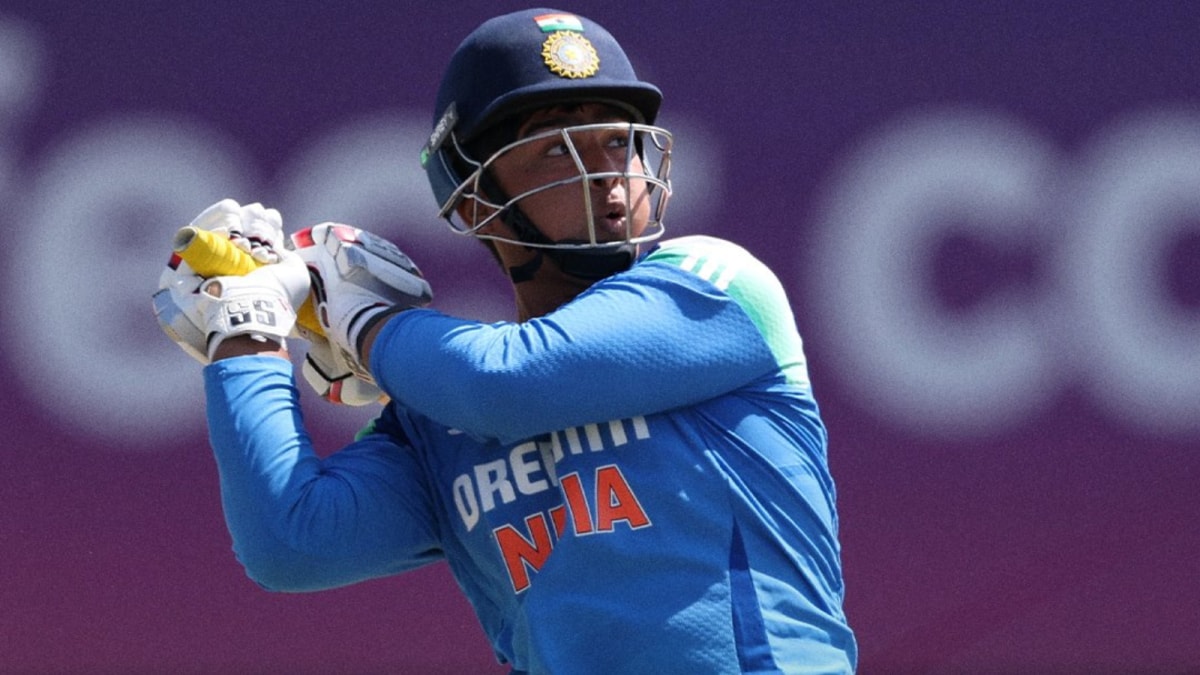
Kishan defies that lineage.
For a player of his height, his authority through the front foot is nothing short of remarkable. His balance, bat swing, and willingness to take the ball early make him a rare hybrid — a compact batter with the reach and power of someone far taller. As a former state player and coach, I find this transformation fascinating. Technique usually follows body type. Kishan has chosen to challenge that rule.
And his mindset reflects it.
“Ishan Kishan ‘shant nahi rahata’,” as the dressing room joke goes — and neither does the opposition when he’s at the crease. His attacking instincts have grown in leaps and bounds from what we saw a year ago. This isn’t reckless aggression; it’s calculated pressure. The kind that forces captains to shuffle fields and bowlers to second-guess their plans.

Alongside him, Abhishek Sharma and Rinku Singh are adding a new dimension — not just to India’s batting, but to how the bowling unit can operate. Much like Australia’s model of batting depth providing tactical freedom, this trio allows India’s bowlers to attack without the constant fear of defending par-plus totals. It’s a subtle but powerful shift in team psychology.
Then there’s the supporting cast — Tilak Varma, Shivam Dube, and Hardik Pandiya, besides others — forming a middle order that feels less like a safety net and more like a launchpad.
The larger question, though, stretches beyond February’s World Cup.
What we are witnessing is a philosophical change in Indian cricket. The U-19 team mirrors the senior side’s fearlessness. The senior side, in turn, reflects the hunger of the next generation knocking on the door. This feedback loop is healthy — even ruthless. No place is secure. Every performance is a statement.
But with promise comes responsibility.
The challenge for Indian cricket’s think tank is not just to celebrate this talent surge, but to channel it. Suryavanshi’s repeated dismissals are not a flaw — they are an opportunity. Kishan’s explosive growth is not a coincidence — it is a case study. Somewhere between the two lies the blueprint for the next decade.
As the World Cup approaches, the signs are encouraging. Not because India looks strong — but because it looks restless. Hungry. Unsettled in the best possible way.
And if history has taught us anything, it is this: when India’s youth and confidence move in the same direction, the rest of the cricketing world usually feels the tremors soon after. (The author is a former Hyderabad Ranji player)


Excellent Dynamics for the Future of World of Cricket,Appreciated Decades of devotional development of the game with selfishness of Coaching.