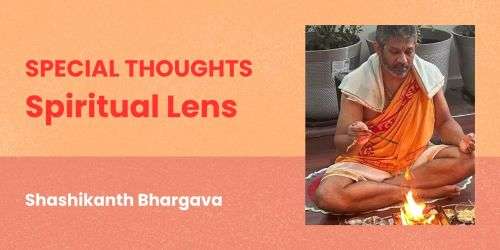
This is an article series. Please read all previous articles before reading this article. The URLs for all previous articles are located in the www.special thoughts.com section.
As you may’ve noticed, it took 5 articles (nearly 30 pages’ worth) to elaborate a little bit on some of the Devata-s in level 18. I hope it didn’t wear your patience thin. I also hope that you appreciated reading about it in detail, because nobody ever explained to me in this much detail. We always need correct information about things that matter to us. Resourceful knowledge can be extracted only from correct information. Any knowledge extracted from incorrect information is of no value to you or anyone else. So, I hope that the information made available to you through these articles makes sense to you, and I hope you value it. And, if you do… you’ll benefit from contemplating on it and sharing it with others.
With that, we’ll now learn a little about some of the Devata-s in level 17.
Mitra
As elaborated in the previous articles, Pitru Devata-s take care of us in the 3 phases of our existence, namely Kaumaarya, Yauvana, and Jaraa. As the adage goes, “We Live, We Learn”. One of the things we learn in each of the phases of life is about our limits. In Kaumaarya (childhood), as we grow, we become aware of our limits. For example, how much to eat to feel full; how high/far can I jump; how loud can I speak; what’s the maximum height I can jump down from; how much weight can I carry and for how long; and so on. We end up in some or the other trouble when these limits are crossed.
Similarly, in Yauvana again, we become further aware of our limits. For example, how much sleep we need to function properly the next day; how fast can I drive in a certain road at certain speed without hitting or damaging anything or hurting anyone; how much risk is too much risk; How much workload/stress can I handle; how much milk/fruits/spice can my stomach handle; and the variation of our own limits when we are unwell or tired and so on. And in the Jaraa phase again, we become aware of so many limitations of bodily functions, medicinal and dietary limits, limits of memory, limits of being able to handle technological advancements, and so on.
The Sanskrit word for limit is Miti. How are we becoming aware of the Miti in various aspects of our lives? My take is that the Devata who gives us an awareness of our personal limits is referred to by the name Mitra. He is also the Abhimaani Devata for the morning and also the East direction (as the morning begins with the sun rising from the east).
Nirruti
Most of us will have, either in person or in videos, heard someone or the other say, “Where is God?” while going through a really horrible situation. For example, during World War, 2 millions of defenceless people were being killed mercilessly. Many years later, when some survivors were interviewed, they were heard saying, “Where was God when all these horrible things were happening to us?” From the surface, it seems like a very valid question. And it almost seems to imply that there is no God. Let’s set aside pondering over the atheistic line of thought for the future, and just think about this commonly asked question. Why do bad things happen at all? Why did God not create this world such that there is no evil at all anywhere?
Let’s take an example of the printer and paper shredder. They are 2 different machines. A printer can only print. It can’t shred the paper. And the paper shredder can only shred the paper; it can’t print on it. But both of them need electricity to operate. When plugged in, they perform their distinct functions. Correct? Similarly, and as was elaborated on in the article “Bhagavaan and Devata”, there are 3 types of Jeevaatma-s, i.e., Saatvika, Raajasa, and Taamasa Jeevaatma-s. Saatvika Jeevaatma-s are the Devata-s, and the Taamasa Jeevaatma-s are the Asura-s. Bhagavaan gives an opportunity to all the Jeevaatma-s to manifest as per their intrinsic characteristics. This means the Raajasa and Taamasa Jeevaatma-s too draw their energy only from Paramaatma. Each Jeevaatma has its unique characteristic. And those characteristics manifest when, and only when, they are connected with the Paramaatma, and when Paramaatma gives them an opportunity to manifest by creating this universe. Questions such as the above can only be answered rationally when we adhere to a line of thought that accepts that the Jeevaatma and Paramaatma do exist.
Paramaatma created the day. He also created the night. He created summer. He also created winter and rainy seasons. If we ask, “Why did Paramaatma create both day and night? He should’ve created just the day and not created night at all”, then how will we understand what night feels like? And those who think that Paramaatma should’ve created only summer and no winter at all should talk to the people who live in Singapore, which, according to internet data, stays hot and humid all year. Similarly, Paramaatma, who allows Saatvika Jeevaatma-s to manifest on earth, also gives the same opportunity for Raajasa and Taamasa Jeevaatma-s too. For example, if he wished, Paramaatma could’ve simply taken Avataara as Raama and ensured that Raavana was not born at all. No evil… No problem. Right? Why create an evil Raavana, have him abduct Seetaa Maataa, why build a bridge across the ocean, why then do Raavana Vadha? Why create Evil and then have Evil trouble its own creator? This is because Paramaatma’s creation is a common ground for all types of Jeevaatma-s to get an opportunity to manifest so that their intrinsic nature is revealed, and their capabilities are demonstrated.
Bottom line is… Evil DOES exist… it will always exist. It HAS to exist. And everything that exists will get an opportunity to manifest itself in Paramaatma’s creation at some point. Good and Evil take their very definition based on how they manifest in Paramaatma’s creation. A very good example for this that I’ve heard is… a battery has a + end and a – end. If, for some reason, we don’t like – end in the battery… and we cut it off and throw it away. Will such a battery be useful? We definitely need both + end and – end for the battery to be useful. Similarly, Raajasa and Taamasa energies will always exist. They MUST exist. The Saatvika Jeevaatma-s should rather learn to harness Raajasa/Taamasa energies and Jeevaatma-s for their own spiritual upliftment.
Going back to the above example of a printer and a paper shredder, they both function when the electric power supply is at 110 Volts (or 220 Volts in some parts of the world). But the power plant, which produces electricity, transmits it at 220 – 500 Kilo Volts, which no machine can handle. So, it needs to be stepped down through the use of transformers to bring down the voltage to 110/220 Volts. And sometimes, an additional adaptor is needed to, say, convert the power from AC to DC, Correct? Similarly, Paramaatma is like that source of power. Devata-s are like those transformers that step down the voltage to a level that ordinary Jeevaatma-s can handle and manifest. There are various Devata-s who step the energy of the infinite Paramaatma down to a level that we can handle. That’s why we are looking at this hierarchy of Devata-s. We’ll learn more about this in the future as we learn about Devata-s higher up in the hierarchy.
While the above is true with most Saatvika Jeevaatma-s, Paramaatma’s energy does not flow directly to the Taamasa Jeevaatma-s. There is a Devata who, sort of, acts as a link through whom Paramaatma’s energy flows to the Taamasa Jeevaatma-s (Asura-s). The Devata who acts as this “Link” or the “Adaptor” with the Asura-s is Nirruti.
The above has been depicted symbolically very nicely in the Mahaabhaarata. Those who’ve read the outline of the epic will know that Bheemasena is the Avataara of Vaayu, who is a Devata. But, when the Paandava-s become forest-bound after the Laaksha Gruha incident, they end up having an encounter with Hidimba, who is an Asura. In a battle that ensues, Bheemasena fells Hidimba. Later, Hidimba’s sister Hidimbi, also an Asura woman, expresses interest in marrying Bheemasena. When insisted upon by his own mother, Kunti, to marry Hidimbi, Bheemasena marries her and agrees to stay with her for 1 year. Ghatotkacha was born through Bheemasena’s union with Hidimbi, who is an Avataara of Nirruti.
Since Nirruti acts as a link with the Taamasik Jeevaatma-s, perhaps he’s always mindful of their evil designs, plans and conspiracies to hurt the Saatvika Jeevaatma-s. My take is that he deserves our gratitude for protecting us from Taamasik Jeevaatma-s and their evil designs. Nirruti is also the Abhimaani Devata for the South-West direction. Please refer to the article “Devatas – Level 18” and read about “Kubera” for more elaboration on “Dik Paalaka Devata-s”. You may’ve also noticed that many commonly performed Homa-s and Pooja-s also involve “Ashta Dik Paalaka Devata Pooja”, during which any step involving offerings to Nirruti in the southwest direction of the Pooja venue is followed by a cleansing step. This is in recognition of the thought that Nirruti acts as a link with Taamasik Jeevaatma-s and, therefore, cleansing is necessary after coming in contact with anything that comes in contact with the Asura-s.
Taaraa Devi and Praavahi Devi
The remainder of Devataa-s in this level are Taaraa Devi, consort of Bruhaspati (Guru of all Devata-s), and Praavahi Devi, consort of Pravaha Vaayu. I’ve not heard any details about Taaraa Devi and Praavahi Devi and their role in our lives. But my take is that they are associated with all that their respective husbands are involved in.
Next week, we’ll elaborate on Devata-s in hierarchical level 16.