Special Correspondent
For months, allegations of corruption in Hyderabad cricket selections have refused to fade. Parents, former players, and insiders have repeatedly flagged irregularities, only to be met with silence, procedural evasions, or the familiar refrain: “Bring concrete proof.” That proof—at least in part—now appears to be on record.
Investigators from Orangenews9 have accessed documentary material suggesting monetary transactions and chat exchanges between intermediaries allegedly linked to selectors and parents of aspiring cricketers. While the evidence presently available may reflect only a limited digital trail—such as a ₹25,000 transaction accompanied by corroborative communications—it opens a far more disturbing window into what many allege is a well-entrenched and systemic racket within Hyderabad Cricket Association (HCA) selections.
The controversy centres on the Under-23 team selection this season. Traditionally, this responsibility lies with the senior selection committee. However, under circumstances that remain unexplained and undocumented, the mandate was reportedly shifted to the junior selection committee. Critics allege this committee comprises individuals perceived as pliant, inexperienced, and vulnerable to external influence—raising serious questions about intent and oversight.

Sources close to the High Court–appointed Supervisory Committee, headed by Justice Naveen Rao, claim that the supervisor has been keeping a close watch on selection committee members and has, from time to time, cautioned them against entertaining complaints or indulging in irregular practices. It is also learnt that individuals allegedly involved in collecting substantial sums from parents to influence selections may face consequences. The hope now is that the evidence placed in the public domain by this e-paper will compel decisive action.
It bears reiteration that the supervisory framework exists precisely to prevent such brazen irregularities. The authority to question, approve, or halt questionable decisions ultimately rests with the supervisor himself. With the domestic season drawing to a close, there is growing expectation that the Under-23 selection mandate will be withdrawn from the junior committee and restored to the senior selection committee—if only to send a clear message that the system will no longer tolerate manipulation.

Multiple parents allege that brokers, acting as intermediaries, approached them with fixed “rates” for selection. These allegations are not confined to fringe players alone. Even meritorious performers, parents claim, are pressured to “fall in line” to safeguard their children’s future prospects. Conversations within cricketing circles suggest that individual berths may command anywhere between ₹10 lakh and ₹30 lakh, depending on format and visibility. If even a fraction of these claims are accurate, the amounts involved in a single season would run into several crores.
Admittedly, much of this alleged exchange is said to occur in cash, making direct documentation difficult. However, investigative agencies are not powerless. Where credible suspicion exists, established legal tools—financial forensics, custodial questioning, and other investigative methods sanctioned by courts—can be invoked. Several aggrieved parents who refused to pay have already approached the police, while others have sought judicial intervention.

FIR No. 1999/2025 dated 14.10.2025 was filed at Rachakonda Police Station by another parent, alleging discrimination against players, selection manipulation, and monetary demands by an individual acting as an agent on behalf of certain selectors. Despite the seriousness of these allegations, no substantive progress appears to have been made in that case either.
In this context, a troubling question arises: why have earlier police complaints on identical allegations gone conspicuously silent?
One such instance is FIR No. 1999/2025 dated 14.10.2025, registered at the Rachakonda Police Station on a complaint by another parent. The FIR reportedly alleges discrimination against players, manipulation of selections, and monetary demands by an individual acting as an agent on behalf of certain selectors. Despite the gravity of these accusations, there appears to have been little visible progress in the investigation. More disturbingly, those named—directly or indirectly—continue to be associated with the selection process, raising legitimate concerns about oversight, deterrence, and institutional will.
Ironically, the supervisor has previously stated—both to complainants and in internal deliberations—that without tangible proof, law-enforcement intervention could not be directed. That threshold now appears to have been crossed. It is learnt that material gathered by Orangenews9 has been shared with the relevant authorities. Whether this leads to a formal probe—or opens a Pandora’s box of past and present irregularities—remains to be seen.
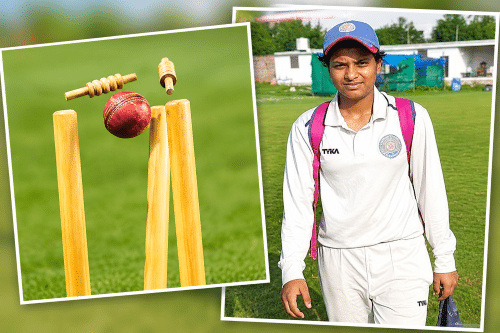
The problem does not appear confined to men’s junior cricket alone. Similar allegations have surfaced regarding women’s team selections, where an unusually large pool of probables—sometimes as many as 50—is shortlisted, only for 16 players to be finally picked. This raises serious concerns about transparency and intent, particularly against the backdrop of consistently poor on-field performances by both junior and women’s teams, despite no corresponding accountability within the selection machinery.
On behalf of numerous parents who believe their children’s careers have been irreparably damaged, this publication makes a restrained but firm appeal: the immediate dissolution and reconstitution of the junior men’s and women’s selection committees is essential to restore credibility. Time is fast running out.
If the supervisory mechanism is to mean anything at all, credible evidence must now be followed by decisive action. Continued inaction will only deepen mistrust—and invite uncomfortable speculation that no institution claiming reform can afford to ignore.