



By Vinay Rao
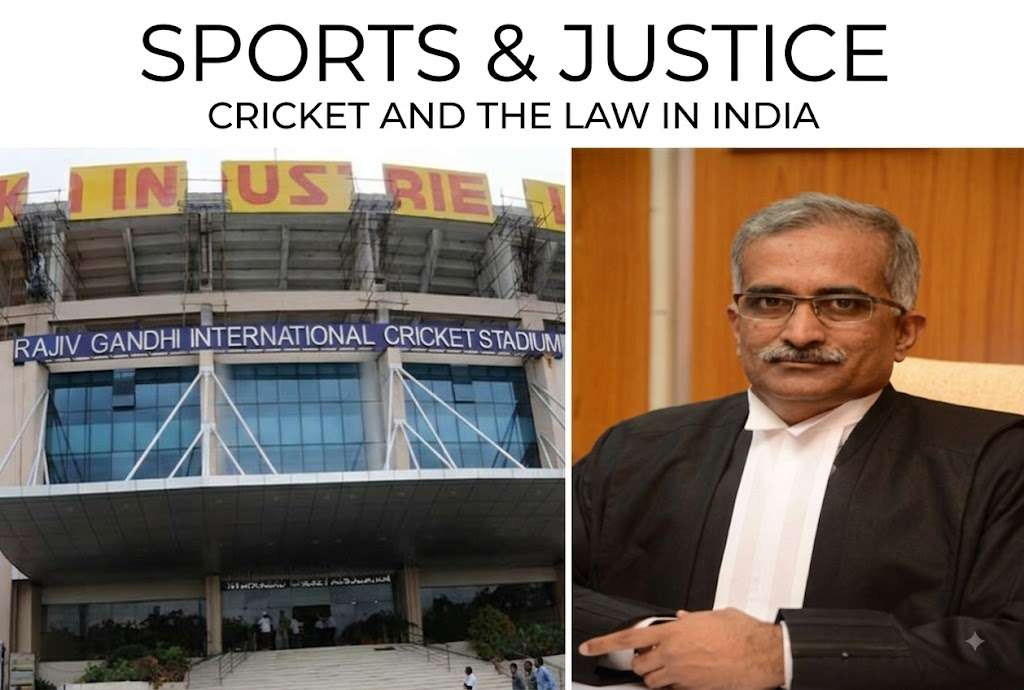
Blaming parents has become the easiest reflex in India’s cricketing ecosystem—more so in this part of the country. Nowhere is this more evident than in the Hyderabad Cricket Association, an institution entangled in controversy, allegations of corruption, nepotism, and a web of legal battles. Matters are pending not only with state investigating agencies, but also before the High Court and the Supreme Court. Despite multiple remedies, including judicial interventions by both courts, precious little has been done to streamline the association’s administration or bring accountability into the system.
In this vacuum, it remains convenient, emotionally satisfying, and morally lazy to point the finger at parents. The stereotype is familiar: overambitious mothers and fathers living out their unfulfilled dreams through their children, pushing them into a ruthless rat race. But this narrative, repeated endlessly in drawing rooms and dressing rooms alike, ignores a more uncomfortable truth.
Parents are not the architects of this pressure cooker.
They are, more often than not, its earliest customers—and eventual casualties.
What parent wouldn’t dream that their child might become the next Sachin Tendulkar, Virat Kohli, or Kapil Dev? What is wrong in hoping for a better future, in protecting a child’s talent, in investing time, money, and belief into a passion that shows promise? The real question is not why parents dream. It is who is selling those dreams—and at what cost.
How the Trap Is Set
The pitch begins early. When a child is barely 10 or 12, the language of “prodigy” and “special talent” enters the conversation. Coaches, academies, and intermediaries plant a powerful seed: with the right mentoring, this child is not just good—he is destined. The words are intoxicating. For the child, they become identity. For parents, they become obligation. Once that seed takes root, stepping back feels like betrayal.
Then comes the watering. Foreign tours, exposure trips, elite camps—each wrapped in the promise of a competitive edge. The price tags are heavy, but the emotional pitch is heavier:
“If you don’t send him, someone else will. And that someone else will get ahead.”
No parent wants their child to be the one left behind. The sport, once a source of joy, quietly turns into a race against invisible rivals.
By the time the child reaches the Under-14 level, the stakes have been artificially inflated. Despite not being a BCCI-sanctioned stage of consequence, selections here are treated like a national entrance examination. Anxiety spreads through homes like a seasonal illness. Miss this rung, parents are told—implicitly or explicitly—and the ladder collapses.
At Under-16, the pressure tightens.
At Under-19, vulnerability peaks.
From Sport to Business: The Class Divide
This is where the ecosystem reveals its true shape. Talent still matters—but it is no longer alone in the room. Resources arrive with a checklist: personal trainers, nutritionists, analytics subscriptions, specialist coaches, travel budgets, and neatly packaged “mentorship programs.” Cricket stops being a game and starts resembling a start-up—one that requires continuous capital infusion just to stay competitive.
Hyderabad cricket today does not visibly suffer from the caste divides seen in some other associations. Instead, it has developed something equally corrosive: a class divide, consciously created and carefully maintained by those who have turned junior cricket into a lucrative business. A simple game has been complicated beyond comprehension. Merit and transparency in selection have long been sacrificed at the altar of access and affordability.
Selection becomes a complex cocktail of ability, money, lobbying, timing, and proximity to power. Those who fall out of the system are rarely given honest feedback. More often, they are told to try again next year. The wheel keeps spinning. The payments keep flowing.
Those who question this structure are not engaged with—they are hunted down. Packs of parents and officials aligned with entrenched syndicates close ranks quickly. Ironically, many among them fail to realise that in such systems, loyalty offers no immunity. When someone more powerful or more monied enters the scene, they may well be the next to be discarded.
The Real Failure: The Child
But the most alarming failure is not financial.
It is human.
Who is taking care of the child inside this machine?
Young players are squeezed from all directions—peer competition, institutional expectations, parental hope, and their own fear of being replaced. Yet mental and emotional support remains a luxury, not a standard. Very few adults in the system sit a 14-year-old down and say:
It is okay to fail.
It is okay to not be the best.
It is okay if cricket does not become your life.
Instead, fear becomes the primary motivator. Fear of being dropped. Fear of being forgotten. Fear of being labelled “finished” before adulthood even begins. This kind of pressure does not forge champions; it erodes confidence, drains joy, and leaves behind burnout and emotional scars that last far beyond the boundary rope.
Ironically, when fear is removed—when a child is told there is another day, another path, another definition of success—that is often when performance improves. A secure child plays freer. A supported child grows stronger.
But the system is not designed to produce healthy humans.
It is designed to extract performance, filter numbers, and move on.
And Then Parents Are Blamed—Again
At the end of this cycle, the finger points back at parents.
Why not the structure that thrives on their hope?
Why not the absence of transparent pathways, standardised guidance, and mental-health safeguards?
Why must a sport become a high-risk financial and emotional gamble instead of a developmental journey?
We comfort ourselves with a handful of inspirational stories—boys from humble backgrounds who “made it.” But inspiration should never substitute accountability. For every success story, there are thousands of silent exits—children who gave up not just on cricket, but on confidence, joy, and self-belief.
Cricket in India is now a lucrative industry, and the Board of Control for Cricket in India deserves credit for its commercial success. But profitability cannot be the final metric of responsibility. The next frontier must be fairness, transparency, and child welfare. State associations must be compelled to build pathways that are clear, humane, and emotionally safe.
An Inevitable Reckoning
Things have to change—and they will.
Every system built on exclusion, fear, and exploitation eventually collapses under its own weight. Every anomaly finds its end. There will be a moment, and there will be someone—or a collective—who reins this in.
One can only hope that the time has come.
Hyderabad cricket was once known for its flair.
Today, it is not asking to be great again.
It is simply yearning to be fair.



Most parents are just trying to support their kid and end up trapped in a system that runs on fear and false urgency
if you don’t pay , he’ll be left behind
What hit hard is the child-welfare angle selections, lobbying, money, and constant comparison can crush a 12–16 year old’s confidence long before they even understand what’s happening. If associations and academies truly care about cricket, they need transparency in selection, clear pathways, honest feedback, and basic mental support for kids—not a pay-to-stay race.
Why only north players are part of any nation game !! Just think
Very true