


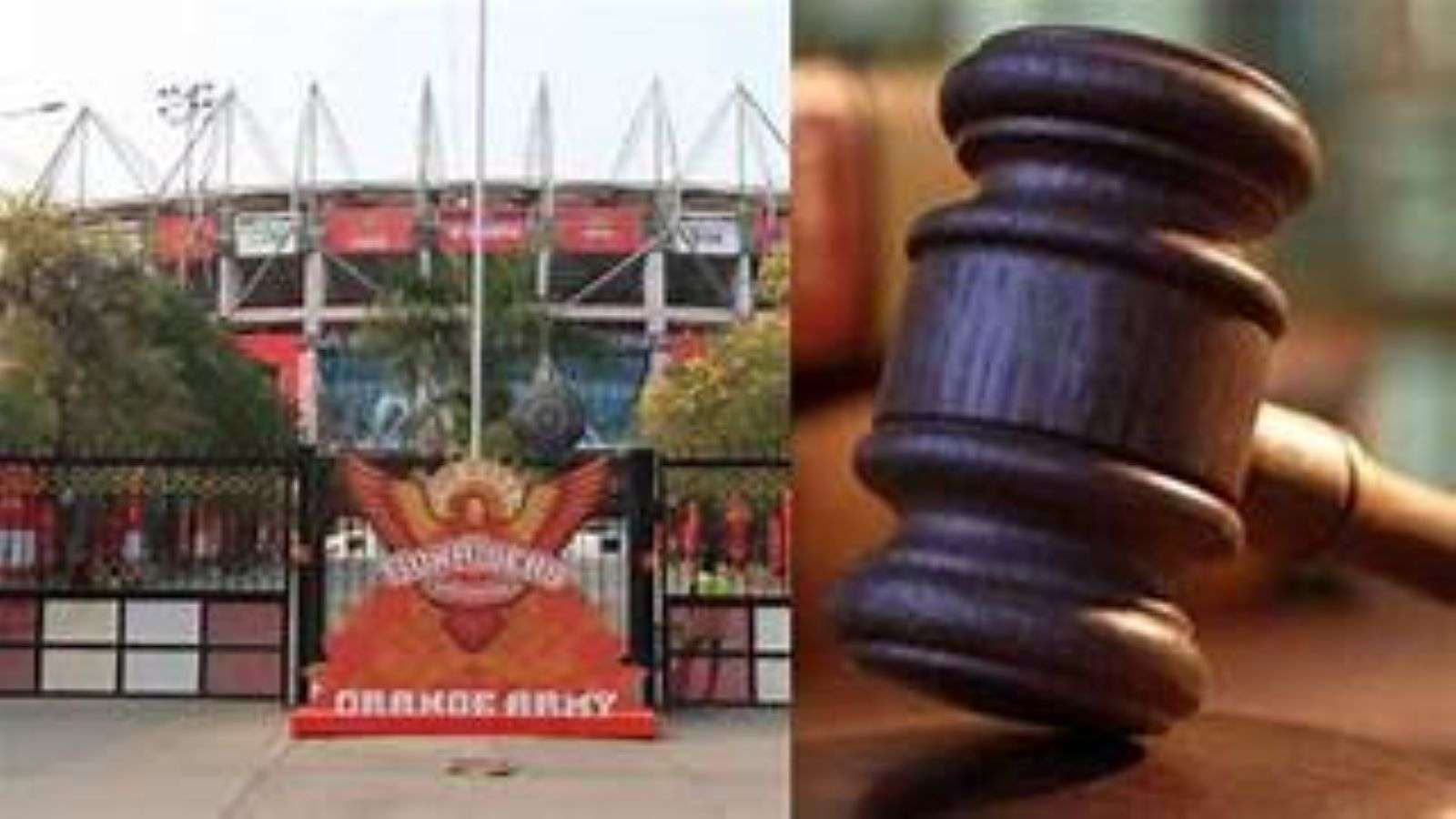
Special Correspondent
The noise surrounding the proposed TG20 Premier League has once again exposed the deep fault lines within the corruption-ridden Hyderabad Cricket Association (HCA). Ironically, many of those now shouting the loudest against the league are the very individuals who presided over the steady decay of Hyderabad cricket administration for nearly two decades.
In an earlier article, this e-paper had questioned the intentions of certain former HCA secretaries who, instead of playing a constructive role in strengthening cricket administration, appeared more interested in undermining every fresh initiative simply because it did not originate from their own camp.
Had they instead used their influence to unite all HCA-affiliated secretaries on common platforms, including WhatsApp groups, and collectively demanded that the state government and the Director General of Police constitute a Special Investigation Team (SIT) to probe the alleged irregularities in HCA, it would have appeared far more credible — both on paper and in public perception.
However, there is also a growing belief within cricket circles that if such an investigation is conducted sincerely and in true letter and spirit, it could end up opening a Pandora’s box, with the probe potentially boomeranging on several of those who are now projecting themselves as champions of morality and transparency.
The larger question, therefore, is simple: why stop with selective outrage?
Why not also ask what progress has been made in the ongoing CID inquiry into the alleged transfer of nearly Rs 65 crore compensation to a private company owned by a politician’s family in connection with the construction of the Uppal cricket stadium? Why has there been complete silence on that matter now? Why have many of those demanding accountability suddenly gone mute?
As a responsible media platform, this e-paper has no intention whatsoever to malign individuals or target anyone personally. The purpose is only to place facts, raise legitimate questions, and ask those occupying the moral high ground to introspect before throwing stones at others.
Interestingly, one affiliated club secretary, speaking on condition of anonymity, described some of the former HCA secretaries making noise over TG20 as “devils quoting scriptures.” Harsh words, perhaps, but words born out of years of frustration.
According to him, HCA’s Annual General Meetings gradually became nothing more than “two-minute noodle sessions.” Secretaries would walk into AGMs with pre-decided agendas, get resolutions passed within minutes without any meaningful debate, complete formalities at lightning speed, and then proceed to lavish lunches and, in some instances, even drinks. Governance became a ritual. Accountability disappeared.
He also vividly recalls how a former secretary, while seeking an extension of the Apex Council’s term, allegedly took barely two minutes to push the proposal through and declare it “approved,” despite objections from several members. According to him, the episode reflected the arrogance with which some former secretaries functioned within the HCA.
However, another club secretary disputed this allegation. He contended that the term extension became necessary because elections, which were traditionally held on the last Sunday of May, had been postponed beginning in 2012, first to July and later to September. According to his version, the extension was approved by a majority of members present at the AGM and was not arbitrarily pushed through by the then-president.
“However, this was not the culture during the tenure of PR Mansingh as HCA Secretary,” the former club secretary recalled.
Without mincing words, he admitted that the rot truly deepened after the so-called Players’ Panel stormed into power following the infamous “tracksuit episode,” projecting themselves as reformers who would improve HCA administration. Instead, according to several insiders, what followed was systematic destruction of institutional governance and large-scale misuse of BCCI grants.
The anonymous secretary raises another uncomfortable question. How many of those preaching ethics today can honestly distance themselves from the infamous “gold coin distribution” episode allegedly orchestrated at the instance of a small-time club secretary who enjoyed proximity to a then all-powerful former HCA secretary — a man who not only represented India but also served as a national selector and held influential positions in the BCCI?
“That was the beginning of HCA’s downfall,” the club secretary alleged bluntly.
According to him, the culture of unquestioned authority began during that era itself. He wonders whether even the proposal to construct the Uppal stadium was ever properly discussed and approved in an AGM. Such was the aura surrounding that powerful secretary that many treated him like a monarch rather than an elected office-bearer. Club secretaries rolled out metaphorical red carpets even at family functions to please him.
Over time, that culture of personality worship slowly converted HCA into a network of patronage, camps, and loyalists.
Initially, the former strongman promoted his former teammates and colleagues. Later, he allegedly promoted loyal cronies to key positions. But as often happens in systems built around power and “sharing of benefits,” cracks eventually appeared within the once-close circle itself. Differences over “loot-sharing,” as alleged by insiders, divided former allies into rival camps.
Yet, despite formally being out of office, the same power centres allegedly continued controlling HCA affairs from behind the scenes — from appointments of selectors and coaches to nominations for committees and teams. The association increasingly resembled a political establishment where loyalty mattered more than merit.
As a result, Hyderabad cricket today stands fragmented among multiple power centres controlled by former cricketers-turned-administrators, many of whom once fought shoulder to shoulder but later became bitter rivals.
At this stage, the anonymous secretary asks a devastating but important question: What exactly is the contribution of these former secretaries to Hyderabad cricket during the entire period the Players’ Panel dominated HCA administration?
How many assets were actually created for the nearly 90-year-old association?
What lasting infrastructure did they leave behind?
Who was responsible for killing the prestigious Moin-ud-Dowlah Gold Cup, once among India’s most respected cricket tournaments?
More importantly, where is the original Moin-ud-Dowlah Gold Cup trophy presented by the last Nizam of Hyderabad?
Who approved the sub-leasing of government-allotted land to a private company for stadium construction?
Was AGM approval ever obtained?
Where is the original Memorandum of Understanding related to the Uppal stadium project? Why is it allegedly hidden in HCA cupboards?
Are these not legitimate questions?
Or has journalism become “irresponsible” merely because it dares to ask what others in the media conveniently ignored for years?
The club secretary further questions why many of the former office-bearers and their supporters appear uncomfortable with a genuine SIT probe headed by a senior IPS officer. If they truly believe in transparency, why fear a comprehensive investigation into all allegations — past and present — concerning the HCA?
Why selective accountability?
Why selective outrage?
At the same time, the current administration, despite criticism and controversies over how it came to power, appears — at least for now — to be showing greater intent and transparency than many of its predecessors.
The incumbent secretary may have only a brief tenure of six or seven months, but within a short span, he has initiated discussions on projects that previous regimes failed even to imagine seriously. The proposed TG20 Premier League, aimed at identifying and promoting rural cricket talent across Telangana, is one such initiative.
Certainly, if there are discrepancies in the league’s planning or execution, they deserve scrutiny and correction. No initiative should be beyond criticism. This e-paper itself has unapologetically flagged several concerns in its earlier editorial. But criticism should be constructive, not driven by insecurity or vested interests.
The club secretary also points out that the incumbent, coming from a corporate background though rooted in an agricultural family, appears keen on creating long-term infrastructure and exploring the possibility of building a genuine home stadium for Hyderabad cricket with government support.
For an association that has spent years drowning in allegations, litigation, internal feuds, and administrative paralysis, even an attempt to create assets and decentralize opportunities deserves objective evaluation rather than immediate sabotage.
Ultimately, the issue is bigger than individuals.
Hyderabad cricket today stands at a crossroads. One path leads back to the same culture of camps, manipulation, patronage, and silent destruction that has reduced a once-great cricketing centre into administrative chaos. The other path, though imperfect and uncertain, at least attempts reform, transparency, and broader participation.
This is therefore the moment for former cricketers and administrators who once enjoyed power to place their hands on their hearts and honestly introspect.
Did Hyderabad cricket truly progress under their stewardship?
Or did personal egos, power struggles, and institutional greed slowly destroy the very system they once promised to reform?
That is the question stakeholders, cricket lovers, and the people of Hyderabad deserve answered.



A hard-hitting story. It is a harsh reality that Hyderabad Cricket Association has turned into Hyderabad Corrupt Association. Even as other Associations had a ground or stadium constructed, here HCA were busy otherwise with zero development in the districts. As one former secretary allegedly said many of the club secretaries and office bearers benefited in a huge way. A classic example, many who came in two-wheelers ended up owning even a BMW car (if reports are true). God only can save HCA. First remove the non-functional institutional teams. It is a long and earnest process to clean the Association.